
Automated guided vehicles (AGVs) and electric material-handling vehicles are increasingly used in warehouses, factories, and distribution facilities. Unlike manually operated vehicles, many automated systems follow programmed routes and repeat similar movements throughout each shift. Although this improves operational consistency, it also creates specific demands on the tires.
Choosing suitable Tires For Automated & Electric Vehicles requires more than matching wheel dimensions and load ratings. Repeated travel along the same paths can create localized wear, while frequent turning, acceleration, and stopping affect tire deformation and operating temperature. Understanding these conditions helps maintain vehicle stability and reduce unnecessary maintenance.
Why Fixed Routes Create Different Tire Wear Patterns
Automated vehicles often travel between designated workstations, storage areas, and production lines. Their routes may remain largely unchanged for long periods, meaning the same wheels repeatedly pass over the same floor sections and perform similar movements.
This consistency can produce predictable but uneven wear. For example, a vehicle that repeatedly turns at one junction may place greater lateral stress on certain wheels. If it carries loads along the same route every cycle, the wheels may experience similar pressure patterns throughout the day.
Floor conditions can amplify the effect. Small surface joints, uneven patches, and changes in floor texture may repeatedly affect the same tire contact areas. Unlike vehicles operating on varied routes, automated equipment may encounter these conditions thousands of times over an extended service period.
For Tires For Automated & Electric Vehicles, route characteristics should therefore be considered alongside load capacity. Understanding where vehicles travel, how often they turn, and which sections create additional resistance helps identify the actual demands placed on each wheel.
How Repeated Turning Affects Tire Performance
Turning is one of the most important factors influencing tire behavior in automated material handling. AGVs may need to navigate narrow aisles, rotate within limited spaces, or make repeated directional changes at designated points.
During a turn, the wheels experience lateral forces in addition to their normal vertical load. Depending on the vehicle’s steering configuration, some wheels may also slide slightly against the floor rather than roll smoothly through the entire movement. Repeating this action can increase surface friction and accelerate localized wear.
The effect becomes more significant when vehicles carry heavy loads or perform tight turns frequently. Wheels may develop uneven wear across their contact surfaces, while excessive friction can contribute to additional heat generation.
Wheel arrangement and steering control also influence the outcome. A vehicle designed for tight-space maneuvering may place different demands on its wheels from one that follows broad, gradual turns. Selecting Tires For Automated & Electric Vehicles according to the actual turning pattern helps avoid relying on general specifications that do not reflect operating conditions.
The Relationship Between Load Cycles and Tire Deformation
Automated vehicles frequently perform repetitive transport tasks. A typical cycle may involve approaching a workstation, collecting a load, traveling to another location, unloading, and returning to the starting point. Each cycle changes the load supported by the wheels.
When a vehicle is loaded, its tires deform under the additional weight. Once the load is removed, the tires recover toward their original shape. This repeated compression and recovery creates continuous mechanical stress, particularly when the equipment operates across multiple shifts.
Uneven loading can make the situation more complicated. If the transported materials are not positioned correctly, individual wheels may carry different amounts of weight. Over time, this can contribute to uneven deformation and differences in wear between wheel positions.
Load capacity should therefore be evaluated according to the actual vehicle configuration. The total vehicle weight, maximum transported load, number of supporting wheels, and load distribution all influence the force acting on each tire.
Suitable Tires For Automated & Electric Vehicles should maintain sufficient structural support without excessive deformation under normal working loads. Choosing a wheel based only on the vehicle’s unloaded weight can lead to an unsuitable selection.
Why Rolling Resistance Matters in Electric Vehicle Operations
Electric vehicles depend on battery power to operate their drive systems. The resistance encountered by the wheels influences how much effort the vehicle needs to maintain movement.
Rolling resistance is affected by several factors, including rubber properties, wheel dimensions, applied load, surface conditions, and tire deformation. A wheel that deforms excessively may require more energy to keep moving. This can increase the demand placed on the drive system during repeated transport cycles.
However, reducing rolling resistance should not come at the expense of traction or stability. If a wheel is too hard for the operating surface or unsuitable for the vehicle’s load, it may compromise floor contact and handling performance.
The objective is to balance efficient rolling with sufficient grip and load support. When evaluating Tires For Automated & Electric Vehicles, operators should consider how wheel characteristics influence both energy consumption and vehicle movement under actual working conditions.
Selecting Tires for Different Automated Operating Environments
Automated vehicles do not all operate under the same conditions. Some travel on smooth warehouse floors, while others work in manufacturing facilities where floor joints, dust, moisture, or minor surface irregularities are present.
These differences influence wheel selection. Smooth surfaces may allow lower rolling resistance, while floors with joints or uneven sections may require greater resilience to manage repeated impacts. Areas exposed to moisture also require attention to traction and material compatibility.
The vehicle’s operating pattern is equally important. An AGV traveling long distances along straight routes has different wheel demands from a compact automated vehicle that repeatedly turns in a small working area.
Before selecting Tires For Automated & Electric Vehicles, consider the following factors:
- Route layout: Identify straight sections, tight corners, turning points, and areas where vehicles repeatedly stop.
- Load conditions: Evaluate both unloaded movement and maximum operating loads, including possible differences in weight distribution.
- Floor characteristics: Check surface hardness, joints, moisture, dust, and other conditions that may influence traction and wear.
- Operating frequency: Consider daily operating hours, transport cycles, and the time available for maintenance.
A wheel specification that works well in one facility may not provide the same results in another. Matching the wheel to the actual operating environment is more reliable than selecting solely by general application descriptions.
Monitoring Wear in Automated Vehicle Fleets
Automated equipment often operates with limited interruption, making early identification of wheel problems particularly important. A small defect may become more significant when the vehicle continues following the same route throughout each shift.
Maintenance teams should compare wheel condition across different vehicles and positions. If several vehicles develop similar wear near the same turning point, the route or floor condition may be contributing to the problem. If only one wheel shows abnormal deterioration, installation, alignment, or load distribution may require closer inspection.
Inspection records can also help establish whether wear is developing gradually or accelerating. Changes in wheel diameter, surface condition, deformation, and operating noise should be reviewed together rather than treated as unrelated symptoms.
When abnormal wear appears, replacing the wheel without examining the route, steering system, and vehicle loading may allow the problem to return. A combined inspection of the wheel and operating environment provides a more useful basis for maintenance decisions.
Exploring Tire Options for Automated and Electric Vehicles
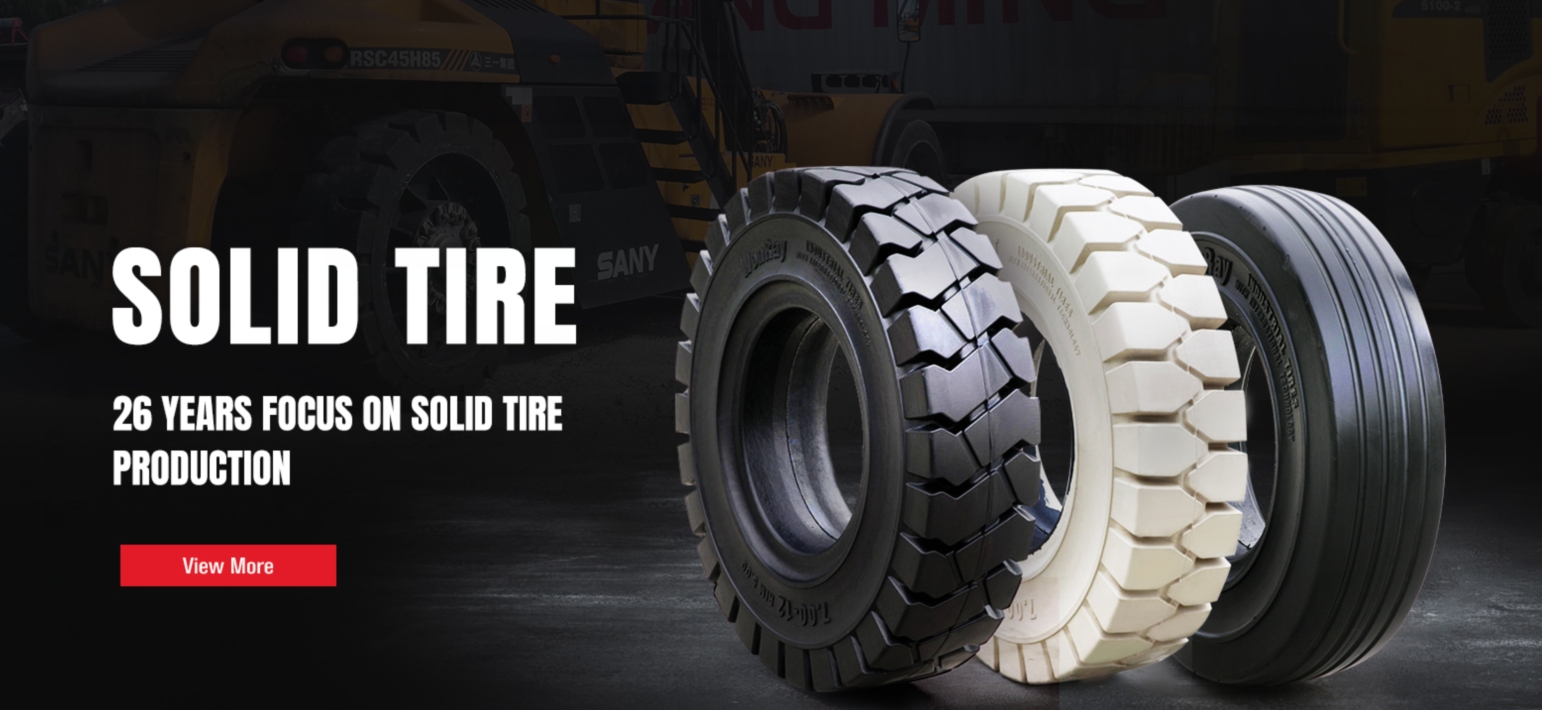
When evaluating Tires For Automated & Electric Vehicles, it is important to consider the relationship between vehicle design, route repetition, load requirements, and floor conditions. WonRay provides industrial solid tire and wheel solutions for material-handling applications. Comparing suitable options against actual vehicle specifications and operating patterns can help identify a configuration that supports consistent movement, appropriate load support, and long-term wear performance.
Conclusion
Automated and electric vehicles place distinctive demands on tires because they often repeat the same routes, turning movements, and load cycles throughout daily operations. These patterns can create localized wear, repeated deformation, and additional rolling resistance. Selecting suitable Tires For Automated & Electric Vehicles requires an understanding of route design, load distribution, floor conditions, and operating frequency. Regular inspections and appropriate wheel matching help maintain stable vehicle movement and reduce avoidable maintenance interruptions.
FAQs
1. Do automated vehicles wear tires faster than manually operated vehicles?
Not necessarily. However, repeated routes and identical turning patterns can concentrate wear in specific areas. Actual service life depends on load, floor conditions, wheel design, and operating frequency.
2. Why do AGV wheels sometimes develop uneven surface wear?
Repeated turning, uneven load distribution, steering configuration, and recurring contact with floor irregularities can contribute to uneven wear. Comparing affected wheels and reviewing vehicle routes can help identify the cause.
3. Does lower rolling resistance always improve electric vehicle performance?
No. Lower rolling resistance can reduce the effort required to maintain movement, but traction, stability, and load capacity must also be considered. A balanced wheel specification is more important than minimizing resistance alone.
4. How can operators identify wheel problems before an AGV stops working?
Regularly inspect wheel surfaces, deformation, diameter changes, and unusual operating noise. Comparing inspection records across vehicles can reveal recurring problems before they cause unexpected equipment interruptions.
Post time: 10-11-2026