
A Tire With Rim Assembly combines an industrial tire with a compatible rim so the wheel can be installed as a matched unit. For forklifts, trailers, loaders, aerial work platforms, tow tractors, and other industrial equipment, this arrangement can reduce several variables that normally appear during separate tire and rim replacement. A Tire With Rim Assembly is therefore not merely a convenience item; its main technical value is control over compatibility, mounting condition, and installation consistency before the wheel reaches the machine.
Industrial wheel problems are often attributed to the rubber tire because it is the visible wear component. In practice, the tire, rim, mounting interface, hub, fasteners, and installation procedure work as one system. A dimensionally correct tire fitted to an unsuitable or damaged rim can still produce poor seating, runout, vibration, uneven wear, or difficulty during installation. Treating the Tire With Rim Assembly as a complete interface helps reduce these avoidable sources of variation.
The reliability chain starts at the tire-rim interface
Every wheel transmits load from the machine through the hub and rim into the tire, then into the ground. That load path changes continuously as the vehicle turns, brakes, accelerates, or crosses surface joints. If the rim geometry does not match the tire construction, stress can concentrate at the mounting area rather than distribute as intended. The result may be movement between components, irregular seating, or accelerated wear.
A Tire With Rim Assembly allows the tire and rim to be matched as one dimensional set. This is particularly useful for solid pneumatic tires, press-on band tires, mold-on wheels, split-rim systems, and industrial complete wheels where installation method and rim profile are part of the product function. The exact requirements differ by wheel type, but the principle is the same: the mounting interface must be correct before the equipment is loaded.
Fitment accuracy includes more than diameter
When identifying a replacement wheel, outside tire diameter is only one reference. Rim diameter, rim width, offset, hub bore, bolt-hole pattern, pilot diameter, backspacing, mounting-face position, and fastener details can all affect whether the wheel sits correctly on the machine. For split or multi-piece rims, component profile and locking features are also relevant. A wheel may appear visually similar and still place the tire centerline in the wrong position.
This is why a Tire With Rim Assembly should be specified using the equipment model and measured wheel data whenever possible. Incorrect offset can change clearance to the chassis or mast. Incorrect pilot dimensions can affect centering. A mismatched bolt pattern may prevent installation entirely, while a near match can create a more serious risk if the wheel can be forced into position without proper seating. Dimensional confirmation is therefore a reliability step, not administrative detail.
Pre-assembly can reduce mounting variation
Solid tires often require specialized presses or controlled mounting procedures. Press-on band tires depend on an interference fit between the steel band and wheel. Split-rim systems require correct component assembly and secure locking. When these operations are completed under controlled conditions, the installed tire can be checked for seating, orientation, and visible defects before shipment or storage.
A Tire With Rim Assembly does not eliminate the need for correct installation on the machine, but it can remove the separate tire-to-rim mounting operation from the maintenance location. This is useful where local tire-press capacity is limited, where emergency replacement time is important, or where a fleet uses standardized complete-wheel spares. The practical benefit is fewer installation steps at the point where equipment downtime is already occurring.
Runout and concentricity influence wear after installation
A wheel that is not concentric may create repeated vertical movement as it rotates. At low industrial speeds this may not resemble the vibration associated with road vehicles, but it can still influence tread wear, steering feel, and component loading. Visible runout can also indicate that the rim is bent, the tire is not seated correctly, or the assembly has been damaged.
Before a Tire With Rim Assembly enters service, basic visual and dimensional checks can identify obvious problems. The tire should sit uniformly relative to the rim, the mounting face should be clean and undamaged, and the wheel should not show deformation around bolt holes or locking areas. For applications with tight chassis clearance or precise platform movement, assembly geometry deserves particular attention.
Complete-wheel spares can change maintenance planning
A fleet that stores only loose tires still needs a compatible rim and mounting process when a replacement is required. If the machine is down, the time needed to remove the old tire from its rim, inspect the rim, mount the new tire, and reinstall the wheel becomes part of the interruption. A prepared Tire With Rim Assembly can shorten that sequence because the wheel swap can be completed while the removed assembly is inspected separately.
This approach is most useful for equipment with standardized wheel positions and predictable replacement demand. It is less useful when each machine uses unique rims or when worn rims are frequently repaired rather than exchanged. The decision should consider fleet size, wheel commonality, tire mounting capability, storage space, and the operational cost of waiting for a tire press or rim repair.
The assembly still requires machine-side inspection
A complete wheel should not be treated as a substitute for inspection. Before fitting a Tire With Rim Assembly, technicians should check the hub face, studs or bolts, pilot surfaces, adjacent components, and available clearance. Corrosion, damaged threads, contamination, or distorted mounting faces can prevent a correctly built wheel from seating properly.
Fastener tightening should follow the equipment manufacturer’s specified sequence and torque requirement. After installation, the wheel should be observed during initial operation for unusual movement, interference, noise, or steering change. These checks are especially important after changing rim design, offset, tire construction, or wheel supplier, because the assembly may be dimensionally different even when the nominal tire size remains the same.
When a Tire With Rim Assembly is especially useful
Complete assemblies are particularly practical for machines where wheel replacement must be fast, where specialized tire mounting equipment is not always available, or where rim condition is a recurring source of fitment problems. They can also simplify new equipment integration because the tire and wheel can be evaluated together for load, clearance, and mounting geometry.
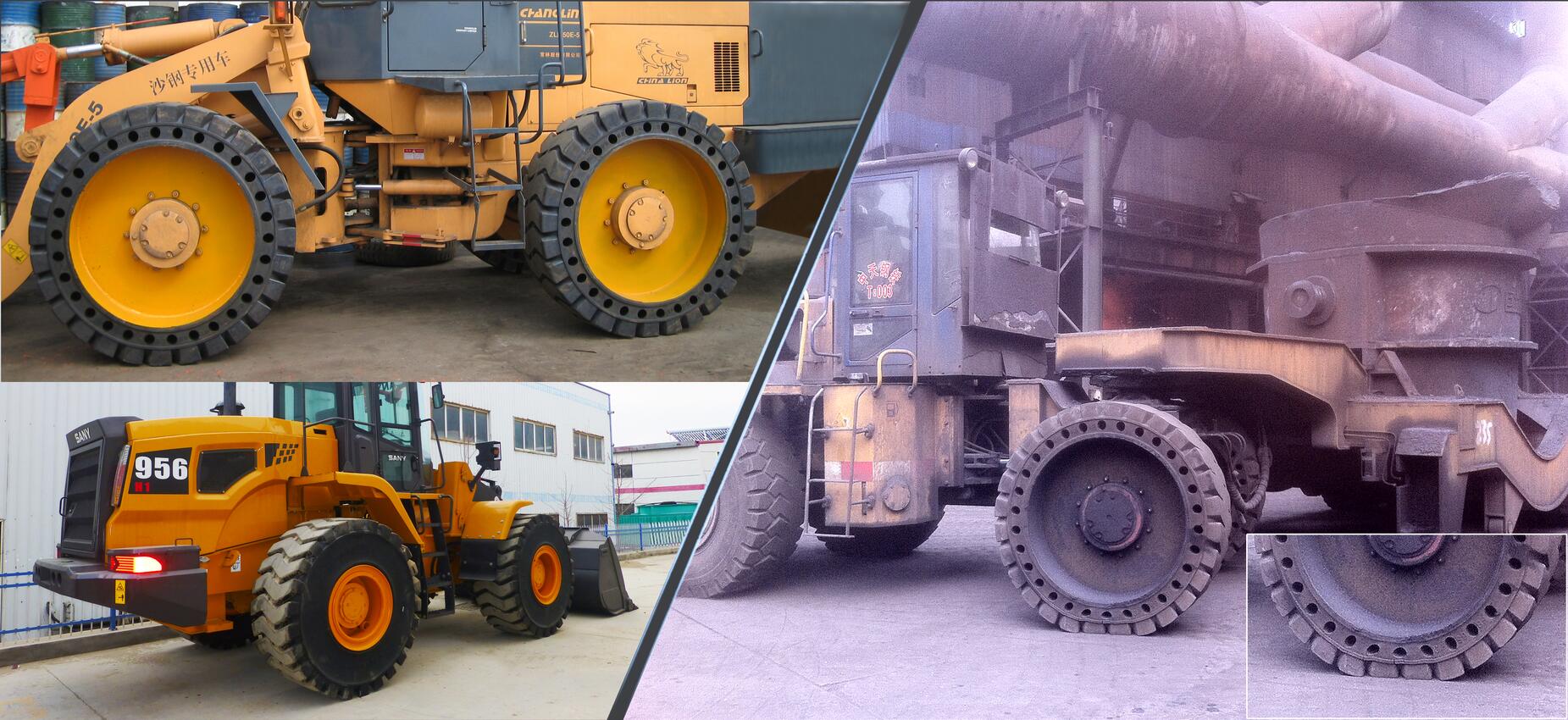
Applications can include forklifts, industrial trailers, tow tractors, mobile platforms, loaders, and custom material-handling equipment. The correct configuration depends on whether the tire is solid pneumatic, press-on, mold-on, polyurethane, or another industrial design. The phrase Tire With Rim Assembly describes the delivery format, not a single universal wheel construction.
Conclusion
The primary value of a Tire With Rim Assembly is not simply faster installation. It is the opportunity to control tire-rim compatibility, mounting condition, geometry, and inspection before the complete wheel is installed on the machine. This reduces the number of variables introduced during a maintenance event and can make replacement more repeatable across a fleet.
WonRay provides industrial tires, rims, and complete wheel configurations for different material-handling and industrial applications. When a Tire With Rim Assembly is required, accurate equipment and wheel measurements allow the tire construction and rim geometry to be matched as one working unit rather than as separate components.
Frequently Asked Questions
What is a Tire With Rim Assembly?
It is a tire supplied together with a compatible rim as a complete wheel unit. Depending on the application, the tire may be solid pneumatic, press-on, mold-on, polyurethane, or another industrial type.
Why can a Tire With Rim Assembly reduce equipment downtime?
It can remove the tire-to-rim mounting step from the maintenance site. A prepared wheel can be installed while the removed assembly is inspected or serviced separately.
Is tire size enough to order a complete wheel?
No. Rim width, offset, hub bore, bolt pattern, mounting-face position, and other dimensions may be required. Equipment model and wheel drawings or measurements should be confirmed.
Does a pre-assembled wheel require inspection before installation?
Yes. The hub, fasteners, mounting faces, clearance, wheel condition, and correct seating should still be checked before the machine returns to service.
Post time: 19-08-2026