
In today’s industrial landscape, sustainability is no longer optional—it is a strategic priority. As companies aim to reduce environmental impact while maintaining operational efficiency, solid tires are emerging as a preferred solution. Known for their durability and low maintenance, solid tires also offer significant environmental benefits that align with global sustainability goals.
This article explores how solid tires contribute to eco-friendly operations, examining their material efficiency, lifecycle advantages, and role in reducing industrial carbon footprints.
Understanding the Structure and Function of Solid Tires
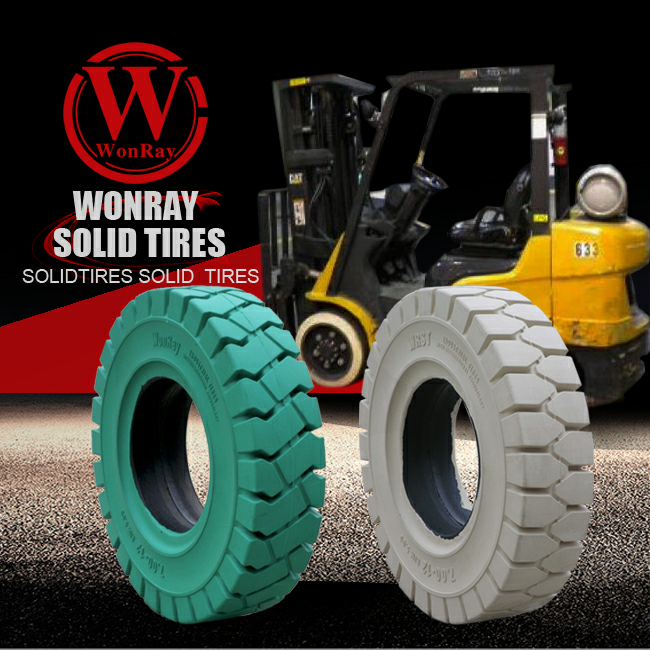
Solid tires differ fundamentally from traditional pneumatic (air-filled) tires. Instead of relying on compressed air, they are constructed from high-density rubber compounds or advanced polymer materials. This structure eliminates the risk of punctures and significantly enhances durability.
From a sustainability perspective, this design reduces dependency on frequent replacements and minimizes material waste. In industrial environments—such as warehouses, ports, and construction sites—where tire damage is common, this advantage becomes even more critical.
Lifecycle Sustainability: From Production to Disposal
One of the most important eco-friendly advantages of solid tires lies in their extended lifecycle. Unlike pneumatic tires that may require multiple replacements within a short period, solid tires can last significantly longer under the same operating conditions.
● Reduced raw material consumption
Longer service life means fewer tires need to be manufactured, directly reducing the consumption of rubber, synthetic materials, and energy.
● Lower manufacturing emissions
Fewer production cycles result in reduced greenhouse gas emissions associated with tire manufacturing processes.
● Minimized disposal waste
With fewer tires reaching end-of-life stages, solid tires contribute to reducing landfill pressure and environmental pollution.
By extending the replacement cycle, businesses can significantly lower their environmental footprint while improving cost efficiency.
Energy Efficiency and Operational Impact
Solid tires also contribute to improved energy efficiency during operation. Their consistent structure ensures stable rolling resistance, which plays a key role in optimizing equipment performance.
● Consistent rolling resistance
Unlike pneumatic tires that may lose efficiency due to underinflation or wear, solid tires maintain stable performance, reducing unnecessary energy consumption.
● Improved equipment efficiency
Forklifts and industrial vehicles equipped with solid tires often experience smoother operation and reduced mechanical strain.
● Lower fuel or energy usage
In diesel or electric equipment, optimized tire performance translates into measurable energy savings over time.
These benefits are particularly important for large-scale logistics operations, where even small efficiency gains can lead to significant environmental and financial impacts.
Maintenance Reduction and Environmental Benefits
Maintenance activities themselves have an environmental cost. From lubricant use to replacement parts and labor, every maintenance cycle contributes to resource consumption.
Solid tires dramatically reduce these requirements:
● No air pressure monitoring or inflation
Eliminates the need for compressors and related energy consumption.
● Reduced repair materials
No need for patches, valves, or sealants commonly used in pneumatic tire maintenance.
● Less operational downtime
Minimizing equipment stoppages reduces energy waste associated with idle machinery.
By simplifying maintenance, solid tires support cleaner and more efficient industrial operations.
Material Innovation and Recycling Potential
Modern solid tire manufacturers are increasingly focusing on sustainable materials and recycling technologies. This trend further enhances the environmental value of solid tires.
● Use of recycled rubber compounds
Incorporating recycled materials reduces dependency on virgin resources.
● Advanced polymer engineering
Improves durability while reducing material waste over time.
● Recyclability at end-of-life
Many solid tires can be processed and reused in other industrial applications, supporting circular economy practices.
These innovations position solid tires as a forward-looking solution in sustainable manufacturing and industrial supply chains.
Comparative Environmental Performance
To better understand the eco-friendly advantages, it is useful to compare solid tires with pneumatic tires:
| Environmental Metric | Pneumatic Tires | Solid Tires |
|---|---|---|
| Service Life | Moderate | Long |
| Replacement Frequency | High | Low |
| Maintenance Impact | High | Minimal |
| Waste Generation | High | Reduced |
| Energy Efficiency | Variable | Stable |
This comparison highlights how solid tires outperform traditional options in key sustainability indicators.
Industry Applications Driving Green Adoption
The shift toward eco-friendly operations is accelerating across multiple industries, and solid tires are playing a key role in this transition.
● Warehousing and logistics
High-frequency operations benefit from reduced downtime and energy savings.
● Port and container handling
Heavy-duty environments demand durable solutions that minimize waste and maintenance.
● Construction and infrastructure
Solid tires withstand harsh conditions while supporting sustainable project goals.
● Manufacturing facilities
Continuous operations require reliable components that reduce environmental impact.
As industries adopt greener practices, solid tires are becoming a standard component in sustainable equipment strategies.
Conclusion
Solid tires offer a compelling combination of durability, efficiency, and environmental responsibility. Their extended lifespan, reduced maintenance requirements, and lower carbon footprint make them an ideal choice for businesses seeking sustainable solutions.
For B2B buyers, investing in solid tires is not only a practical decision but also a strategic move toward greener operations. As environmental regulations tighten and sustainability becomes a competitive advantage, solid tires will continue to play a critical role in modern industrial ecosystems.
FAQ
1. Why are solid tires considered more eco-friendly than pneumatic tires?
Solid tires last longer, require less maintenance, and generate less waste, which reduces overall environmental impact.
2. Can solid tires be recycled?
Yes, many solid tires can be processed and reused in various applications, supporting recycling and circular economy initiatives.
3. Do solid tires improve energy efficiency?
Yes, their stable structure reduces rolling resistance fluctuations, helping equipment operate more efficiently.
4. Are solid tires suitable for all industrial applications?
They are ideal for heavy-duty and high-frequency operations, especially in environments where punctures and maintenance are common challenges.
Post time: 19-03-2026