
Industrial tires are essential to daily material handling, construction, logistics, and manufacturing operations. However, frequent tire replacement creates more than an equipment maintenance expense. It also increases material consumption, generates used tire waste, and may interrupt normal operations. As industrial operators pay more attention to resource efficiency, Sustainable Industrial Tires are becoming an important consideration when selecting equipment tires. Sustainability in this context is not determined by environmental claims alone. Tire service life, resistance to working conditions, maintenance requirements, and end-of-life management all influence the overall impact of a tire throughout its use.
Why Tire Replacement Frequency Matters for Industrial Sustainability
When tires wear out prematurely, these resource demands occur more frequently. A vehicle that repeatedly needs replacement tires may consume considerably more rubber and other materials over time than equipment operating with tires properly matched to its workload.
Frequent replacement can also affect productivity. Maintenance personnel need time to inspect and change tires, while equipment may be unavailable during the process. In operations involving forklifts, loaders, or industrial transport vehicles, repeated downtime can disrupt material movement and scheduling.
This is why Sustainable Industrial Tires should be evaluated over their entire service life rather than by their initial purchase price or environmental description. A tire that lasts longer under suitable operating conditions may reduce material consumption and replacement-related waste. However, longer service life should never be achieved at the expense of safe operation or equipment compatibility.
How Tire Durability Helps Reduce Material Waste
Durability is one of the most direct ways industrial tires can contribute to more responsible resource use. A tire that maintains its intended performance for an appropriate period does not need to be replaced as frequently. This can reduce the demand for new tires and the volume of used tires generated by daily operations.
Rubber compound and material quality
The rubber compound affects resistance to abrasion, deformation, and other forms of wear. Different industrial environments place different demands on tire materials. For example, tires used on smooth warehouse floors may face different wear patterns from those operating on rough outdoor surfaces.
Material selection should therefore match the intended application. A compound designed for one environment may not provide the same performance in another. Choosing a tire based only on general descriptions such as high durability or environmental friendliness can lead to unsuitable results.
Structural consistency
The quality of tire construction also affects long-term performance. Inconsistent materials or manufacturing defects may contribute to uneven wear, deformation, or premature damage. Consistent production and appropriate quality inspections help reduce the likelihood of early replacement caused by product-related problems.
Resistance to actual working conditions
Industrial tires may encounter repeated turning, heavy loads, debris, rough flooring, and frequent acceleration or braking. A tire must be suitable for the forces and surfaces it experiences. Selecting a product that does not match these conditions can shorten its service life, even if the tire is marketed for industrial use.
Why the Right Application Matters More Than General Durability Claims
A durable tire is not necessarily suitable for every industrial vehicle. Sustainability depends partly on matching tire characteristics to the actual equipment and operating environment.
For example, a forklift working indoors may spend much of its time turning in narrow aisles and moving loads over concrete floors. A wheel loader operating outdoors may encounter rougher ground, larger impacts, and different traction requirements. These applications cannot be evaluated using exactly the same tire-selection criteria.
Before choosing Sustainable Industrial Tires, operators should consider the following:
- Equipment and load: Confirm the required tire dimensions, mounting arrangement, load capacity, and compatibility with the vehicle.
- Ground conditions: Consider whether the equipment operates on smooth concrete, uneven flooring, asphalt, or mixed outdoor surfaces.
- Operating pattern: Identify frequent turning, repeated stops, long operating periods, and other activities that influence tire wear.
- Maintenance and replacement history: Review how often existing tires are replaced and whether particular positions repeatedly develop damage.
Extending Tire Life Through Better Operating and Maintenance Practices
Even a well-designed industrial tire can wear prematurely when equipment is overloaded, operated improperly, or used on unsuitable surfaces. Product quality and daily operating practices must work together to support a longer service life. Operators can improve tire utilization through several practical measures.
First, avoid unnecessary wheelspin and sudden braking. These actions create additional friction and stress on the tire surface. Smooth acceleration, controlled deceleration, and appropriate turning speeds help reduce avoidable wear.
Second, keep operating routes in suitable condition wherever possible. Loose debris, sharp objects, uneven flooring, and oil contamination can increase the risk of localized damage or reduced traction. Regularly checking travel paths can help prevent repeated tire problems.
Third, establish a consistent inspection routine. Instead of waiting until visible damage affects equipment operation, operators should monitor wear patterns, cracking, deformation, and unusual changes in handling. Recording inspection results also helps identify recurring problems and determine whether they are related to the tire, vehicle, or working environment.
Finally, investigate the cause of premature wear before replacing a tire. Incorrect alignment, brake problems, uneven loading, and unsuitable operating practices may continue damaging a replacement tire if the underlying issue remains unresolved.
Do Solid Industrial Tires Automatically Offer a More Sustainable Choice?
Solid tires are used in many industrial applications because their construction eliminates the risk of air-pressure loss caused by punctures. This can be useful in environments where sharp debris, metal fragments, or rough surfaces make pneumatic tires more vulnerable to puncture-related interruptions.
However, solid tires should not automatically be considered more sustainable in every application. Their overall suitability depends on equipment requirements, operating conditions, tire construction, service life, and end-of-life handling.
For example, solid tires may be appropriate for certain forklifts and industrial vehicles operating at suitable speeds and loads. In other applications, pneumatic tires may provide advantages related to cushioning or ground conditions. Selecting the wrong tire type can lead to poor performance, premature replacement, or additional equipment stress.
A responsible evaluation of Sustainable Industrial Tires should therefore consider the complete operating cycle. The goal is to choose a tire that performs reliably in its intended environment, uses materials effectively, and does not create avoidable replacement demand.
What Happens When Industrial Tires Reach the End of Their Service Life?
Reducing tire waste does not stop at extending service life. Used tires also require appropriate handling when they can no longer operate safely.
Depending on local regulations and available facilities, end-of-life tires may be collected for material recovery, recycling, or other approved treatment processes. Some used tire materials can be processed for applications such as rubber-derived products or other secondary uses. Actual recovery options depend on tire composition, condition, local infrastructure, and applicable regulations.
Operators should avoid assuming that every industrial tire can be recycled through the same process. Different rubber compounds and tire constructions may require different handling methods. Working with qualified waste management providers can help ensure that used tires are handled responsibly.
Keeping records of tire purchases, service periods, replacements, and disposal arrangements can also help businesses understand their material consumption. Over time, these records may reveal which equipment or operating areas generate the most tire waste and where improvements are possible.
Choosing Sustainable Industrial Tires for Long-Term Operations
When comparing industrial tire options, buyers should look beyond the initial price and general durability claims. A useful evaluation should consider the relationship between product quality, expected working conditions, replacement frequency, and maintenance requirements.
It is also important to ask manufacturers about application suitability, available tire constructions, material characteristics, and quality control procedures. Clear product information makes it easier to compare options and avoid selecting a tire that is unsuitable for the intended equipment.
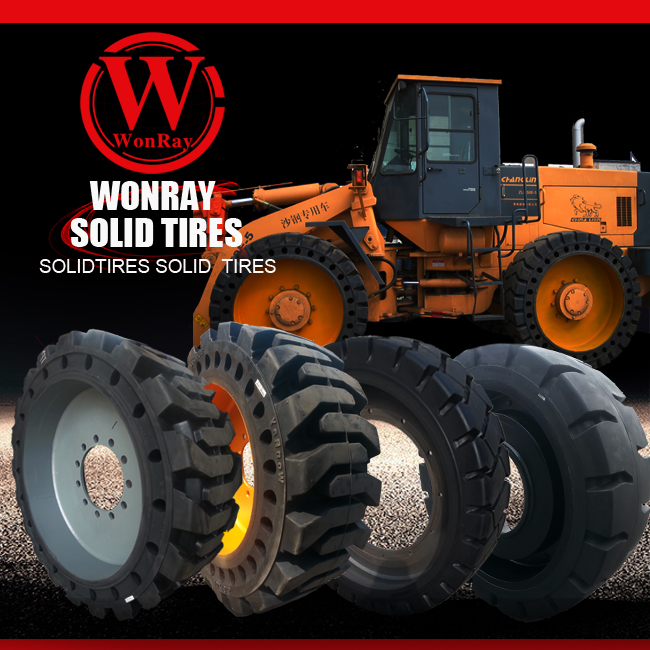
WonRay offers solid tire solutions for industrial applications, including forklifts and other material-handling equipment. When evaluating suitable options, operators can consider the vehicle type, load requirements, floor conditions, and daily work cycle to identify tires that match their operating needs. Choosing the right product is an important step toward improving tire utilization and reducing unnecessary replacement.
Conclusion
Sustainable Industrial Tires are not defined by one environmental feature. Their contribution to more responsible industrial operations depends on durability, application compatibility, maintenance, material use, and end-of-life management. By selecting suitable tires, preventing premature wear, and managing used tires properly, operators can reduce unnecessary waste while supporting reliable equipment performance.
FAQs
1. How can industrial tires help reduce environmental impact?
Tires with suitable service life can reduce replacement frequency, material consumption, and the volume of used tires generated during operation.
2. Are solid tires suitable for all industrial applications?
No. Their suitability depends on equipment design, load, speed, ground conditions, and operating requirements.
3. Can regular maintenance make industrial tires last longer?
Yes. Routine inspections, proper loading, suitable driving practices, and timely correction of equipment problems can help prevent premature tire wear.
4. What should businesses do with used industrial tires?
Used tires should be handled according to local regulations and available recycling or recovery programs. Qualified waste management providers can help determine appropriate disposal methods.
Post time: 16-11-2026