
Scissor lift platforms are widely used in construction, warehousing, maintenance, and industrial facilities where safe and stable elevated access is required. While the lifting mechanism often receives the most attention, the performance of the equipment ultimately depends on what touches the ground. Choosing the right solid tyre for scissor lift platform directly affects stability, safety, maintenance frequency, and total operating costs.
For fleet managers and equipment suppliers, solid tyres have become the preferred solution due to their durability, puncture resistance, and consistent performance in demanding environments.
Why Tire Selection Matters for Scissor Lift Platforms
Unlike forklifts or transport vehicles, scissor lifts operate vertically and require a high level of balance and stability. Even minor tire issues such as air loss, deformation, or uneven wear can create safety risks, especially when operators are working at height.
Pneumatic tires may offer cushioning, but they introduce vulnerabilities like punctures, pressure fluctuations, and downtime. Solid tyres eliminate these risks by providing a stable and maintenance-free foundation, which is particularly valuable in professional B2B operations where reliability is critical.
In many industrial settings, tire-related failures are one of the most common causes of unexpected equipment downtime. Upgrading to solid tyres significantly reduces these interruptions.
What Is a Solid Tyre for Scissor Lift Platform
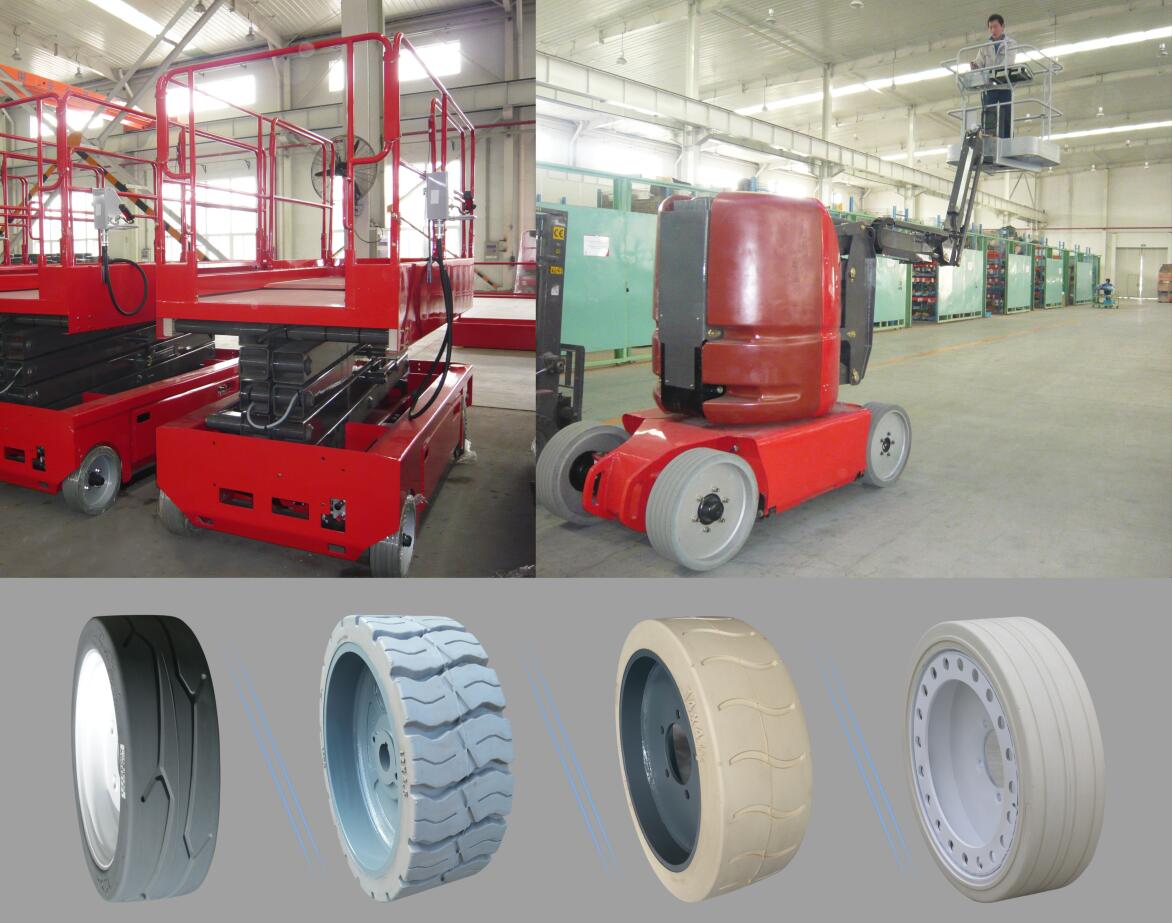
A solid tyre for scissor lift platforms is a non-pneumatic tire manufactured from high-density rubber or polyurethane compounds. Instead of relying on air pressure, it maintains its shape and load-bearing ability through its solid construction.
This design ensures consistent performance regardless of working hours, terrain conditions, or environmental exposure. Solid tyres are commonly used on both indoor electric scissor lifts and outdoor rough-terrain platforms.
Core Performance Advantages
For B2B operators managing multiple lifts, the benefits of solid tyres go beyond basic durability. They influence safety compliance, maintenance planning, and overall equipment efficiency.
● Puncture-Proof Structure – No flats or air leaks, eliminating sudden failures and downtime
● Higher Load Stability – Maintains firm contact with the ground, improving balance at height
● Long Service Life – Slower wear compared to pneumatic alternatives
● Low Maintenance – No inflation checks, pressure adjustments, or frequent repairs
● Consistent Performance – Reliable operation across temperature changes and heavy-duty cycles
● Improved Safety – Reduced risk of tilting or instability during lifting operations
These characteristics make solid tyres particularly suitable for continuous-use industrial fleets.
Typical Working Environments
Scissor lifts are deployed across various professional environments where ground conditions differ significantly. Solid tyres provide the versatility needed to handle these challenges.
● Indoor warehouses and logistics centers with smooth concrete floors
● Manufacturing plants with oil, debris, or chemical exposure
● Construction sites with gravel, dust, or uneven surfaces
● Shopping malls, airports, and commercial facilities requiring non-marking tires
● Outdoor maintenance areas with mixed terrain
Because solid tyres resist cuts and abrasions, they perform reliably even in areas where sharp debris would quickly damage pneumatic tires.
Impact on Safety and Compliance
Safety is a top priority for companies operating aerial work platforms. Tire performance directly affects the stability of elevated equipment, which in turn impacts operator protection and regulatory compliance.
Solid tyres help improve safety in several ways. First, their rigid structure reduces sidewall flex, keeping the platform steady during lifting and lowering. Second, consistent ground contact minimizes vibration and swaying. Third, the absence of air pressure eliminates sudden blowouts that could lead to accidents.
For companies following OSHA or international safety standards, installing high-quality solid tyres is often considered part of a preventative safety strategy.
Cost Considerations and Total Cost of Ownership
Although solid tyres may have a higher upfront purchase price, they often deliver lower total ownership costs over time. For B2B buyers, this long-term perspective is more relevant than the initial expense.
Factors contributing to cost savings include:
● Fewer replacements due to longer lifespan
● Reduced labor for tire maintenance
● Less downtime from punctures or failures
● Lower risk of equipment damage caused by unstable tires
● Increased machine availability and productivity
When measured across a fleet of multiple scissor lifts, these savings can be substantial.
Design Options and Technical Features
Modern solid tyre technology has evolved to meet diverse industrial requirements. Manufacturers now offer various constructions to match different platform sizes and operating conditions.
● Non-marking compounds for clean indoor floors
● Anti-static materials for electronics and sensitive environments
● Cushion or resilient designs for enhanced shock absorption
● Steel band or press-on structures for secure installation
● Wear-resistant tread patterns for longer service intervals
These options allow fleet managers to tailor tire specifications precisely to their operational needs.
Installation and Maintenance Practices
One advantage of solid tyres is simplified maintenance. However, proper installation and inspection remain important to maximize performance.
Correct fitting ensures even load distribution and prevents premature wear. Routine checks should focus on tread wear, surface damage, and alignment rather than air pressure. Because solid tyres do not deflate, maintenance schedules become more predictable and easier to manage.
This predictability is especially beneficial for large operations that rely on planned maintenance rather than reactive repairs.
Future Trends in Solid Tyre Technology
The industrial tire market continues to innovate. Solid tyres are increasingly integrated with advanced materials and smart technologies to enhance performance.
Emerging developments include:
● Smart wear indicators for predictive replacement
● Eco-friendly rubber compounds
● Lighter-weight structures for energy-efficient electric lifts
● Enhanced vibration reduction for operator comfort
● Improved recycling processes for sustainability
These advancements support the growing demand for safer, more efficient, and environmentally responsible equipment solutions.
Conclusion
Selecting the right solid tyre for scissor lift platform is a strategic decision that directly influences equipment reliability, operator safety, and long-term operating costs. Solid tyres offer puncture resistance, stability, and minimal maintenance, making them ideal for warehouses, factories, construction sites, and commercial facilities.
For B2B fleet operators, the advantages are clear: fewer breakdowns, longer service life, improved safety, and greater productivity. Investing in high-quality solid tyres ensures that scissor lift platforms remain dependable assets in demanding industrial environments.
FAQ
Q1: Why are solid tyres better than pneumatic tires for scissor lifts?
Solid tyres eliminate punctures and air pressure issues, providing greater stability and reducing maintenance needs.
Q2: Are solid tyres suitable for both indoor and outdoor use?
Yes. Different compounds and tread designs allow them to perform well on smooth indoor floors and rough outdoor terrain.
Q3: How long do solid tyres typically last on scissor lifts?
They generally last significantly longer than pneumatic tires due to their wear-resistant construction and puncture-proof design.
Q4: Do solid tyres require special maintenance?
No air checks are required. Only routine inspections for wear and damage are needed, making maintenance simpler and more predictable.
Post time: 06-02-2026