
Solid tyres play a critical role in ensuring the efficiency and safety of scissor lift platforms. Choosing the right Solid Tyre for Scissor Lift Platform is just the first step; proper maintenance is equally essential. In this article, we will explore practical maintenance strategies that can significantly extend the lifespan of your solid tyres while keeping your equipment running smoothly.
Understanding Solid Tyres for Scissor Lift Platforms
A Solid Tyre for Scissor Lift Platform is made entirely of solid rubber, unlike pneumatic tyres that contain air. This design provides enhanced durability, puncture resistance, and the ability to handle heavy loads without the risk of deflation. These tyres are widely used in industrial settings, construction sites, and warehouses where scissor lifts operate on rough or uneven surfaces.
Solid tyres are particularly suitable for scissor lift platforms due to:
● Their ability to support heavy machinery without deformation.
● Minimal downtime caused by punctures or blowouts.
● Consistent performance in various indoor and outdoor applications.
Understanding the characteristics and proper maintenance of these tyres is crucial for extending their operational life.
Why Maintenance Matters for Solid Tyres
Even though solid tyres are highly durable, neglecting maintenance can lead to:
● Premature wear and reduced traction.
● Increased operational costs due to frequent replacements.
● Compromised safety for operators and personnel.
By implementing a structured maintenance routine, you can protect your investment, improve safety, and ensure that your scissor lift platform performs efficiently over time.
Maintenance Tips and Tricks for Solid Tyres
Regular Inspections
Frequent inspections are vital to identify potential issues before they escalate. Inspect your Solid Tyre for Scissor Lift Platform for:
● Cuts, cracks, or punctures in the rubber surface.
● Uneven wear patterns that may indicate misalignment or overload.
● Bulges or deformities caused by excessive pressure or improper mounting.
Detecting and addressing these problems early can prevent costly downtime and ensure optimal performance.
Cleaning
Keeping tyres clean helps maintain their flexibility and durability. For scissor lift platforms:
● Wash tyres regularly with mild soap and water to remove dust, grease, and debris.
● Avoid harsh chemicals or solvents that can degrade rubber compounds.
● Ensure tyres are dry before use to prevent slippage and maintain traction.
A clean tyre not only performs better but also helps in identifying hidden damages during inspections.
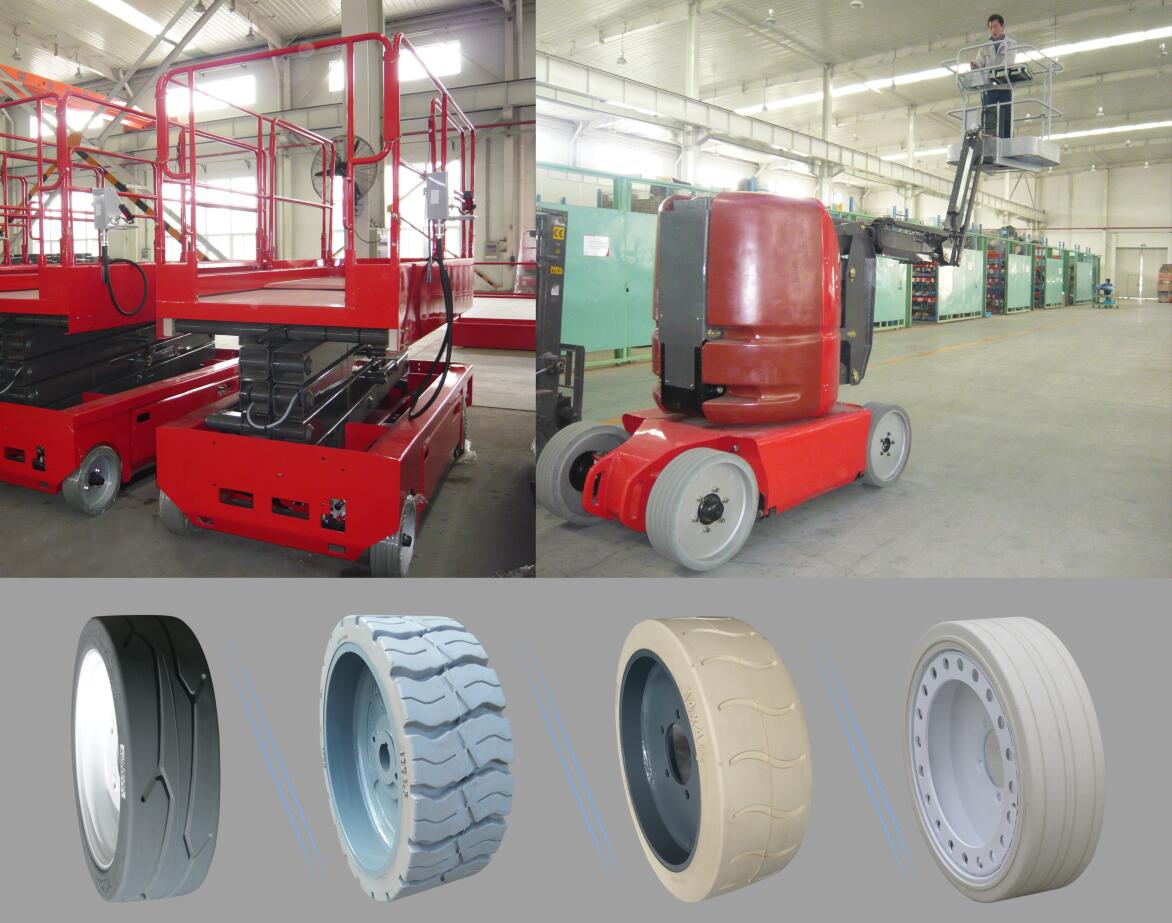
Rotating Tyres
Although solid tyres wear more evenly than pneumatic tyres, scissor lift platforms often exert uneven loads depending on usage patterns. Periodic rotation can help:
● Distribute wear more evenly across all tyres.
● Extend the overall lifespan of your tyre set.
● Reduce the risk of uneven traction or instability during lift operations.
Follow the manufacturer’s guidelines for rotation schedules specific to your lift platform model.
Proper Mounting and Alignment
Unlike pneumatic tyres, solid tyres do not require air inflation, but mounting and alignment are still critical:
● Ensure tyres are properly seated on the rim to avoid wobbling.
● Confirm alignment to prevent side wear or uneven pressure on specific tyre areas.
● Replace tyres that cannot be mounted correctly, as improper mounting can reduce lifespan and compromise safety.
Proper mounting ensures that your scissor lift operates smoothly and safely while maximizing tyre durability.
Load Management
Solid tyres are designed to handle heavy loads, but exceeding recommended limits can accelerate wear:
● Always adhere to the load capacity specified by the tyre manufacturer.
● Avoid sudden impacts or overloading, especially when moving on uneven surfaces.
● Monitor operational patterns to identify areas where tyres may experience excessive stress.
Managing load effectively prevents premature tyre failure and reduces maintenance costs.
Sample Maintenance Schedule for Solid Tyres on Scissor Lift Platforms
| Maintenance Task | Recommended Frequency |
|---|---|
| Visual Inspections | Monthly |
| Cleaning | Bi-weekly |
| Tyre Rotation | Every 6 months |
| Proper Mounting & Alignment Check | Quarterly |
| Load Capacity Review | Monthly |
This schedule helps ensure that your Solid Tyre for Scissor Lift Platform remains in optimal condition and performs reliably over time.
Selecting the Right Solid Tyre for Your Scissor Lift Platform
Choosing the right tyre is as important as maintaining it. Consider these factors when selecting a Solid Tyre for Scissor Lift Platform:
● Load capacity: Ensure the tyre can safely support the maximum weight of your lift platform.
● Tread design: Match the tread type to the operating environment—smooth treads for indoor use and deep treads for rough outdoor surfaces.
● Material quality: Opt for tyres made from high-quality rubber compounds for superior durability and puncture resistance.
● Manufacturer reputation: Choose tyres from reliable brands with proven performance in industrial applications.
Investing in high-quality tyres reduces downtime, minimizes replacements, and ensures operator safety.
Conclusion
Maintaining Solid Tyres for Scissor Lift Platforms is essential for operational efficiency, safety, and cost-effectiveness. By performing regular inspections, cleaning, rotating tyres, ensuring proper mounting, and managing load effectively, you can extend the life of your tyres significantly. Coupled with careful selection of high-quality tyres, these maintenance practices help maximize performance and reduce overall operational costs.
FAQ
Q1: How often should I inspect my solid tyres on a scissor lift platform?
A1: Inspections should be conducted at least once a month to identify cuts, cracks, or uneven wear early.
Q2: Can solid tyres be used outdoors on rough surfaces?
A2: Yes, but choose tyres with deeper treads and higher durability ratings suitable for rough terrain.
Q3: Do solid tyres require inflation?
A3: No, solid tyres are airless, but proper mounting and alignment are critical for performance.
Q4: What is the average lifespan of a solid tyre for scissor lift platforms?
A4: Lifespan depends on usage, load, and maintenance, but with proper care, they can last several years in industrial applications.
Post time: 15-01-2026