
Selecting the right tires for your equipment is a crucial decision that directly affects operational efficiency, safety, and cost-effectiveness. The debate between solid tires vs pneumatic tires is common across industries, as each type offers unique advantages and limitations depending on the application and working environment. Making an informed choice ensures that your equipment performs optimally while minimizing downtime and maintenance costs. This article provides a detailed comparison of solid and pneumatic tires to help you select the most suitable option for your needs.
Understanding Solid Tires and Pneumatic Tires
Solid Tires
Solid tires, as the name implies, are constructed entirely from solid rubber and do not contain air chambers. This design makes them highly durable and resistant to punctures, cuts, and other damage caused by debris or rough terrain. Solid tires are commonly used in industrial equipment such as forklifts, scissor lifts, and waste management vehicles where operational reliability and durability are critical.
Key characteristics of solid tires include:
● High puncture resistance – they can withstand sharp debris or harsh surfaces without failure.
● Minimal maintenance requirements – no need to check air pressure or repair flats.
● Long lifespan – suitable for heavy-duty applications where equipment is in continuous use.
Pneumatic Tires
Pneumatic tires, in contrast, are air-filled and designed to provide cushioning and shock absorption. They offer a smoother and more comfortable ride, particularly on uneven or outdoor terrain. However, pneumatic tires are susceptible to punctures and require regular maintenance, including monitoring air pressure, inspecting for leaks, and repairing flats.
Key characteristics of pneumatic tires include:
● Comfortable ride – absorbs shocks and vibrations, reducing operator fatigue.
● Better traction – especially on uneven or soft surfaces such as grass, dirt, or gravel.
● Regular maintenance required – susceptible to punctures and pressure loss.
Comparing Solid Tires and Pneumatic Tires
Choosing between solid and pneumatic tires depends on multiple factors, including durability, maintenance, performance, comfort, cost-effectiveness, and application.
Durability and Maintenance
Durability: Solid tires are highly resistant to wear and tear, making them ideal for heavy-duty industrial applications. They are less likely to experience blowouts or flats, providing consistent performance even under extreme working conditions. Pneumatic tires, while capable of handling heavy loads, are more vulnerable to punctures and require careful monitoring.
Maintenance: Pneumatic tires require frequent maintenance, such as checking air pressure, repairing punctures, and monitoring for uneven wear. Solid tires, however, are virtually maintenance-free, reducing downtime and maintenance costs over the life of the equipment.
Performance and Comfort
Performance: Pneumatic tires excel in shock absorption and traction, providing a smoother and more controlled ride on uneven terrain. They are particularly suitable for outdoor equipment or machinery operating on sensitive surfaces. Solid tires, being firmer, offer less cushioning but provide stability and reliability in environments with rough surfaces, debris, or heavy loads.
Comfort: Operators may find pneumatic tires more comfortable over long periods of use due to their air-cushioning properties. Solid tires are less forgiving, which can lead to a slightly rougher ride, though this is compensated by their stability and resilience.
Cost-effectiveness and Application
Cost-effectiveness: While solid tires have a higher upfront cost, their long lifespan and minimal maintenance requirements often make them more economical in the long term. Pneumatic tires may cost less initially, but frequent repairs, replacements, and downtime can lead to higher overall expenses.
Application: Solid tires are ideal for industrial sectors such as construction, mining, waste management, and warehouses where durability and puncture resistance are crucial. Pneumatic tires are better suited for agriculture, landscaping, and material handling operations where comfort, traction, and smooth operation are essential.
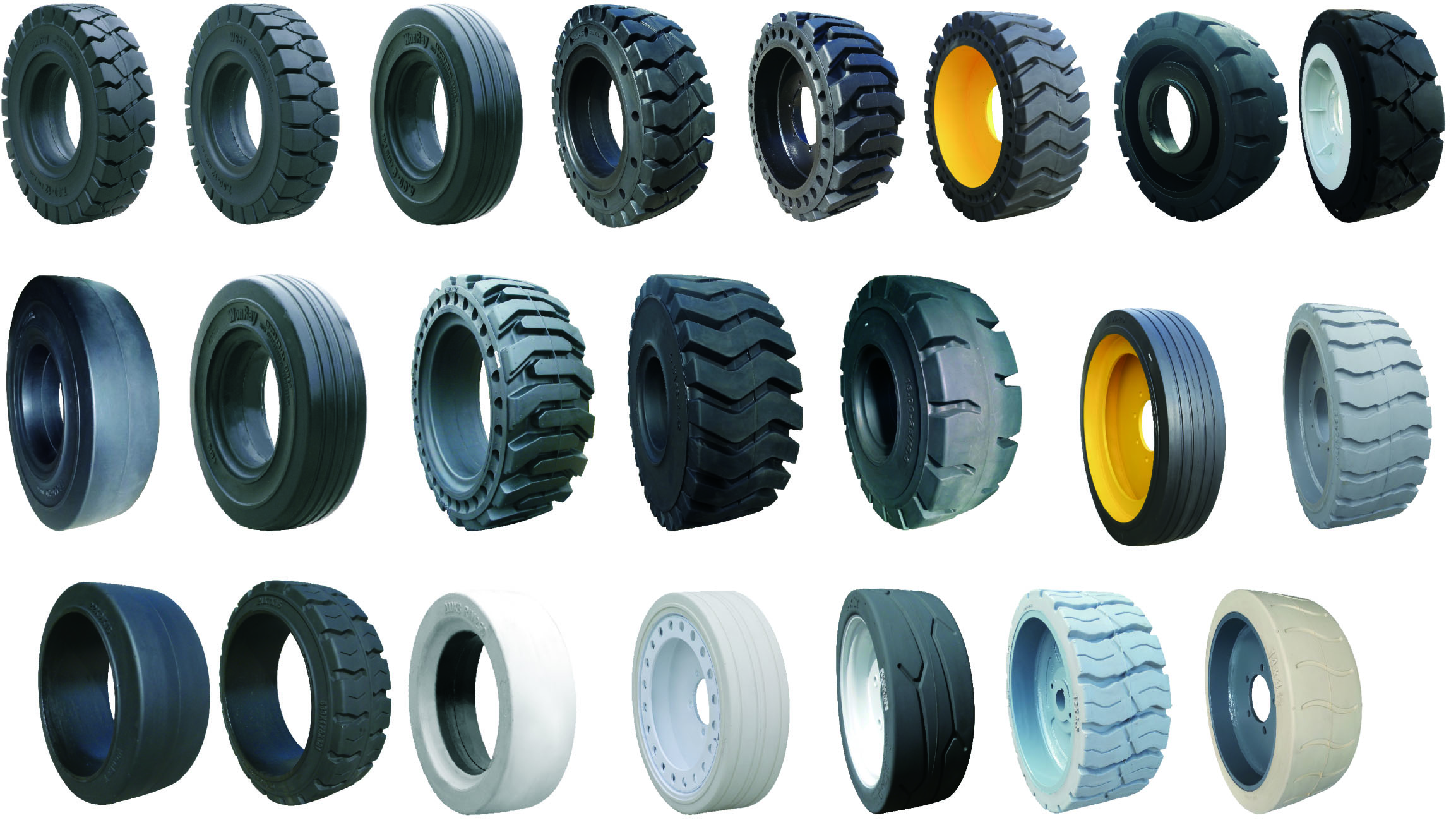
Solid Tires vs Pneumatic Tires: Key Feature Comparison
Below is a sample data comparison highlighting the main differences between solid tires and pneumatic tires:
| Feature | Solid Tires | Pneumatic Tires |
|---|---|---|
| Durability | High – resistant to wear, punctures, and heavy loads | Moderate – prone to flats and punctures |
| Maintenance | Low – virtually maintenance-free | High – requires regular air checks and repairs |
| Performance | Stable and reliable on rough surfaces | Better traction and shock absorption |
| Comfort | Firmer, less cushioning | Smooth, comfortable ride |
| Cost-effectiveness | Long-term savings due to durability | Lower upfront cost, higher long-term expenses |
Considerations When Choosing Tires
When deciding between solid and pneumatic tires for your equipment, consider the following:
● Operating Environment – Is your equipment used indoors on smooth surfaces or outdoors on rough terrain?
● Load Requirements – What is the maximum weight your equipment carries? Heavy-duty operations often benefit from solid tires.
● Maintenance Capacity – Do you have the resources to regularly check and maintain pneumatic tires?
● Comfort Needs – Will operators be using equipment for extended periods? Pneumatic tires may reduce fatigue.
● Budget Constraints – Evaluate both initial investment and long-term costs, including maintenance, replacement, and downtime.
By thoroughly analyzing these factors, businesses can make a well-informed decision that balances performance, cost, and operational efficiency.
Conclusion
In conclusion, the choice between solid tires and pneumatic tires depends largely on your specific equipment needs and operating environment. Solid tires offer superior durability, minimal maintenance, and reliability in heavy-duty or harsh conditions, making them ideal for industrial applications. Pneumatic tires provide better comfort and traction, particularly on uneven or sensitive surfaces, making them suitable for outdoor or light-duty applications.
Ultimately, selecting the right tires ensures equipment longevity, operational efficiency, and safety. Carefully evaluating the operating environment, load requirements, and maintenance capabilities will help you make the best choice. Prioritizing safety, stability, and performance ensures that your operations remain productive and cost-effective over the long term.
FAQ
Q1: Which tire type is better for indoor warehouse forklifts?
A1: Solid tires are generally preferred due to their durability, low maintenance, and stability on smooth surfaces.
Q2: Can pneumatic tires be used outdoors?
A2: Yes, pneumatic tires excel outdoors where cushioning and traction on uneven terrain are needed.
Q3: Are solid tires more cost-effective than pneumatic tires?
A3: Although the upfront cost is higher, solid tires reduce maintenance, replacements, and downtime, offering better long-term savings.
Q4: How often should pneumatic tires be checked?
A4: Pneumatic tires should be inspected regularly for air pressure, punctures, and wear to ensure safe and optimal performance.
Post time: 16-01-2026