
Choosing the right tires for your equipment is crucial for ensuring safety, performance, and cost-efficiency. Solid tires and pneumatic tires are two of the most commonly used types, each with unique advantages and limitations. Making an informed choice between them requires understanding their features, durability, maintenance needs, and suitability for different operating environments. Whether you operate forklifts, telehandlers, wheel loaders, or other industrial machinery, selecting the appropriate tire type can directly impact productivity and equipment longevity.
Understanding Solid Tires
What Are Solid Tires?
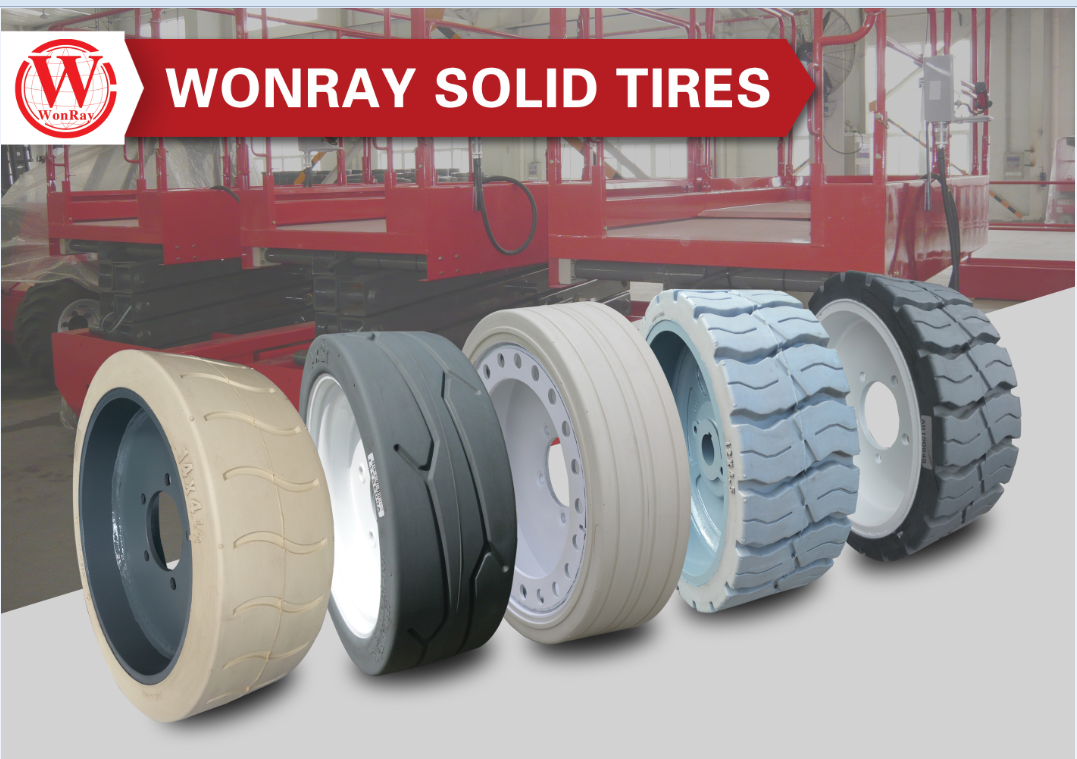
Solid tires are constructed from solid rubber compounds without any air-filled chambers or inner tubes. Their robust design makes them highly resistant to punctures, cuts, and wear. This durability allows them to withstand tough and hazardous working conditions, which is why they are widely used in construction sites, manufacturing plants, recycling facilities, and other industrial environments where reliability and safety are priorities.
Advantages of Solid Tires
● Durability: Solid tires are exceptionally durable and can endure prolonged exposure to heavy loads, rough surfaces, and sharp debris. Unlike pneumatic tires, they do not risk punctures or blowouts, making them a safer and longer-lasting option for equipment operating in challenging environments.
● Low Maintenance: Since solid tires do not require air pressure, operators can eliminate the time and costs associated with regular tire inflation, pressure checks, or repairs due to flats. This makes them ideal for minimizing downtime and reducing operational interruptions.
● Stability: The solid structure of these tires provides enhanced stability, particularly when handling heavy or uneven loads. This stability improves equipment control, reducing the likelihood of tipping or accidents.
● Cost-Effectiveness: While the initial investment in solid tires may be higher, their long lifespan and minimal maintenance requirements make them a cost-effective choice for long-term industrial operations.
● Ideal for Harsh Environments: Solid tires perform well on rough surfaces, gravel, concrete, and other industrial terrains, providing consistent traction and performance regardless of surface conditions.
Applications of Solid Tires
Solid tires are best suited for equipment that operates in high-risk, high-load, or high-wear environments. Examples include:
● Forklifts and telehandlers used in warehouses and construction sites
● Wheel loaders and skid steers operating in mining or recycling facilities
● Industrial machinery working in material handling or heavy manufacturing
By choosing solid tires, operators ensure uninterrupted operations, improved safety, and reliable performance in demanding conditions.
Understanding Pneumatic Tires
What Are Pneumatic Tires?
Pneumatic tires are filled with air, creating a cushioning effect that absorbs shocks and vibrations. These tires are commonly used in vehicles, trucks, and industrial equipment where operator comfort and smooth performance are important. Pneumatic tires provide flexibility and traction, making them suitable for varied terrains and applications that do not involve excessive exposure to puncture risks.
Advantages of Pneumatic Tires
● Comfort: Pneumatic tires offer a softer ride thanks to air-filled chambers that cushion equipment and operators against uneven surfaces. This comfort can be critical during long operating hours.
● Shock Absorption: The air pressure inside pneumatic tires absorbs shocks and reduces vibrations, which protects the machinery’s suspension system and other components from wear and tear.
● Traction: Pneumatic tires provide better traction on softer or uneven surfaces, such as grass, soil, or gravel, where solid tires might slip or provide less grip.
● Versatility: These tires are versatile and can be used across multiple terrains, including both indoor and outdoor environments, making them suitable for lighter-duty applications where puncture risk is low.
Applications of Pneumatic Tires
Pneumatic tires are ideal for:
● Vehicles and forklifts operating on smoother or mixed surfaces
● Light industrial machinery and utility vehicles requiring comfort and traction
● Equipment that frequently travels over long distances or uneven terrains
While they are excellent for comfort and performance, pneumatic tires require careful maintenance to prevent flats and blowouts, especially in hazardous environments.
Comparison: Solid Tires vs Pneumatic Tires
To make the choice easier, consider the following comparison:
| Feature | Solid Tires | Pneumatic Tires |
|---|---|---|
| Durability | High – puncture-proof, wear-resistant | Moderate – prone to flats and cuts |
| Maintenance | Minimal – no air checks required | Moderate – requires regular air pressure checks |
| Stability | High – stable under heavy loads | Moderate – can flex under weight, less stable |
| Comfort | Low – firmer ride | High – air cushioning provides smoother ride |
| Load Capacity | Excellent – supports heavy loads | Moderate – limited by air pressure |
| Cost Over Time | Cost-effective due to long lifespan | May require frequent replacement due to damage |
From this comparison, it is clear that solid tires are ideal for heavy-duty, high-risk operations, while pneumatic tires are better suited for applications where operator comfort, smooth ride, and traction are priorities.
Key Considerations for Selecting Tires
When deciding between solid and pneumatic tires for your equipment, consider the following factors:
● Operating Environment: For rough, hazardous, or debris-filled environments, solid tires are the preferred choice. Pneumatic tires work well in smoother, less risky terrains.
● Load Requirements: Heavier equipment carrying large or uneven loads benefits from solid tires due to their superior load-bearing capabilities.
● Maintenance Capabilities: If reducing downtime and maintenance costs is critical, solid tires are advantageous. Pneumatic tires require more frequent monitoring and maintenance.
● Comfort and Operator Preference: For applications where operator comfort and ride quality are essential, pneumatic tires offer cushioning that solid tires cannot provide.
● Budget and Long-Term Costs: While solid tires may have a higher upfront cost, their longevity and minimal maintenance often offset the initial investment, making them cost-effective in the long run.
Conclusion
Choosing between solid and pneumatic tires depends on your equipment’s operational requirements, terrain, and desired performance characteristics. Solid tires excel in durability, low maintenance, stability, and heavy-duty applications, making them ideal for construction, industrial, and high-risk environments. Pneumatic tires, on the other hand, provide comfort, shock absorption, and traction, suitable for smoother surfaces and applications where operator experience is a priority.
By evaluating the operating environment, load capacity, maintenance requirements, and cost-effectiveness, equipment owners can make informed decisions that optimize performance, productivity, and safety. Investing in the right tire type ensures your equipment operates reliably and efficiently, whether you prioritize durability or comfort.
Product Selection Recommendations
When selecting tires for your equipment, consult with reputable manufacturers and tire specialists. Consider high-quality solid tires for heavy-duty applications where durability, stability, and puncture resistance are critical. For lighter-duty or comfort-focused operations, pneumatic tires are the most suitable option. Proper tire selection will not only improve equipment performance but also enhance safety and reduce operational costs over time.
By prioritizing the right combination of durability, comfort, load capacity, and maintenance requirements, businesses can maximize the efficiency and lifespan of their equipment while minimizing risks and downtime.
Post time: 08-01-2026