
Solid tires are essential components for industrial vehicles, offering durability, reliability, and long-lasting performance. Unlike traditional pneumatic tires, solid tires provide a puncture-proof alternative that can withstand harsh conditions, heavy loads, and continuous industrial operations. In this comprehensive guide, we will explore the benefits of solid tires, their applications across various industries, maintenance best practices, recommend some top products, and answer common questions to help you choose the right tires for your industrial vehicles.
Introduction to Solid Tires
Solid tires, also known as solid resilient tires, are made entirely from solid rubber or rubber compounds reinforced with other durable materials. Unlike conventional air-filled tires, they do not require inflation. This makes them immune to flats, punctures, and sudden deflation, which is particularly advantageous in industrial environments. These tires are commonly found on forklifts, skid steers, pallet jacks, tractors, loaders, and other heavy equipment used in warehouses, construction sites, agriculture, and mining operations.
The key advantage of solid tires lies in their ability to provide consistent performance under challenging conditions. Their robust design ensures stability, reduces downtime, and supports higher productivity, making them a preferred choice for businesses relying on industrial vehicles.
Benefits of Solid Tires
Durability
One of the most significant advantages of solid tires is their durability. Solid tires are designed to withstand heavy loads, rough terrain, and extreme temperatures without suffering damage. Unlike pneumatic tires, which may degrade or puncture under stress, solid tires maintain their integrity, reducing replacement frequency and operational interruptions.
● Long Service Life: Solid tires can last several times longer than standard pneumatic tires under comparable usage conditions.
● Resistance to Abrasion: They are built to endure abrasive surfaces such as concrete, gravel, and construction debris.
● Heat Resistance: Solid tires can withstand high friction heat, which is common in continuous warehouse or industrial operations.
Puncture-Proof
Since solid tires lack air chambers, they are inherently puncture-proof. In environments where sharp nails, metal fragments, or debris are common, this feature is invaluable. It eliminates unexpected downtime due to flats and reduces repair costs significantly.
● Safety Improvement: Operators are less likely to experience accidents due to sudden tire failure.
● Consistent Performance: Solid tires maintain uniform contact with the ground even in challenging conditions, ensuring stability and control.
Low Maintenance
Solid tires require minimal maintenance compared to air-filled tires. There is no need for constant pressure checks or inflation, and they do not experience blowouts. This reduces labor costs and operational downtime, allowing industrial vehicles to remain productive throughout long shifts.
● No Air Loss: Eliminates the need for compressors or air refill stations.
● Reduced Replacement Frequency: Solid tires last longer, reducing inventory and replacement costs.
● Simplified Maintenance Routine: Only routine inspections and cleaning are required to ensure optimal performance.
Applications of Solid Tires
Solid tires are versatile and suitable for various industrial sectors:
● Construction: Used on skid steers, backhoes, loaders, and other machinery for rough terrain and heavy lifting.
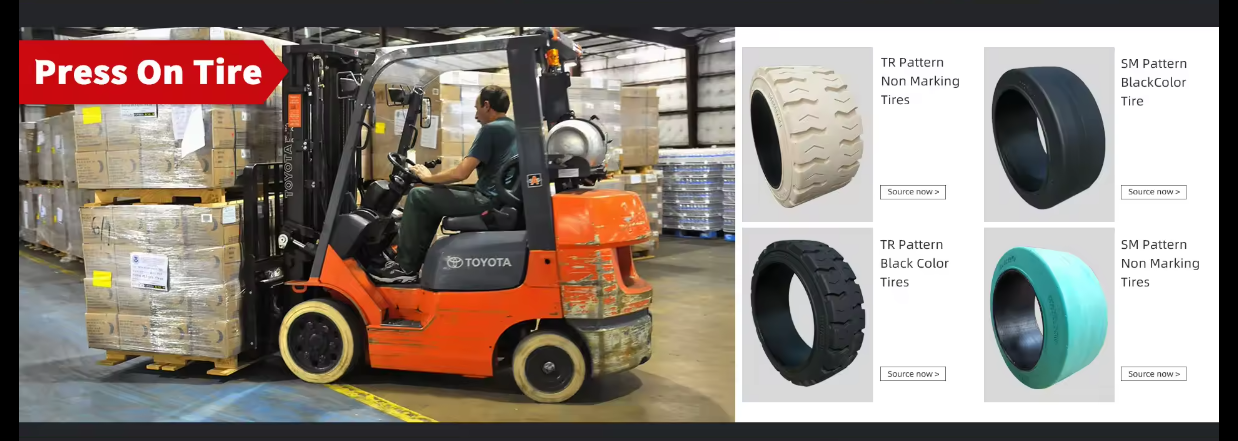
● Warehousing: Ideal for forklifts, pallet jacks, and order pickers operating on concrete or asphalt surfaces.
● Agriculture: Applied to tractors, harvesters, and other farming equipment that operates in soil, mud, or uneven terrain.
● Mining: Suitable for mining trucks, loaders, and equipment working on rocky or abrasive surfaces.
Solid tires can also be customized with different compounds and treads depending on the specific application, further enhancing their suitability across industries.
Maintenance Tips for Solid Tires
Even though solid tires are low-maintenance, proper care ensures maximum performance and lifespan:
-
Regular Inspections: Check tires for signs of wear, cracks, or other damage.
-
Keep Tires Clean: Remove debris that may accumulate in treads or around machinery.
-
Maintain Proper Alignment: Prevents uneven wear and ensures smooth operation.
-
Check for Adjustability: If the vehicle uses adjustable solid tires, ensure proper fit and tension.
-
Periodic Rotation: Rotating tires can help promote even wear across all tires.
Following these simple maintenance steps can prevent premature wear and ensure safety and efficiency in industrial operations.
Solid Tire Comparison
Here is a sample comparison of popular solid tire options for industrial vehicles:
| Brand | Size | Load Capacity | Tread Pattern |
|---|---|---|---|
| Brand A | 28×9-15 | 3,000 lbs | Lug |
| Brand B | 23×10-12 | 2,500 lbs | Smooth |
| Brand C | 36×14-20 | 5,000 lbs | Traction |
This comparison highlights how different brands and sizes cater to varying load requirements and surface conditions. Selecting the right tread pattern ensures maximum grip, safety, and durability for specific industrial tasks.
Conclusion and Product Recommendations
In conclusion, solid tires are a highly reliable choice for industrial vehicles due to their durability, puncture-proof design, and low maintenance requirements. They are particularly effective in challenging work environments such as warehouses, construction sites, farms, and mining operations.
When selecting solid tires, consider:
● Load Capacity: Ensure the tire can safely support the vehicle and payload.
● Tread Pattern: Choose a pattern that matches the surface and terrain.
● Tire Size: Ensure proper fit for your equipment to maintain performance and stability.
Top-quality solid tire brands like Brand A, Brand B, and Brand C offer a wide range of options suitable for various industrial applications. Conduct thorough research, consult providers, and select tires that align with your specific operational requirements.
By investing in durable, puncture-proof solid tires and following proper maintenance practices, industrial operators can enhance safety, operational efficiency, and productivity across their fleets.
FAQ
Q1: What are solid tires?
A1: Solid tires, also known as solid resilient tires, are tires made entirely of solid rubber, designed to withstand heavy loads, rough terrain, and prevent punctures.
Q2: Are solid tires suitable for all industrial vehicles?
A2: Yes, solid tires are commonly used on forklifts, skid steers, pallet jacks, loaders, tractors, and other heavy machinery in construction, warehousing, agriculture, and mining.
Q3: How do solid tires improve safety?
A3: Their puncture-proof design eliminates flats, reduces the risk of sudden tire failure, and ensures stable handling even on rough or debris-laden surfaces.
Q4: What maintenance is required for solid tires?
A4: Maintenance is minimal but includes regular inspections, cleaning debris, ensuring alignment, checking adjustable tires, and periodic rotation to ensure even wear.
Post time: 16-12-2025