
Introduction
In industrial and heavy-duty operations, tire performance directly impacts productivity, safety, and overall operational costs. Solid tires have emerged as a practical solution for machinery operating in high-intensity environments, offering durability, low maintenance, and long-term cost savings. This article explores why solid tires are a smart choice for industrial equipment, highlighting their performance advantages, economic benefits, and contributions to sustainability.
Understanding Solid Tires
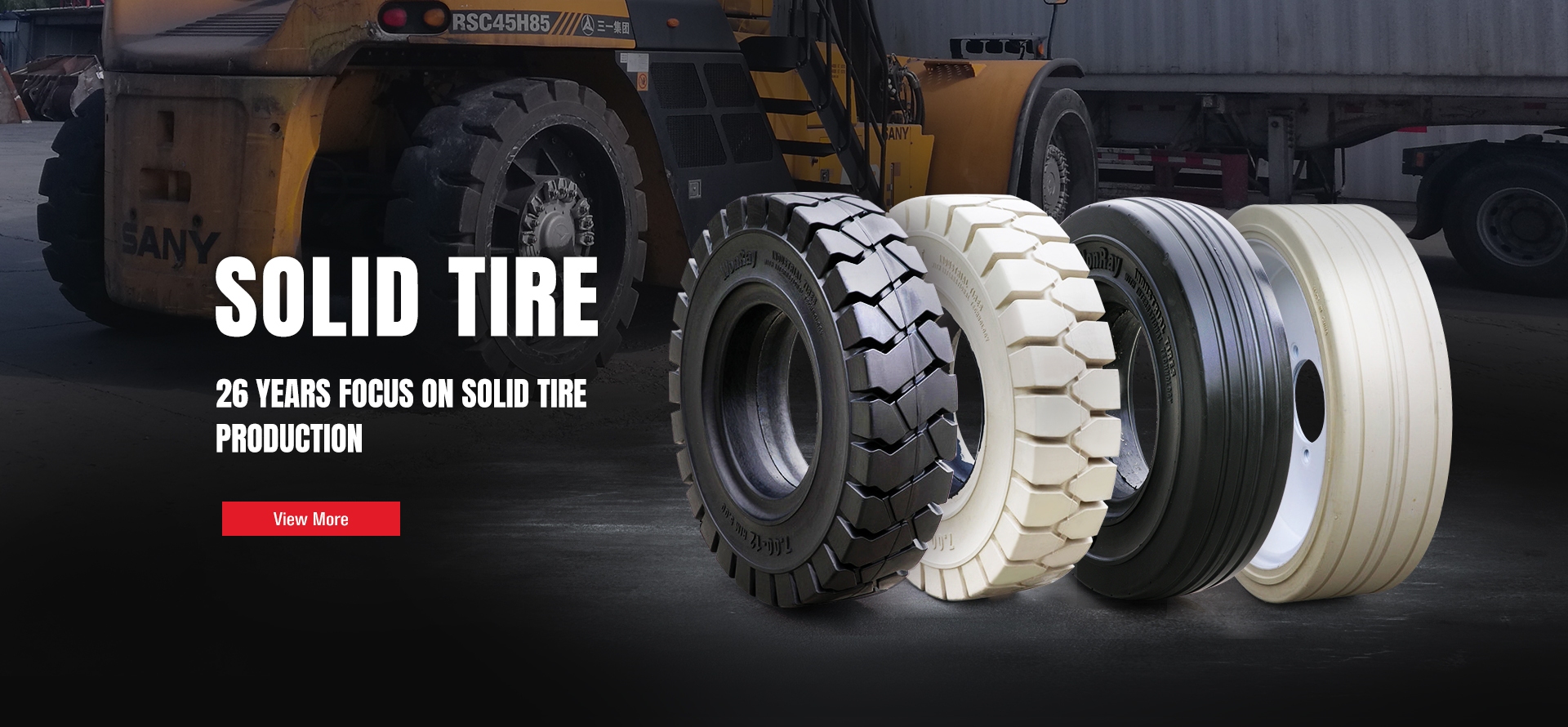
Solid tires are made entirely of high-strength rubber or polyurethane materials and do not require air inflation. Unlike pneumatic tires, they are immune to punctures, blowouts, or air leaks, providing consistent performance across various industrial applications. Their robust construction allows them to withstand heavy loads, rough surfaces, and extended periods of continuous use.
Key features of solid tires include:
● High structural integrity – Solid tires maintain their shape under heavy loads, ensuring stable contact with the ground and improved equipment stability.
● Wear and tear resistance – Dense rubber compounds resist cuts, abrasions, and impacts, reducing replacement frequency.
● Wide compatibility – Available in various sizes and tread designs, solid tires suit forklifts, scissor lifts, baggage trailers, and other industrial vehicles.
Performance Advantages
Solid tires offer performance benefits that directly affect efficiency and safety:
● Enhanced load-bearing capacity – Their solid construction allows equipment to carry heavier loads without compromising stability or performance.
● Consistent traction – Solid tires provide reliable traction on both smooth and moderately rough surfaces, ensuring safe operation.
● Reduced operational interruptions – Puncture-proof design eliminates downtime caused by flats or blowouts, improving productivity.
● Improved safety – Stability and resistance to sudden tire failures reduce operational risks, creating a safer working environment.
Economic Benefits
Although the initial cost of solid tires may be higher than pneumatic tires, their long-term financial advantages are significant:
● Lower maintenance costs – No need for air pressure checks or frequent repairs, reducing labor and material expenses.
● Extended lifespan – Solid tires last several times longer than pneumatic tires in heavy-duty applications, reducing replacement frequency and costs.
● Minimized downtime – Reliable performance ensures continuous operation, increasing overall productivity and lowering indirect costs.
● Fleet cost efficiency – For companies managing multiple industrial vehicles, fewer replacements and maintenance translate to significant overall savings.
Sustainability Considerations
In addition to performance and economic advantages, solid tires support environmental sustainability:
● Reduced waste – Longer lifespan results in fewer discarded tires, lowering industrial waste.
● Lower energy consumption in production – Durable tires reduce replacement frequency, indirectly saving energy and materials.
● Eco-friendly materials – Many modern solid tires are made from environmentally-conscious rubber compounds, minimizing environmental impact without compromising performance.
Adopting solid tires supports sustainability goals while maintaining industrial efficiency, aligning with modern corporate environmental practices.
Selecting the Right Solid Tires
Choosing the right solid tire requires consideration of several key factors:
● Vehicle type – Ensure tire size, load rating, and tread design match the specific industrial vehicle, whether it’s a forklift, scissor lift, baggage trailer, or construction machinery.
● Operating environment – Consider surface conditions, debris levels, and temperature extremes that may affect tire performance.
● Load requirements – Match the tire’s load-bearing capacity to the maximum weight of the equipment and cargo.
● Budget and ROI – Evaluate initial costs against long-term savings in maintenance, replacements, and downtime.
Consulting with experienced tire suppliers can help companies identify the optimal solid tire solution for their specific industrial applications.
Conclusion
Solid tires offer a reliable, cost-effective, and sustainable solution for industrial equipment operating in demanding environments. Their puncture-resistant design, long lifespan, and low maintenance requirements make them ideal for maximizing productivity and safety.
Moreover, solid tires contribute to sustainability by reducing tire waste and promoting responsible resource use. Investing in high-quality solid tires is a strategic decision that enhances operational efficiency, minimizes unexpected downtime, and ensures long-term value. By carefully evaluating vehicle type, load requirements, and operating conditions, businesses can select the most suitable solid tires for optimal performance and long-term benefits.
FAQ
Q1: What types of industrial vehicles are solid tires suitable for?
A1: Solid tires are widely used on forklifts, scissor lifts, baggage trailers, warehouse transport vehicles, and construction equipment. They are especially suitable for vehicles operating in heavy-duty and high-intensity environments.
Q2: What are the advantages of solid tires over pneumatic tires?
A2: Solid tires are puncture-resistant, wear-resistant, low-maintenance, and long-lasting. They provide stability under heavy loads, whereas pneumatic tires offer more comfort but are prone to punctures and air pressure issues.
Q3: How long do solid tires typically last?
A3: Solid tires usually last 2–5 times longer than pneumatic tires, depending on the operating environment, load, and surface conditions.
Q4: Do solid tires increase fuel consumption?
A4: Solid tires are generally heavier than pneumatic tires, which may slightly affect fuel efficiency. However, the reduction in downtime and maintenance often offsets this, improving overall operational efficiency.
Q5: Are solid tires environmentally friendly?
A5: Yes. Solid tires have a longer lifespan, reducing discarded tires. Many modern solid tires are made with eco-friendly rubber compounds, minimizing environmental impact while maintaining performance.
Post time: 23-01-2026