
Solid tires for scrap yards operate under demanding conditions. Forklifts and material-handling vehicles often move heavy loads across uneven surfaces, navigate around piles of scrap, and stop repeatedly during short work cycles. Although solid tires resist punctures, their performance and service life are still affected by driving forces, heat buildup, surface conditions, and operating habits.
How Acceleration and Braking Create Stress Inside Solid Tires
- Acceleration and drive torque: When a loaded forklift accelerates, its drive wheels transfer torque to the ground through the tire contact patch. The rubber deforms as it generates traction and then recovers its shape as the wheel rotates. Frequent acceleration increases the number of deformation cycles and the energy converted into heat. Sharp acceleration on loose metal fragments or dusty concrete can also cause wheelspin, creating additional friction and localized wear without improving vehicle movement.
- Braking and load transfer: During deceleration, the vehicle’s load shifts toward the front axle, changing the forces acting on the front and rear tires. Abrupt braking requires the tires to generate greater grip over a short period. If the operator brakes while turning, the tires must also resist lateral forces, increasing the complexity of the stress applied to the contact patch. Repeating these actions throughout a shift can contribute to uneven wear and heat accumulation.
- Surface contact and impact: Scrap yards rarely provide uniform driving surfaces. Sharp metal fragments, loose debris, rough concrete, moisture, and oil contamination can affect traction and expose tires to localized impacts or abrasion. Solid construction prevents puncture-related air loss, but it cannot eliminate surface damage, impact stress, or reduced grip on slippery ground.
The combined effect matters more than any single event. A tire may tolerate occasional hard braking, but frequent high-force movements under heavy loads can gradually increase wear and thermal stress. Evaluating the vehicle’s work cycle alongside the tire’s physical condition provides a more useful picture of its operating demands.
Why Heat Accumulation Matters During Repeated Work Cycles
Heat is an important link between repeated acceleration, braking, and long-term tire deterioration. Every cycle of rubber deformation consumes energy, and some of that energy becomes heat. Friction caused by wheelspin, hard braking, and contact with rough surfaces adds to the thermal load.
A tire may tolerate occasional high-force events without obvious damage, but repeated cycles can create a different outcome. If heat is generated faster than it can dissipate, the tire’s internal temperature may rise during continuous operation. The effect depends on the tire’s construction, rubber compound, load, speed, ambient temperature, and the length of each working cycle. A tire used for short movements with frequent stops may therefore face a different thermal demand from one operating at a steady speed over a longer distance. Excessive heat can accelerate rubber aging and may contribute to cracking, deterioration, or separation within the tire structure. These symptoms should not automatically be attributed to driving behavior alone. Incorrect fitment, overloading, brake problems, wheel misalignment, and unsuitable tire specifications can produce similar signs or make the effects of repeated braking more severe.
Temperature should therefore be assessed alongside physical condition and operating history. A tire that becomes noticeably hotter than comparable tires under similar conditions deserves inspection, especially when the change is accompanied by unusual odor, visible cracking, deformation, or changes in vehicle handling.
How to Identify Wear Patterns and Their Possible Causes
Tire wear is more useful as a diagnostic signal than as a simple indication of remaining service life. In a scrap yard, the location and appearance of damage can help narrow down possible causes, although no single wear pattern proves a specific fault.
For example, localized tread wear may indicate wheelspin, repeated turning, or frequent contact with abrasive material. Uneven wear across the tire can be associated with alignment problems, uneven loading, incorrect installation, or differences in the forces experienced by each wheel. Cracks, rubber separation, or abnormal deformation require prompt attention because they may indicate damage beyond ordinary surface wear.
- Examine the wear location: Check whether wear is concentrated on the drive tires, steering tires, one side of a tire, or a specific contact area. Compare tires operating under similar conditions.
- Review the operating pattern: Record frequent wheelspin, sudden stops, tight turns under load, long operating periods, and routes with poor surface conditions.
- Check related equipment: Inspect wheel alignment, mounting condition, braking performance, load distribution, and any signs of impact damage.
- Track changes over time: Photos and routine inspection records help distinguish gradual wear from rapid deterioration and make recurring problems easier to investigate.
This approach prevents premature replacement when the underlying cause is a correctable equipment or operating issue. It also reduces the risk of continuing to use a tire whose condition requires immediate assessment.
Operating Practices That Help Reduce Unnecessary Tire Wear
Tire life depends not only on construction but also on how consistently the vehicle is operated. In scrap handling, small changes in driving behavior can reduce unnecessary forces without slowing work excessively. Smooth acceleration allows traction to develop progressively, while controlled braking reduces abrupt load transfer. Operators should avoid spinning the drive wheels to overcome obstacles and should reduce speed before turning, particularly when carrying heavy or unstable loads.
Ground conditions also deserve attention. Removing loose metal fragments where practical, keeping travel routes as even as possible, and addressing slippery areas can improve traction and reduce unpredictable tire loading. Loads should remain within the vehicle’s rated capacity and be handled in accordance with operating procedures. Overloading increases tire stress and may raise heat generation even when the vehicle travels at a modest speed. Maintenance checks should include more than visible tread wear. Confirm that the tire is correctly matched to the vehicle and rim, and investigate recurring differences in wear or temperature. If the same tire position repeatedly develops damage, replacing the tire without checking alignment, braking, loading, or route conditions may simply reproduce the problem.
Matching Solid Tires to Scrap Yard Working Conditions
Choosing solid tires for scrap yards requires more than confirming the correct size. The tire must suit the vehicle, load, operating speed, surface, and work cycle. A forklift that repeatedly accelerates and brakes under heavy loads may place different demands on its tires from a loader moving material over a broader area. Tire construction, tread pattern, and rubber compound can influence traction, wear resistance, deformation, and heat behavior.
The actual operating environment should guide the selection. Consider whether the vehicle spends most of its time on concrete, rough ground, or mixed surfaces; whether it frequently turns under load; and whether the work involves short stop-start movements or longer travel periods. Load and speed ratings must also be compatible with the equipment’s requirements. A tire designed for one operating condition should not be assumed suitable for every scrap-handling application simply because its dimensions fit.
Exploring Solid Tire Options for Scrap Handling
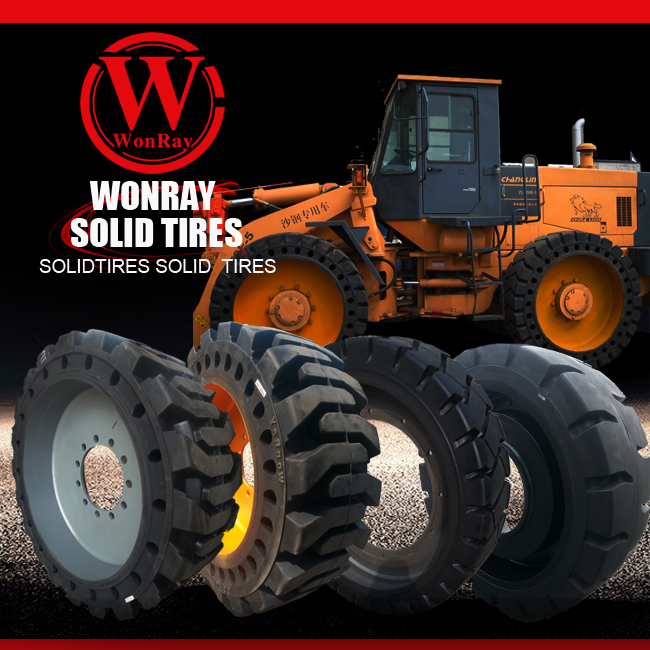
When evaluating solid tires for demanding industrial environments, it is useful to compare options according to the equipment type and actual working conditions rather than relying on general descriptions alone. WonRay provides solid tire options for industrial applications, including forklift and wheel-loader use. Reviewing suitable product categories and confirming compatibility with the vehicle, load, speed, and surface conditions can help narrow the choices. The final selection should be based on the operating requirements and relevant technical specifications, with attention to both durability and day-to-day handling demands.
Conclusion
Repeated acceleration and braking affect solid tires for scrap yards through traction forces, changing axle loads, cyclic deformation, and heat buildup. These effects become more significant when heavy loads, rough surfaces, wheelspin, and frequent turning occur together. Monitoring wear patterns, checking related vehicle systems, improving driving practices, and selecting tires suited to the application can help reduce unnecessary deterioration and support safer, more consistent material handling.
FAQ
1. Do frequent acceleration and braking shorten solid tire service life?
They can. Repeated high-force cycles increase deformation, friction, and heat, particularly when operators accelerate sharply, brake abruptly, or turn under heavy loads. The actual effect depends on tire design, vehicle loading, surface conditions, and operating habits.
2. Why do solid tires become hot during scrap yard operations?
Heat can result from repeated rubber deformation, wheelspin, braking forces, excessive loads, high operating speeds, or prolonged use. If a tire becomes unusually hot or shows cracking, deformation, or other damage, the vehicle should be inspected according to applicable safety procedures.
3. Can solid tires prevent skidding on scrap yard surfaces?
No. Solid tires eliminate puncture-related air loss, but they cannot guarantee traction on oily, wet, dusty, or loose surfaces. Tire suitability, tread design, vehicle speed, load, and driving technique all influence grip.
4. Should a tire be replaced when uneven wear appears?
Not automatically. First assess the extent of wear and check possible causes such as alignment, braking, loading, installation, and operating conditions. Replace the tire when its condition falls outside applicable safety limits, and correct any underlying fault to help prevent the problem from recurring.
Post time: 21-10-2026