
Ports are among the most demanding industrial environments in the world. From container terminals to bulk cargo yards, vehicles must operate continuously under extreme loads, abrasive surfaces, and unpredictable conditions. In such settings, tire performance is not just a maintenance concern—it directly impacts productivity, safety, and operating costs.
Solid tires have become a preferred solution for port vehicles due to their durability, puncture resistance, and ability to handle heavy-duty workloads. This article answers the most common questions users search about solid tires for port vehicles and provides a comprehensive guide to selecting the right solution.
Why Are Solid Tires Widely Used in Port Vehicles
Port operations involve handling heavy containers, steel products, and bulk materials, often across rough concrete or debris-filled surfaces. Traditional pneumatic tires are prone to punctures and pressure-related failures in such environments.
Solid tires offer a more reliable alternative because they:
● Eliminate the risk of punctures from sharp debris
● Maintain consistent performance without air pressure
● Provide higher load-bearing capacity
● Reduce unexpected downtime
For port operators, this means more stable operations and fewer interruptions in high-throughput environments.
What Types of Port Vehicles Use Solid Tires
Solid tires are used across a wide range of port equipment where durability and stability are critical.
● Container forklifts handling heavy loads
● Reach stackers used for stacking containers
● Terminal tractors transporting trailers
● Rubber-tired gantry (RTG) support vehicles
● Heavy-duty trailers and transport platforms
Each of these vehicles benefits from the reliability and strength of solid tire solutions.
How Do Solid Tires Perform Under Heavy Loads
One of the most common concerns is whether solid tires can handle extreme loads in port environments.
The answer is yes—solid tires are specifically engineered for heavy-duty applications.
They provide:
● Reinforced internal structures for load stability
● Minimal deformation under high pressure
● Even weight distribution to reduce stress points
● Stable handling during lifting and transport
This ensures safe and efficient handling of containers and heavy cargo.
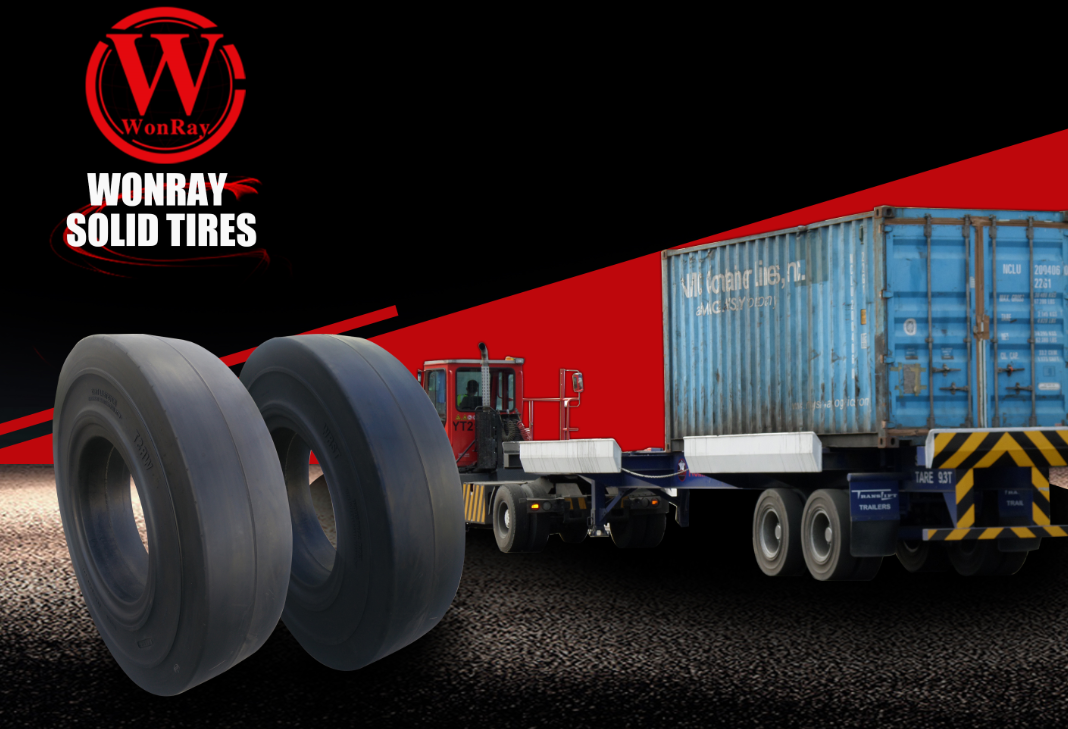
Are Solid Tires Suitable for Harsh Port Conditions
Port environments are not only heavy-duty but also harsh, with exposure to saltwater, sharp materials, and constant friction.
Solid tires are designed to withstand:
● Abrasive concrete and rough surfaces
● Sharp debris such as metal fragments
● High humidity and corrosive environments
● Continuous multi-shift operations
Their robust construction makes them ideal for long-term use in such challenging conditions.
How Do Solid Tires Improve Safety in Port Operations
Safety is a top priority in port logistics, where heavy loads and large equipment create potential risks.
Solid tires enhance safety by:
● Providing stable traction to prevent slipping
● Eliminating sudden air loss that can cause instability
● Supporting balanced load handling
● Reducing the risk of tire-related accidents
This stability is essential for both operators and surrounding personnel.
Do Solid Tires Reduce Maintenance Costs
A major advantage of solid tires is their ability to lower maintenance requirements.
Compared to pneumatic tires, they:
● Do not require air pressure monitoring
● Eliminate puncture repairs
● Have longer service life
● Reduce replacement frequency
These factors significantly reduce both direct maintenance costs and indirect downtime losses.
What About Ride Comfort and Vibration
While solid tires are known for durability, users often ask about ride comfort.
Modern solid tires address this through advanced design features:
● Multi-layer construction for shock absorption
● Flexible rubber compounds for reduced vibration
● Improved operator comfort compared to older designs
Although pneumatic tires still provide more cushioning, solid tires offer a balanced solution for durability and comfort.
Key Factors When Choosing Solid Tires for Port Vehicles
Selecting the right solid tires requires understanding your operational needs.
● Load capacity must match equipment specifications
● Tire compound should resist wear and cutting
● Tread design should optimize traction on port surfaces
● Operating environment should guide material selection
Choosing the correct tire ensures maximum performance and longevity.
Product Selection Recommendations
For port operators looking to improve efficiency and reduce operational risks, investing in high-quality solid tires is essential. Look for products with reinforced structures, advanced rubber compounds, and proven performance in heavy-duty environments.
Working with experienced suppliers can help tailor tire solutions to specific equipment and operating conditions, ensuring better long-term results.
FAQ
Q1: Are solid tires better than pneumatic tires for port vehicles?
Yes, in most port applications, solid tires are preferred due to their durability and puncture resistance.
Q2: How long do solid tires last in port operations?
Their lifespan depends on usage conditions, but they generally last significantly longer than pneumatic tires.
Q3: Can solid tires handle continuous operation?
Yes, they are designed for multi-shift and 24/7 operations.
Q4: Do solid tires improve efficiency?
Yes, by reducing downtime and maintenance, they help improve overall operational efficiency.
Conclusion
Solid tires are a critical component for port vehicles operating in demanding environments. Their durability, stability, and low maintenance requirements make them the ideal choice for handling heavy loads and ensuring continuous operations.
By choosing the right solid tires, port operators can enhance safety, reduce costs, and achieve higher efficiency in one of the most challenging industrial settings.
Post time: 31-03-2026