
In the fast-paced environment of modern ports, operational efficiency and safety are critical to ensuring smooth logistics and minimizing downtime. Port vehicles, including container handlers, straddle carriers, forklifts, and terminal tractors, face continuous heavy loads and challenging operating conditions. One of the most significant factors affecting performance, safety, and cost-effectiveness is the choice of tires. Solid tires for port vehicles have emerged as a reliable and durable solution, offering puncture-proof performance, reduced maintenance, and long service life. This article explores the advantages, types, maintenance tips, and considerations for selecting the right solid tires for port vehicles.
Why Solid Tires Are Ideal for Port Vehicles
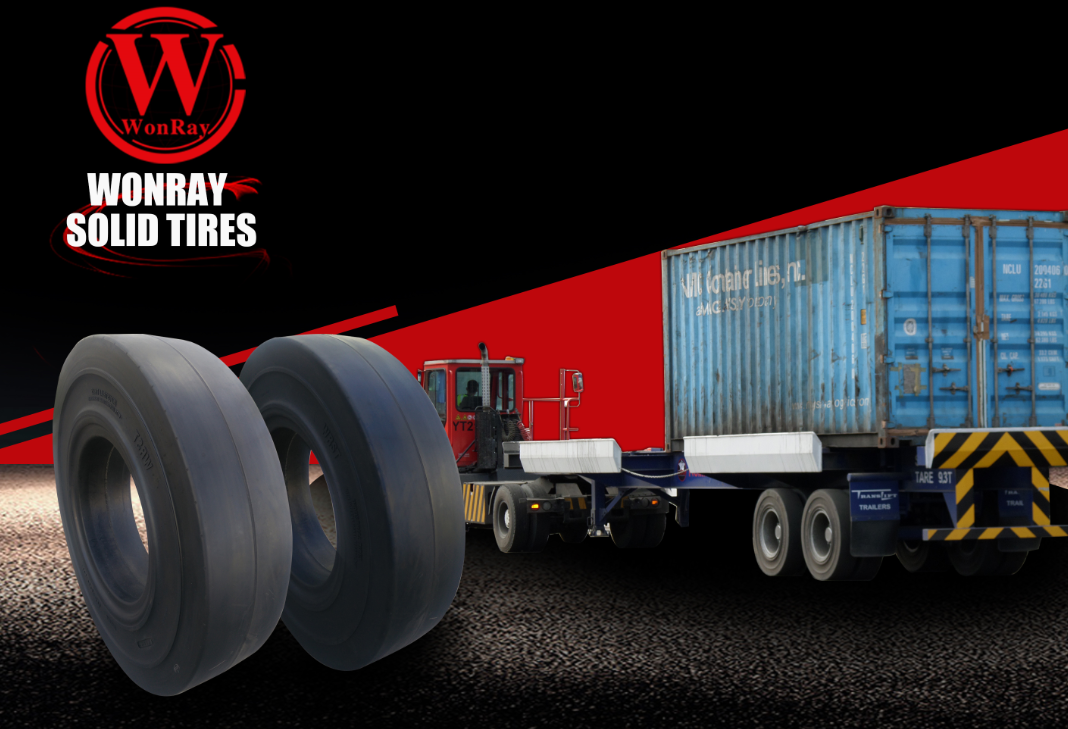
Port operations involve frequent handling of heavy cargo, maneuvering over concrete, asphalt, and occasionally uneven surfaces. Traditional pneumatic tires can fail under such rigorous conditions due to punctures, air leaks, or blowouts, leading to costly downtime and safety hazards. Solid tires, made from high-quality rubber compounds, provide a puncture-proof, long-lasting alternative.
Key benefits include:
● Durability and Longevity – Solid tires can withstand heavy loads and harsh operating conditions without the risk of flats or blowouts. This translates into reduced replacement frequency and lower overall operational costs for port operators.
● Enhanced Safety – Puncture-proof solid tires prevent unexpected tire failures, reducing the risk of accidents in busy port environments. Their stable construction also improves load handling and vehicle control.
● Low Maintenance Requirements – Unlike pneumatic tires, solid tires do not require air pressure checks or frequent repairs. This simplifies maintenance schedules and ensures continuous port operations.
● Cost-Effective Performance – While the initial investment may be higher than pneumatic tires, the extended service life, minimal maintenance, and reduced downtime make solid tires a cost-effective choice for port vehicles.
● Environmental Benefits – Many solid tires are manufactured using eco-friendly materials and can be recycled at the end of their lifespan, reducing environmental impact and supporting sustainable port operations.
Types of Solid Tires for Port Vehicles
Port vehicles have unique operational demands, and solid tires are available in various types to suit specific applications:
● Standard Solid Tires – Ideal for general port operations, these tires offer reliable durability and load-bearing capacity for forklifts and terminal tractors.
● Cushion Solid Tires – Designed with a slightly softer rubber compound, cushion solid tires provide improved shock absorption and smoother rides for container handlers operating on concrete surfaces.
● Press-On Solid Tires – These tires are designed for easy installation on forklifts and straddle carriers. Their straightforward mounting reduces downtime during tire replacement.
● Non-Marking Solid Tires – Essential for port warehouses and indoor loading areas, non-marking tires prevent floor damage while maintaining performance and durability.
Maintenance Tips for Solid Tires in Port Operations
Proper maintenance of solid tires ensures maximum performance and lifespan, even under continuous heavy-duty use:
● Regular Inspections – Periodically check tires for cracks, cuts, or uneven wear. Identifying potential issues early prevents unexpected downtime.
● Proper Alignment – Ensure vehicle wheels are properly aligned to prevent uneven tire wear and optimize performance.
● Clean Tires Frequently – Port environments often involve dust, chemicals, and debris. Cleaning tires regularly prevents surface damage and maintains traction.
● Monitor Load Limits – Avoid exceeding the tire’s load capacity to ensure durability and maintain operational safety.
Question-and-Answer Section (FAQ)
Q: Can solid tires be used for all types of port vehicles?
A: Yes, solid tires are suitable for a wide range of port vehicles, including forklifts, straddle carriers, terminal tractors, and container handlers. They are especially effective in environments where punctures or rough surfaces are common.
Q: How do solid tires improve efficiency in port operations?
A: By reducing downtime due to tire failures and minimizing maintenance requirements, solid tires allow port vehicles to operate continuously, enhancing productivity and operational efficiency.
Q: Do solid tires provide a smooth ride?
A: While solid tires are generally firmer than pneumatic tires, cushion solid tires and certain rubber compounds can provide smoother rides suitable for port vehicles operating on concrete or asphalt surfaces.
Q: What factors should be considered when choosing solid tires for port vehicles?
A: Key factors include vehicle type, load capacity, operating surface, indoor vs. outdoor use, and the specific operational demands of the port. Consulting with tire experts ensures the optimal choice.
Sample Data Table: Solid Tire Options for Port Vehicles
| Tire Type | Application | Key Benefits |
|---|---|---|
| Standard Solid | Forklifts, Terminal Tractors | Durable, load-bearing, cost-effective |
| Cushion Solid | Container Handlers | Shock absorption, smoother ride |
| Press-On Solid | Forklifts, Straddle Carriers | Easy installation, minimal downtime |
| Non-Marking Solid | Indoor Loading Areas | Floor protection, durable, stable |
Conclusion
For modern port operations, solid tires for port vehicles are a smart investment. Their durability, puncture-proof design, and low maintenance requirements make them ideal for the heavy-duty, high-traffic conditions found in ports. By selecting the appropriate type of solid tire based on vehicle specifications and operating conditions, port operators can enhance safety, reduce operational costs, and improve overall efficiency.
Investing in high-quality solid tires ensures that forklifts, straddle carriers, and terminal tractors perform at their best, even under continuous and demanding workloads. With proper selection and maintenance, solid tires are not only cost-effective but also contribute to safer and more productive port operations.
Product Selection Recommendations
When selecting solid tires for port vehicles, consider reputable manufacturers that specialize in industrial-grade tires. Evaluate tire size, load capacity, tread pattern, and rubber composition to match your operational requirements. Prioritize tires designed for durability, low maintenance, and environmental sustainability. Proper consultation and selection ensure your port vehicles operate efficiently, safely, and reliably for years to come.
Post time: 09-01-2026