
In the metallurgical industry, operating conditions are among the most demanding in any industrial sector. Equipment must function under extreme heat, heavy loads, abrasive materials, and continuous operation cycles. In such environments, tire performance is not just important—it is critical to maintaining safety, efficiency, and production continuity.
Solid tires have become the preferred solution for metallurgical applications due to their durability, heat resistance, and ability to withstand harsh conditions without failure. This article explores how solid tires meet the unique challenges of the metallurgical industry and why they are essential for high-performance operations.
Understanding the Challenges of Metallurgical Environments
Metallurgical facilities, including steel plants and foundries, present extreme operating conditions that quickly degrade standard tires.
Common challenges include:
● High ambient temperatures from furnaces and molten materials
● Heavy loads from steel coils, billets, and slabs
● Sharp debris such as metal scraps and slag
● Continuous multi-shift operations with minimal downtime
These factors create a demanding environment where traditional pneumatic tires often fail due to punctures, overheating, or structural damage.
Why Solid Tires Are Ideal for Metallurgical Applications
Solid tires are specifically designed to overcome the limitations of air-filled tires in extreme industrial conditions.
Key advantages include:
● Heat-resistant compounds that maintain performance under high temperatures
● Puncture-proof construction that eliminates risks from sharp metal debris
● High load-bearing capacity for handling heavy steel materials
● Structural stability that supports continuous heavy-duty operation
Because solid tires do not rely on air pressure, they are unaffected by temperature fluctuations that typically cause pressure instability in pneumatic tires.
Heat Resistance: A Critical Performance Factor
One of the most important requirements in metallurgical operations is heat resistance. Equipment frequently operates near high-temperature zones such as furnaces or hot rolling lines.
Advanced solid tires are manufactured with specialized rubber compounds that:
● Resist thermal degradation and cracking
● Maintain elasticity under elevated temperatures
● Prevent premature wear caused by heat exposure
● Ensure consistent performance during prolonged operations
This makes them highly suitable for applications where temperature control is a major concern.
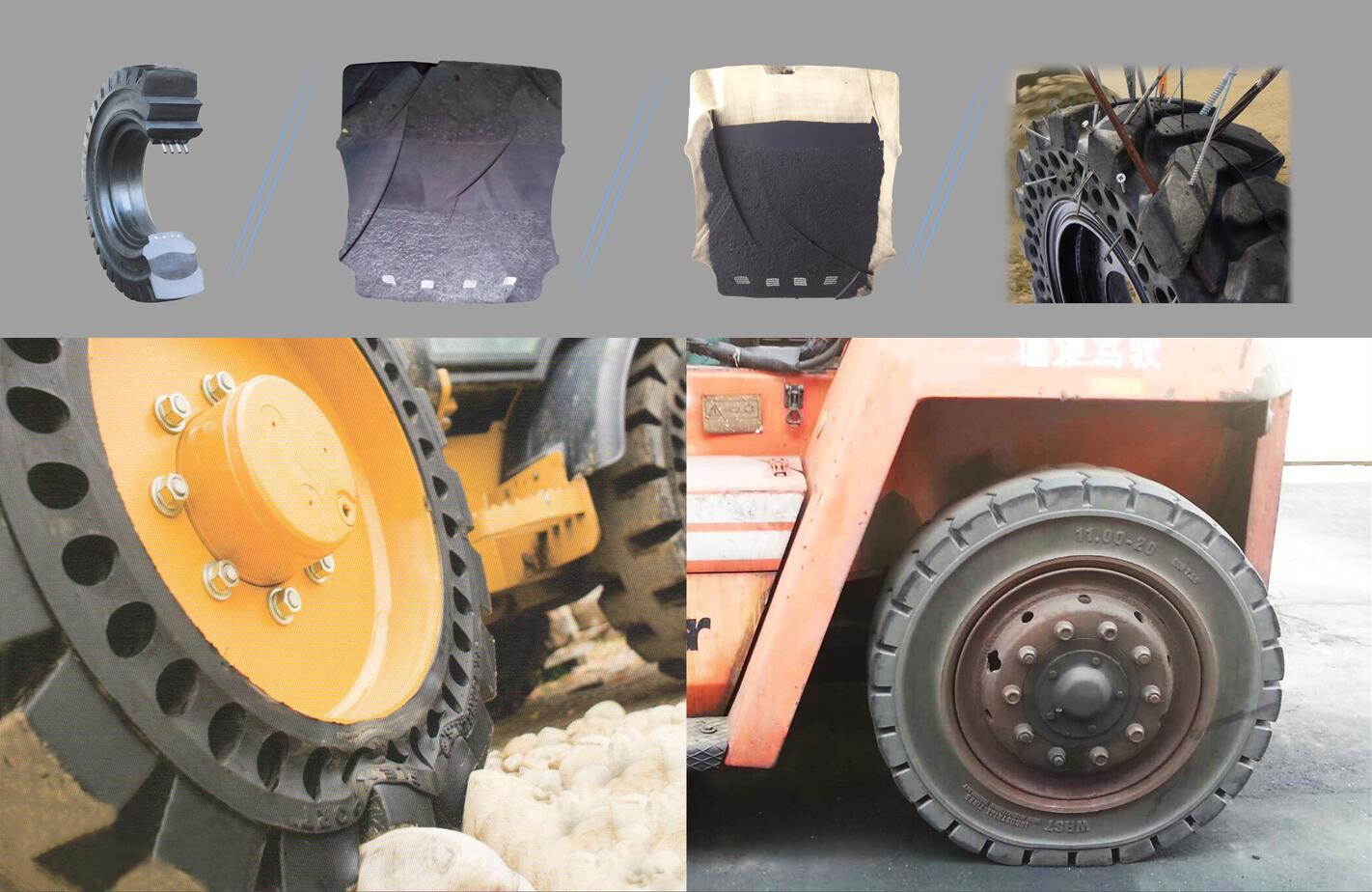
Load Capacity and Structural Integrity
In metallurgical environments, forklifts and transport vehicles often carry extremely heavy loads. The structural integrity of tires directly affects operational safety.
Solid tires provide:
● Reinforced internal structures for heavy-duty performance
● Even load distribution to reduce stress on equipment
● Minimal deformation under high pressure
● Stable handling during lifting and transport
These features ensure that equipment can safely handle large and heavy materials without compromising performance.
Resistance to Abrasion and Mechanical Damage
Metal processing environments involve constant exposure to abrasive materials such as slag, metal shavings, and rough surfaces.
Solid tires are engineered to withstand these conditions through:
● High wear-resistant outer layers
● Strong resistance to cuts and tearing
● Reduced risk of surface damage
● Longer service life in abrasive environments
This durability significantly reduces the frequency of tire replacement and maintenance.
Supporting Continuous Industrial Operations
Metallurgical plants typically operate around the clock, leaving little room for equipment downtime. Tire reliability plays a major role in ensuring uninterrupted operations.
Solid tires contribute to operational continuity by:
● Eliminating unexpected failures caused by punctures
● Reducing maintenance requirements
● Providing consistent performance across long working hours
● Supporting high-frequency equipment usage
This reliability allows plants to maintain production efficiency and avoid costly interruptions.
Typical Applications in the Metallurgical Industry
Solid tires are widely used across various types of equipment in metallurgical operations.
● Forklifts transporting steel products and raw materials
● Ladle carriers operating near high-temperature zones
● Slag handling vehicles in harsh environments
● Industrial trailers moving heavy loads within plants
● Material transport equipment in rolling mills
In each application, solid tires ensure reliable performance under extreme conditions.
Key Considerations When Selecting Solid Tires
Choosing the right solid tires for metallurgical applications requires careful evaluation of working conditions.
● Heat resistance must match operating temperatures
● Load capacity should align with equipment requirements
● Compound formulation should resist abrasion and cuts
● Tire hardness should balance durability and traction
Selecting the appropriate tire ensures optimal performance and extended service life.
Product Selection Recommendations
For metallurgical operations, investing in high-quality solid tires is essential. Look for products specifically designed for high-temperature and heavy-duty applications, with proven performance in similar environments.
Working with experienced suppliers can help identify the best tire solutions tailored to your equipment and operational needs, ensuring long-term reliability and efficiency.
FAQ
Q1: Are solid tires better than pneumatic tires in metallurgical environments?
Yes, solid tires are far more suitable due to their puncture resistance, heat tolerance, and durability.
Q2: Can solid tires withstand extreme heat?
High-quality solid tires are designed with heat-resistant compounds that perform well in elevated temperatures.
Q3: How do solid tires impact maintenance costs?
They significantly reduce maintenance by eliminating punctures and reducing replacement frequency.
Q4: Are solid tires suitable for continuous operations?
Yes, they are ideal for multi-shift and 24/7 industrial operations.
Conclusion
Solid tires are an essential component for the metallurgical industry, offering unmatched durability, heat resistance, and reliability in extreme environments. Their ability to handle heavy loads, resist damage, and support continuous operation makes them the optimal choice for demanding industrial applications.
By selecting the right solid tires, metallurgical businesses can improve safety, reduce downtime, and achieve greater operational efficiency in even the harshest conditions.
Post time: 30-03-2026