
In high-density industrial environments, equipment reliability directly impacts productivity and operating costs. Whether in warehouses, construction sites, or ports, loaders and material handling machines must perform continuously under heavy loads and challenging conditions. Solid tires have become a key solution for improving efficiency, reducing downtime, and ensuring consistent performance.
This article explores how solid tires—especially in loader applications—help optimize industrial operations and why they are increasingly preferred in demanding work environments.
What Are Solid Tires and Why They Matter for Loaders
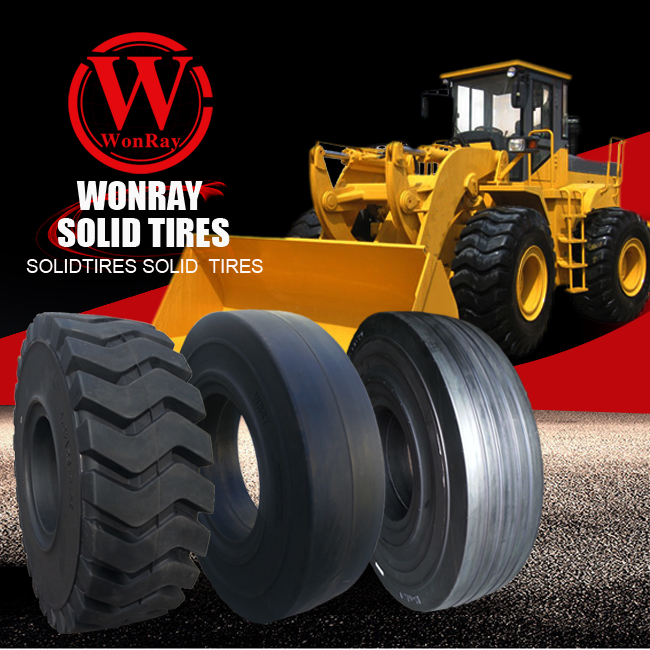
Solid tires are made from high-density rubber compounds and do not rely on air pressure. Unlike pneumatic tires, they are completely puncture-proof and maintain consistent shape and performance even under extreme loads.
For loaders, which often operate in debris-heavy environments such as construction sites or recycling facilities, this structural advantage is critical. Sharp objects, uneven surfaces, and continuous heavy-duty use can easily damage pneumatic tires, but solid tires eliminate these risks entirely.
Additionally, solid tires are typically designed with reinforced internal structures to support the high torque and load requirements of loaders, ensuring reliable operation across long working hours.
Key Benefits of Solid Tires in Loader Operations
Solid tires provide multiple performance advantages that directly contribute to industrial efficiency and cost savings.
● High durability reduces replacement frequency in harsh environments
● Puncture-proof design eliminates unexpected downtime
● Strong load capacity supports heavy material handling tasks
● Stable structure improves machine balance during lifting operations
● Low maintenance requirements reduce labor and servicing costs
These benefits are especially valuable for loaders operating in continuous or multi-shift environments.
Why Solid Tires Improve Efficiency in High-Density Worksites
In high-density industrial settings, equipment is often required to operate with minimal interruption. Solid tires play a crucial role in maintaining workflow continuity.
Because there is no risk of air leakage or pressure loss, operators can rely on consistent tire performance throughout the work cycle. This reduces the need for routine inspections and emergency repairs.
For loaders, this consistency translates into smoother operation during loading, transporting, and dumping tasks. The improved stability also allows for more precise handling, reducing material spillage and increasing overall efficiency.
Over time, fewer breakdowns and reduced maintenance lead to higher equipment utilization rates.
Applications of Solid Tires in Loader-Based Operations
Solid tires are widely used in loader applications across various industries, particularly where durability and reliability are essential.
● Construction sites where loaders handle heavy aggregates and rough terrain
● Ports and terminals for container and bulk cargo handling
● Recycling facilities with sharp debris and harsh working conditions
● Mining and quarry operations requiring high load capacity
● Industrial yards with continuous material movement
In these environments, the ability to operate without interruption gives solid tires a significant advantage over pneumatic alternatives.
Solid Tires vs Pneumatic Tires in Loader Use
Choosing between solid and pneumatic tires depends on operational priorities, but in demanding loader applications, solid tires often deliver superior performance.
| Feature | Solid Tires | Pneumatic Tires |
|---|---|---|
| Puncture Resistance | Very high | Vulnerable to damage |
| Maintenance | Minimal | Requires frequent checks |
| Load Capacity | Excellent | Moderate |
| Stability | High | Moderate |
| Suitability | Heavy-duty environments | Mixed or rough terrain |
While pneumatic tires may offer better cushioning on uneven terrain, solid tires excel in environments where durability and uptime are more critical.
Performance Factors to Consider for Loader Tires
Selecting the right solid tires for loaders requires careful evaluation of working conditions and operational demands.
● Load capacity must align with loader specifications
● Tire compound should match terrain and wear conditions
● Tread design influences traction and performance
● Working hours determine required durability level
Choosing the right combination of these factors ensures optimal performance and longer service life.
Product Selection Recommendations
For businesses using loaders in high-intensity environments, investing in premium solid tires is a strategic move. High-quality tires with advanced rubber compounds and reinforced structures can significantly improve operational efficiency.
Reliable suppliers can provide tailored solutions based on loader models and application scenarios, helping businesses achieve better performance while minimizing risk.
Frequently Asked Questions (FAQ)
Q1: Are solid tires suitable for all types of loaders?
Yes, most loaders can be equipped with solid tires, but proper size and specification selection are essential.
Q2: Do solid tires perform well on rough terrain?
They perform well in harsh environments, but extremely uneven terrain may still benefit from pneumatic tires depending on comfort requirements.
Q3: How long do solid tires last in loader applications?
Their lifespan depends on usage intensity, but they typically last longer than pneumatic tires in heavy-duty conditions.
Q4: Can solid tires reduce operating costs?
Yes, their durability and low maintenance significantly reduce both direct and indirect costs.
Conclusion
Solid tires are a powerful solution for enhancing efficiency and performance in loader operations. Their durability, stability, and maintenance-free design make them ideal for demanding industrial environments where reliability is critical.
By selecting the right solid tires and aligning them with your operational needs, you can improve productivity, reduce downtime, and achieve better long-term cost control in your industrial operations.
Post time: 26-03-2026