
Industrial vehicles are the backbone of modern warehouses, factories, and construction sites. From forklifts and skid steers to loaders and material handling machines, the performance of these vehicles depends heavily on their tires. Solid tires for industrial vehicles have emerged as a reliable solution to improve safety, reduce downtime, and enhance operational efficiency. In this article, we explore why solid tires are becoming the preferred choice for industrial operations and how to maximize their benefits.
Why Industrial Vehicles Need Solid Tires
Industrial vehicles often operate in environments that are challenging for traditional pneumatic tires. Sharp debris, rough surfaces, and heavy loads make punctures and blowouts a frequent concern. Solid tires are made from durable rubber compounds or polyurethane, which eliminates the risk of flats. This reliability ensures that industrial operations run smoothly without interruptions, improving overall productivity.
Key Benefits of Solid Tires
Durability Under Heavy Loads
Solid tires are designed to carry high weight without deforming, making them ideal for forklifts, skid steers, and other heavy machinery. Unlike air-filled tires that may compress or puncture under stress, solid tires maintain their shape and performance over time.
Enhanced Safety
Workplace safety is a major concern in industrial settings. Solid tires reduce the likelihood of accidents caused by tire failure, ensuring a safer environment for operators and nearby workers. Their stability on uneven surfaces also contributes to preventing vehicle tip-overs or load shifts.
Low Maintenance and Cost Savings
Solid tires require minimal maintenance compared to pneumatic tires. There’s no need for regular air pressure checks, puncture repairs, or replacements due to flats. This results in reduced maintenance costs, lower labor demands, and increased vehicle uptime.
Improved Traction and Control
Depending on the tread design, solid tires offer superior grip on smooth and rough surfaces alike. Industrial vehicles benefit from better control, especially when lifting and transporting heavy loads, reducing the risk of slippage or accidents.
Types of Solid Tires for Industrial Vehicles
Choosing the right solid tire type is critical for performance and longevity. Here are the main categories:
Standard Solid Tires
These are fully solid rubber tires ideal for general warehouse use. They are durable and cost-effective, suitable for forklifts and light industrial vehicles.
Cushion or Resilient Tires
Designed with a slightly softer rubber compound, these tires absorb vibrations and offer a smoother ride. They are perfect for indoor operations where operator comfort and floor protection are important.
Press-On Solid Tires
Press-on tires can be mounted directly onto existing wheel rims, simplifying installation and replacement. They are widely used for forklifts, pallet trucks, and other material handling equipment.
Polyurethane Solid Tires
Polyurethane tires are lighter than traditional rubber and provide smoother operation on concrete floors. They are commonly used for high-speed indoor vehicles or light-duty industrial machines.
Best Practices for Maximizing Solid Tire Performance
Even though solid tires are low-maintenance, proper handling and care can extend their life and efficiency:
-
Regular Inspections: Periodically check for cracks, excessive wear, or embedded debris. Early detection prevents damage and ensures safe operation.
-
Cleaning: Remove dirt, grease, and debris that may accumulate on the tire surface, which can affect grip and durability.
-
Proper Load Management: Avoid overloading vehicles beyond the tire’s rated capacity. Excess weight can lead to premature wear.
-
Correct Installation: Ensure tires are installed correctly and aligned properly to prevent uneven wear.
-
Environmental Awareness: Use tires designed for specific environments; for example, chemical-resistant rubber for certain industrial settings or softer compounds for indoor warehouse floors.
Real-World Applications
Warehouses: Forklifts and pallet movers in warehouses benefit from solid tires’ low maintenance and puncture-proof reliability, allowing for uninterrupted operations.
Construction Sites: Heavy machinery like skid steers, loaders, and small excavators rely on solid tires to navigate rough terrains and sharp debris without downtime due to tire damage.
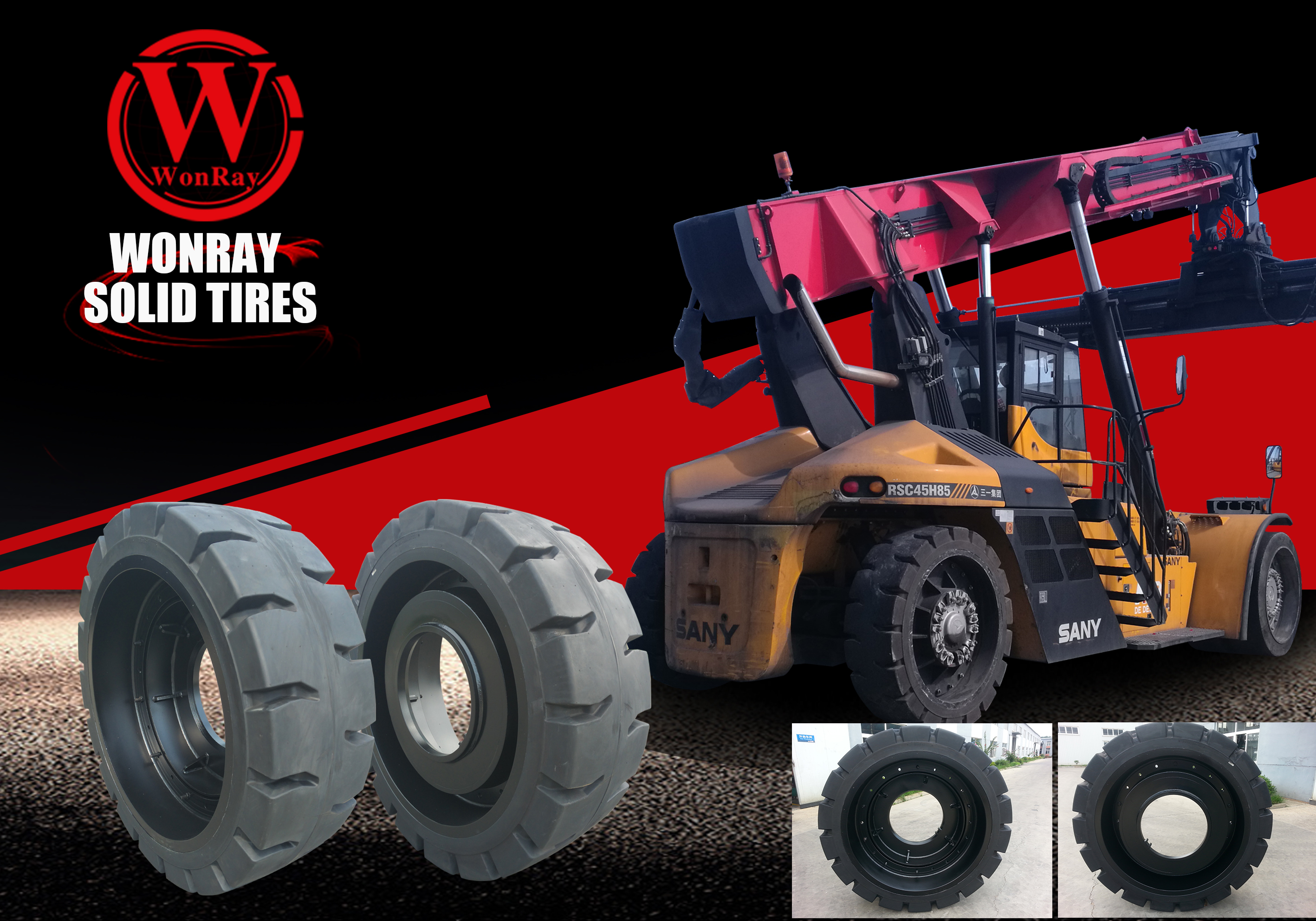
Ports and Shipping Yards: Vehicles such as container handlers and reach stackers can operate continuously with solid tires, ensuring safe and reliable cargo movement.
Manufacturing Facilities: Indoor industrial vehicles can use resilient solid tires to minimize vibrations and protect floors, increasing operator comfort and reducing equipment wear.
Frequently Asked Questions
Q: Are solid tires suitable for all types of industrial vehicles?
A: Solid tires are versatile and can be used on forklifts, skid steers, loaders, reach stackers, and other industrial vehicles. The key is to select the type that matches vehicle weight and operating conditions.
Q: How do solid tires affect operator comfort?
A: Standard solid tires may provide a firmer ride, while resilient or polyurethane solid tires are designed to absorb vibrations, improving operator comfort, especially for indoor applications.
Q: Can solid tires improve operational efficiency?
A: Absolutely. By eliminating downtime from punctures and reducing maintenance requirements, solid tires help industrial operations run smoothly and efficiently, resulting in higher productivity.
Conclusion
Solid tires for industrial vehicles are an essential investment for businesses aiming to enhance safety, efficiency, and performance. Their durability, puncture resistance, low maintenance, and adaptability make them suitable for a wide range of industrial applications—from warehouses and factories to construction sites and ports.
When selecting solid tires, consider vehicle type, operating conditions, load requirements, and tread design to ensure optimal performance. By choosing the right solid tires and following proper maintenance practices, industrial operators can maximize uptime, reduce costs, and ensure a safe working environment.
Investing in high-quality solid tires is not just about durability; it is about improving overall operational efficiency and safeguarding both equipment and personnel in industrial environments
Post time: 12-01-2026