
Industrial vehicles operate in demanding environments, often carrying heavy loads over uneven, rough, or debris-filled surfaces. Choosing the right tires for these vehicles is critical to ensure safety, efficiency, and longevity. Solid tires have become the preferred choice for industrial applications due to their durability, low maintenance, and performance advantages over traditional pneumatic tires. This article explores solid tires for industrial vehicles, their benefits, types, maintenance strategies, and key considerations for maximizing operational reliability.
Understanding Solid Tires
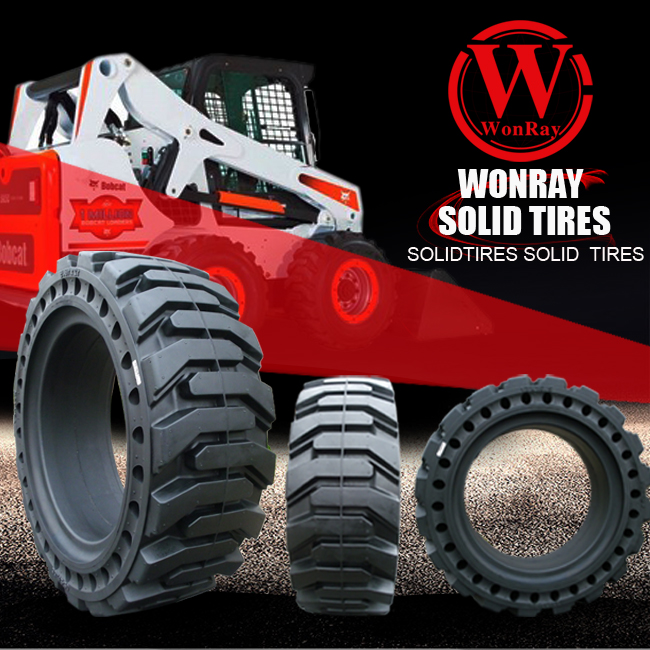
Solid tires, also known as non-pneumatic tires, are constructed from solid rubber or polymer compounds. Unlike pneumatic tires that rely on air pressure, solid tires are entirely solid, making them resistant to punctures, cuts, and blowouts. Their robust design provides consistent performance even in high-stress conditions, making them ideal for forklifts, loaders, skid steers, and other industrial vehicles.
● Puncture-Resistant: Solid tires eliminate the risk of flats caused by sharp objects or rough terrain.
● Long-Lasting: Their durable construction extends the tire’s service life, reducing replacement frequency.
● Stable Performance: Solid tires maintain consistent traction and stability under heavy loads.
● Low Maintenance: Minimal upkeep is required compared to pneumatic tires.
Key Benefits of Solid Tires for Industrial Vehicles
Durability and Strength
● Solid tires can withstand rigorous environments without significant wear.
● Resistance to cuts, abrasions, and punctures ensures consistent operation even on debris-filled surfaces.
Enhanced Safety
● The solid construction provides greater stability, reducing the risk of accidents caused by tire failures.
● They help maintain control of the vehicle under heavy loads, uneven surfaces, and tight maneuvering conditions.
Cost Efficiency
● Although the initial investment may be higher than pneumatic tires, the long-term savings are substantial.
● Reduced maintenance costs, fewer replacements, and minimized downtime contribute to lower operational expenses.
Performance Across Surfaces
● Solid tires offer reliable traction on concrete, asphalt, gravel, and uneven industrial floors.
● Their consistent grip allows vehicles to handle heavy cargo efficiently without slippage.
Environmental Advantages
● Extended lifespan reduces the frequency of tire disposal, contributing to sustainability.
● Unlike some pneumatic tires, solid tires generate less waste and are often fully recyclable.
Types of Solid Tires
Industrial solid tires are available in various designs, each tailored to specific operational needs:
● Cushion Solid Tires: Ideal for indoor operations with smooth surfaces, providing controlled traction and reduced vibration.
● Press-On Solid Tires: Designed for forklifts and other heavy machinery, offering easy installation and reliable load-bearing performance.
● Full Rubber Solid Tires: Maximum durability, suitable for rough terrain and continuous outdoor operations.
● Polyurethane Solid Tires: Lightweight and resistant to chemical exposure, ideal for specialized industrial settings.
Maintenance of Solid Tires
Maintaining solid tires is simpler than pneumatic tires, but proper care ensures peak performance and extended life:
● Regular Visual Inspections: Check for cracks, abnormal wear, or embedded debris.
● Proper Installation: Ensure tires are correctly mounted and seated on rims to prevent uneven wear.
● Alignment Checks: Misalignment can accelerate wear and reduce vehicle stability.
● Clean Surfaces: Keep tires free from chemicals, oils, or debris to prevent degradation and maintain traction.
Selecting the Right Solid Tires
Choosing the correct solid tire requires evaluating several factors:
● Vehicle Type and Load Capacity: Match tire strength to the weight and function of the industrial vehicle.
● Operational Environment: Consider indoor vs. outdoor use, surface conditions, and exposure to chemicals or extreme temperatures.
● Performance Requirements: Assess whether traction, cushioning, or resistance to abrasions is the primary concern.
● Longevity and Cost Balance: Evaluate long-term savings versus upfront investment to make an informed choice.
Advantages Over Pneumatic Tires
Compared to pneumatic tires, solid tires offer significant operational advantages for industrial vehicles:
● No Air Pressure Issues: No risk of flats, blowouts, or sudden pressure loss.
● Consistent Load-Bearing Capacity: Solid tires handle heavier loads without performance variation.
● Reduced Downtime: Fewer interruptions due to tire failures or maintenance.
● Durability: Outlast pneumatic tires in harsh, industrial environments.
Conclusion
Solid tires are a strategic investment for industrial vehicles, offering superior durability, stability, and low maintenance. Their ability to operate efficiently in harsh environments, carry heavy loads, and minimize downtime makes them indispensable for industrial operations. By selecting the right type of solid tire and maintaining it properly, businesses can ensure the reliability, safety, and productivity of their industrial vehicles.
● Prioritize durability, load capacity, and surface compatibility when selecting tires.
● Follow regular maintenance practices to maximize lifespan and performance.
● Solid tires are not just replacements for pneumatic tires—they are an upgrade for demanding industrial applications, providing unmatched efficiency and operational security.
Post time: 26-01-2026