
Demolition sites create difficult working conditions for wheeled construction equipment. Broken concrete, metal fragments, sharp stones, and scattered building materials can damage tires as machines move between loading points and debris collection areas. For wheeled excavators operating in these environments, tire selection directly affects equipment availability, mobility, and maintenance planning. Solid Tires For Excavators may be considered for specific applications where puncture resistance is a priority. However, selecting them requires more than identifying a hazardous surface.
Why Demolition Debris Creates Tire Challenges
Demolition areas rarely provide consistent ground conditions. One section may contain relatively smooth concrete, while another is covered with broken masonry, exposed reinforcement, or loose material. Wheeled excavators can encounter these changes several times during a single shift.
Sharp objects present an obvious risk to conventional pneumatic tires. A puncture can interrupt work, require equipment to be moved to a safe repair location, and delay activities that depend on the excavator. Even when a tire does not fail immediately, repeated contact with abrasive debris can contribute to tread damage and gradual deterioration.
The problem also involves more than punctures. Loose rubble can reduce predictable tire contact with the ground, while uneven surfaces place additional demands on the wheel assembly and machine structure. Operators must therefore consider traction, stability, ground clearance, and permitted travel conditions alongside tire durability. Solid Tires For Excavators can reduce the risk of air-loss failures because they do not depend on an air-filled cavity in the same way as pneumatic tires.
Where Solid Tires May Fit in Demolition Operations
Solid tires are most relevant when the machine and application are compatible with their construction. The suitability of Solid Tires For Excavators depends partly on how the excavator is used. A machine that repeatedly moves across a controlled work area may benefit from reducing puncture-related interruptions. By contrast, an excavator expected to travel long distances or work on highly irregular ground may require a different tire arrangement based on the manufacturer’s specifications and operating conditions.
Before considering a change, operators should clarify the machine’s main tasks. Is it primarily digging from a stationary position, moving debris between nearby areas, or traveling regularly between work zones? How frequently does it cross sharp rubble? Does it spend extended periods moving under load, or does it mainly reposition itself between digging cycles?
These questions establish whether puncture resistance addresses a recurring operational problem or simply introduces a different set of trade-offs. Solid tires should be evaluated as part of the complete equipment system, not as an isolated replacement component.
Key Conditions to Assess Before Choosing Solid Tires
Several practical considerations help determine whether a solid tire configuration is appropriate for a wheeled excavator working around demolition debris.
- Machine compatibility: Confirm that the excavator is designed to accept the proposed tire type. Wheel dimensions, rim design, mounting arrangements, axle loads, and manufacturer restrictions must be checked before replacement. Conventional tracked excavators use track systems rather than standard wheeled-excavator tires, so the same selection process does not apply to them.
- Load distribution: Consider the machine’s operating weight, attachments, and working configuration. Excavators experience changing loads during digging, lifting, and material handling. The selected tire and wheel assembly must remain within its approved load limits under the intended conditions.
- Ground and debris conditions: Identify the types of material encountered most often, including concrete fragments, metal scraps, gravel, and compacted surfaces. Puncture resistance can be valuable, but the tire must also suit the site’s surface, traction requirements, and permitted travel conditions.
- Movement frequency: Evaluate how often the machine travels, turns, stops, and repositions itself. Frequent movement over abrasive ground may create a different wear pattern from stationary digging with occasional relocation. These operating details help determine whether a solid tire offers a practical advantage.
- Heat and speed restrictions: Solid tires can generate and retain heat during continuous movement, particularly when operating under heavy loads or at speeds outside their intended range. Check the manufacturer’s limits for speed, load, and duty cycle rather than assuming that puncture resistance means unrestricted operation.
Together, these checks provide a more reliable basis for evaluating Solid Tires For Excavators than choosing solely according to the amount of debris on site.
How Tire Construction Influences Daily Operation
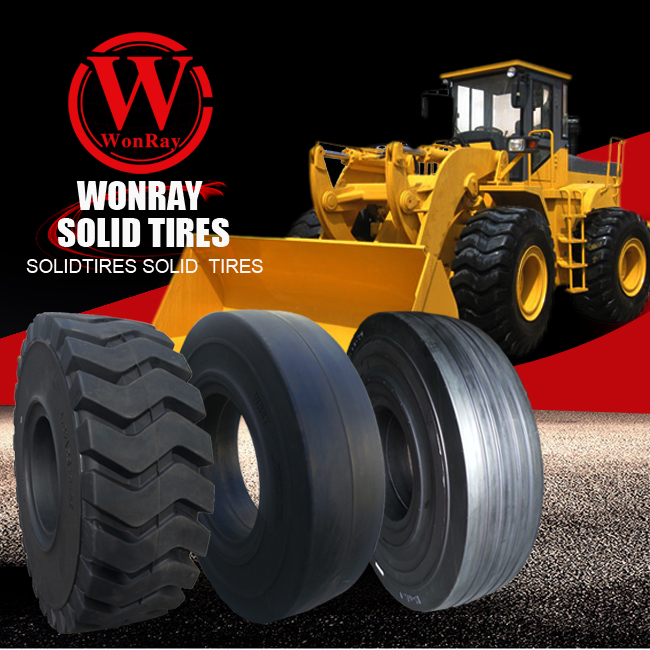
Solid tires avoid the air-pressure loss associated with punctures, but their construction affects how loads and ground impacts are transmitted through the wheel assembly. The material composition, internal structure, tread design, and overall dimensions can influence deformation, heat generation, wear, and operating comfort.
On a demolition site, these characteristics matter because the machine repeatedly encounters changes in surface height and debris distribution. A tire must withstand the intended workload without exceeding its design limits. If its structure is unsuitable for the machine, the result may include excessive heat, accelerated wear, or additional stress on connected components.
Operators should also consider how the tire interacts with the excavator’s suspension, axle, and wheel system. Replacing a pneumatic tire with a solid alternative can change the way impacts are transmitted to the machine. Compatibility therefore involves more than matching the outside diameter or confirming that the tire can physically be mounted.
For Solid Tires For Excavators, construction details should be assessed against the manufacturer’s specifications and the actual operating cycle. A configuration intended for slow, controlled industrial movement should not automatically be treated as suitable for every construction application.
Managing Tire Wear in Debris-Heavy Work Areas
Even when solid tires reduce puncture-related downtime, they still require inspection and maintenance. Demolition debris can abrade the tread, damage exposed surfaces, and affect the wheel assembly. A tire that cannot lose air can still become unsuitable for service if its structure or mounting components deteriorate.
A consistent inspection routine helps identify problems before they interrupt work. Operators should check the tread and visible tire surfaces for unusual wear, cuts, deformation, or signs of excessive heat. The wheel, fasteners, and mounting areas should also be examined according to the equipment manufacturer’s maintenance instructions.
Inspection frequency should reflect the severity of the working environment. Equipment crossing sharp debris throughout the day may need more frequent checks than a machine working mainly on prepared surfaces. Records can help maintenance teams identify repeated damage and determine whether it results from site conditions, operating practices, incorrect specifications, or an unsuitable tire configuration.
Site management is equally important. Removing large metal fragments, separating sharp waste from travel routes, and establishing defined movement paths can reduce unnecessary tire exposure. Solid tires should complement sensible work-area management rather than serve as a reason to ignore hazardous ground conditions.
When evaluating Solid Tires For Excavators, maintenance planning should therefore consider both tire construction and the environment in which the machine operates.
Matching Tire Solutions to Excavator Applications
Not every wheeled excavator faces the same combination of loads, surfaces, and travel requirements. Demolition contractors may prioritize resistance to punctures, while other operators may need to balance ground compliance, traction, heat management, and travel performance. The most appropriate configuration depends on the machine’s design and the conditions specified for its use.
When comparing tire options, operators can review approved dimensions, load ratings, wheel compatibility, speed limitations, and expected duty cycles. They should also consider whether the tire is intended for the particular machine and environment, rather than relying on broad claims about durability.
WonRay offers industrial solid tire solutions that can be evaluated against specific equipment requirements. For excavator applications, the essential step is to verify the exact specification and confirm suitability with the relevant equipment or tire manufacturer before making a replacement decision.
Conclusion
Demolition sites expose wheeled excavators to sharp debris, abrasive surfaces, and changing ground conditions. Solid Tires For Excavators may help reduce puncture-related interruptions in compatible applications, but they must still meet the machine’s load, speed, mounting, and operating requirements.
By assessing site conditions, equipment design, tire construction, and maintenance needs together, operators can make more informed decisions about tire suitability. The goal is not simply to prevent punctures, but to maintain reliable equipment operation within the limits of the intended application.
FAQs
1. Are solid tires suitable for every excavator?
No. Solid tires are relevant to compatible wheeled excavators, subject to manufacturer approval. Conventional tracked excavators use track systems and require a different approach.
2. Do solid tires eliminate all tire maintenance?
No. They avoid air-pressure loss from punctures, but still require checks for wear, cuts, heat damage, mounting problems, and other structural issues.
3. Why does operating speed matter when using solid tires?
Continuous movement can generate heat within a solid tire. The approved speed, load, and duty cycle must be respected to avoid excessive heat buildup and premature deterioration.
4. How can operators identify early signs of solid tire wear on excavators?
Operators should look for uneven tread wear, surface cracking, cuts, deformation, and signs of excessive heat. Changes in tire appearance or equipment movement may indicate that the tire needs closer inspection.
Post time: 28-10-2026