
Introduction
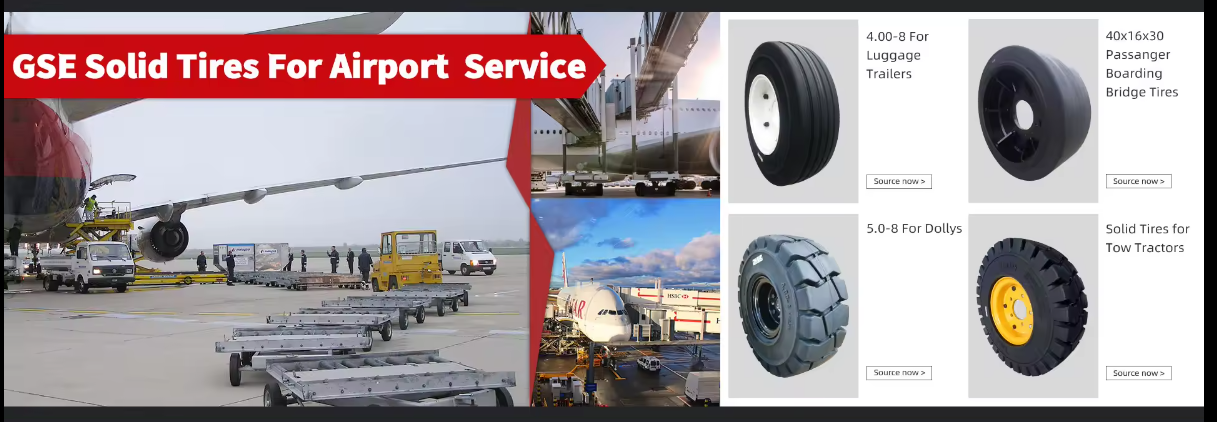
Solid tires are increasingly recognized as a vital solution for baggage trailers in airports, logistics centers, and transport hubs. Unlike pneumatic tires, which rely on air pressure, solid tires are made entirely from durable rubber compounds. This construction provides puncture resistance, long service life, and consistent performance, even under heavy loads. For operators who prioritize reliability and efficiency, understanding the features, advantages, and selection criteria of solid tires is essential.
The Unique Characteristics of Solid Tires
Solid tires for baggage trailers differ significantly from standard pneumatic tires in both design and functionality. Their most notable characteristics include:
● Non-Pneumatic Construction – Solid tires eliminate the need for air chambers, making them immune to flats and blowouts. This reduces the likelihood of sudden downtime caused by tire failures.
● High Durability – Designed with robust rubber compounds, solid tires withstand abrasion, wear, and heavy loads, providing extended operational life.
● Stable Performance – The rigidity of solid tires ensures consistent contact with the ground, improving stability and handling, particularly when towing loaded trailers.
● Maintenance-Free Operation – Since there is no air pressure to monitor, solid tires require minimal maintenance, simplifying fleet management and reducing operational costs.
Advantages of Using Solid Tires for Baggage Trailers
Solid tires offer several operational and financial advantages for baggage trailer operators:
● Extended Lifespan – Solid tires generally outlast pneumatic tires, reducing replacement frequency and associated costs over time.
● Enhanced Reliability – By removing the risk of punctures, operators can ensure uninterrupted trailer movement, improving scheduling reliability and reducing delays.
● Improved Safety – Solid tires provide uniform contact and stable traction, which is particularly important for trailers carrying heavy baggage loads. Reduced tire failures contribute to safer operations in busy airport or transport environments.
● Cost Efficiency – Although the initial investment may be higher than pneumatic tires, the long-term savings due to durability, minimal maintenance, and lower replacement rates make solid tires a cost-effective choice.
● Versatility – Solid tires can operate on a variety of surfaces, from smooth terminal floors to slightly uneven tarmac, making them suitable for both indoor and outdoor use.
Key Considerations for Selecting Solid Tires
When choosing solid tires for baggage trailers, several factors should guide the selection process:
● Load Capacity – Select tires capable of handling the maximum weight of fully loaded trailers to prevent premature wear and ensure safety.
● Operating Environment – Consider whether the trailer operates mainly on smooth surfaces, rough pavements, or mixed environments. Tire material and tread pattern should match the conditions to maintain optimal performance.
● Durability Requirements – For high-frequency operations, such as airport baggage handling or logistics transport, prioritize tires that offer superior wear resistance and long operational life.
● Trailer Compatibility – Ensure that the tire size, width, and mounting specifications align with the trailer’s axles and wheel hubs for safe and efficient operation.
● Budget and ROI – Evaluate the balance between initial purchase cost and long-term operational savings. High-quality solid tires often deliver better value due to fewer replacements and reduced maintenance expenses.
Maintenance Practices for Solid Tires
Although solid tires are low-maintenance, adopting basic care practices can further extend their service life:
● Regular Inspection – Periodically check for surface damage, cracks, or excessive wear to detect potential issues early.
● Cleanliness – Remove debris, grease, and dirt from tires to prevent accelerated wear and maintain traction.
● Proper Alignment – Ensure the trailer axles are correctly aligned to avoid uneven tire wear, which can reduce lifespan.
● Load Management – Avoid overloading trailers beyond tire capacity to maintain performance and prevent damage.
Why Solid Tires Are the Future for Baggage Trailers
The increasing demand for efficient and reliable airport and logistics operations has made solid tires a practical choice. They offer a blend of durability, minimal maintenance, and operational reliability that traditional pneumatic tires cannot match. Solid tires reduce operational interruptions caused by flats or blowouts, enabling smoother workflows and predictable scheduling.
From a sustainability perspective, solid tires also contribute to reducing waste. Fewer tire replacements mean fewer discarded tires, aligning with environmentally conscious fleet management practices.
Conclusion
Solid tires for baggage trailers are a strategic investment for businesses seeking durability, safety, and efficiency in high-frequency transport operations. Their puncture-resistant design, extended lifespan, and low maintenance requirements make them ideal for airports, logistics centers, and other transport hubs.
By selecting the right solid tires, operators can enhance trailer stability, reduce operational interruptions, and achieve long-term cost savings. When choosing solid tires, factors such as load capacity, operating environment, durability, and trailer compatibility should guide the decision-making process. Investing in high-quality solid tires ensures that baggage trailers perform consistently, safely, and efficiently, supporting seamless operations and reducing maintenance burdens.
For fleet managers and operators focused on long-term reliability, solid tires are not just an option—they are an essential component of modern, efficient, and sustainable baggage trailer operations.
Post time: 21-01-2026