
Introduction
In today’s fast-paced industrial and logistics sectors, forklifts are indispensable for material handling, warehouse operations, and production workflows. However, the efficiency and safety of forklift operations depend heavily on one often underestimated component—the tires. Solid tires have become an increasingly preferred solution for B2B operators seeking to enhance performance, reduce risks, and maintain continuous operations.
Unlike traditional pneumatic tires, solid tires are engineered for resilience, stability, and long-term reliability. Their ability to perform consistently under demanding conditions makes them a strategic upgrade for businesses aiming to optimize forklift efficiency without increasing maintenance complexity.
Understanding the Role of Tires in Forklift Performance
Forklift tires directly influence several critical operational factors:
● Load stability during lifting and transportation
● Maneuverability in confined or high-traffic areas
● Safety in indoor and outdoor working conditions
● Maintenance frequency and equipment downtime
In high-intensity environments such as warehouses, ports, and factories, even minor tire failures can disrupt workflows and lead to costly delays. Solid tires address these issues by providing a dependable and maintenance-free solution.
Key Advantages of Solid Tires in Forklift Applications
Superior Structural Strength for Demanding Tasks
Solid tires are manufactured using dense rubber compounds, reinforced cores, and advanced molding techniques. This construction allows them to withstand:
● Continuous heavy loads without deformation
● High-impact operations in rugged environments
● Frequent starts, stops, and directional changes
Their structural integrity ensures consistent performance even in high-pressure working conditions.
Enhanced Stability for Safer Handling
One of the most critical safety factors in forklift operation is stability. Solid tires provide:
● Improved balance during lifting and stacking
● Reduced vibration and swaying under load
● Better traction on smooth and uneven surfaces
This stability is particularly important in environments with narrow aisles, elevated storage systems, or heavy pallet loads.
Maintenance-Free Operation
Solid tires eliminate many of the maintenance challenges associated with pneumatic tires:
● No air pressure monitoring required
● No risk of punctures or blowouts
● Reduced need for emergency repairs
For B2B operations, this translates into fewer interruptions and more predictable equipment performance.
Long-Term Durability and Cost Savings
While the initial investment in solid tires may be higher, their lifecycle benefits are substantial:
● Extended service life reduces replacement frequency
● Lower maintenance costs over time
● Reduced downtime increases productivity
These factors contribute to a lower total cost of ownership, making solid tires a financially sound choice.
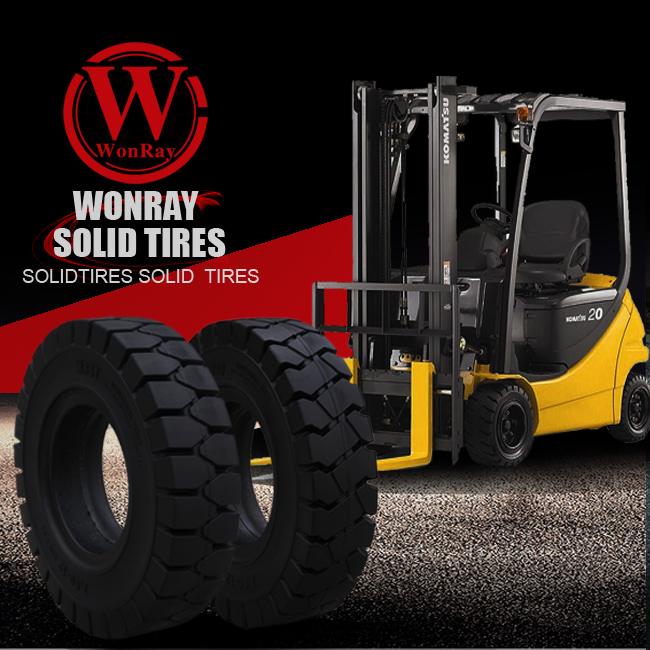
Performance Comparison: Solid Tires vs Pneumatic Tires in Forklifts
When evaluating tire options, it is essential to consider real-world performance differences:
| Performance Factor | Solid Tires | Pneumatic Tires |
|---|---|---|
| Resistance to Damage | Excellent | Moderate |
| Operational Stability | High | Medium |
| Maintenance Needs | Minimal | Frequent |
| Lifespan | Long | Shorter |
This comparison highlights why solid tires are increasingly adopted in high-demand industrial environments.
Application Scenarios Where Solid Tires Deliver Maximum Value
Solid tires are particularly effective in the following forklift applications:
● Warehouse Operations
Frequent movement on concrete floors requires durable and stable tires for consistent performance.
● Manufacturing Facilities
Continuous material flow and heavy loads demand tires that can operate without interruption.
● Port and Container Handling
Harsh outdoor environments with debris and heavy cargo require puncture-proof solutions.
● Recycling and Waste Management
Sharp materials and rough terrain make pneumatic tires vulnerable, while solid tires ensure reliability.
● Cold Storage and Specialized Environments
Solid tires maintain performance in extreme temperatures and controlled environments.
Advanced Technologies Enhancing Solid Tire Performance
The development of solid tires has evolved significantly with technological advancements:
● Multi-Compound Construction
Combines different rubber layers to balance durability and comfort.
● Non-Marking Tire Options
Designed for indoor use where floor cleanliness is essential.
● Heat-Resistant Formulations
Prevent overheating during continuous operation.
● Low Rolling Resistance Design
Improves energy efficiency, especially for electric forklifts.
These innovations ensure that solid tires meet the evolving demands of modern industrial applications.
Best Practices for Selecting Solid Tires for Forklifts
To maximize performance and safety, B2B buyers should consider the following factors:
● Load Capacity Requirements
Ensure the tire can support the maximum operational load.
● Operating Environment
Indoor, outdoor, or mixed-use conditions will influence material selection.
● Floor Surface Type
Concrete, asphalt, or uneven terrain may require specific tread designs.
● Forklift Compatibility
Check tire size, mounting type, and compatibility with existing equipment.
● Operational Intensity
High-frequency usage may require higher-grade materials or reinforced designs.
Making informed choices ensures optimal performance and long-term efficiency.
Safety and Productivity: A Combined Advantage
Solid tires not only improve safety but also contribute directly to productivity:
● Reduced risk of accidents due to tire failure
● Improved operator confidence and control
● Consistent performance across shifts and conditions
● Lower maintenance interruptions during peak operations
This combination makes solid tires an essential component in modern forklift systems.
Conclusion
Solid tires represent a powerful solution for enhancing forklift safety and efficiency in industrial environments. Their durability, stability, and low maintenance requirements make them ideal for high-demand applications where reliability is critical.
For B2B businesses, investing in solid tires is more than a technical upgrade—it is a strategic move toward improved operational performance, reduced downtime, and long-term cost savings. As industrial operations continue to evolve, solid tires will remain a cornerstone of efficient and safe material handling systems.
FAQ
1. Why are solid tires better for forklifts in industrial environments?
They offer puncture resistance, consistent performance, and minimal maintenance, making them ideal for continuous operations.
2. Can solid tires be used both indoors and outdoors?
Yes, depending on the material and design, they can perform effectively in both environments.
3. Do solid tires improve forklift safety?
Yes, they provide better stability, eliminate sudden failures, and enhance operator control.
4. What should businesses consider when choosing solid tires?
Key factors include load capacity, operating conditions, tire material, and compatibility with forklift models.
Post time: 17-03-2026