
Selecting the right tires for your vehicle is essential for ensuring safety, efficiency, and long-lasting performance. Solid tires have emerged as a durable and reliable solution, especially for industrial, construction, and agricultural vehicles. Unlike pneumatic tires, solid tires do not rely on air pressure, making them resistant to punctures, blowouts, and other common tire failures. Their robust construction allows vehicles to operate reliably under heavy loads and on challenging terrains.
This buying guide aims to provide valuable insights into solid tires, explain their benefits, and offer practical tips for choosing the best solid tires tailored to your vehicle and operational requirements.
What Are Solid Tires?
Solid tires, also known as non-pneumatic tires, are constructed from solid rubber or high-quality polymer compounds. Unlike traditional air-filled tires, solid tires do not require inflation, eliminating the risk of punctures, blowouts, and sudden deflation.
Key characteristics of solid tires include:
● Puncture Resistance: No air chamber means no flats or leaks.
● Durability: Solid construction can withstand harsh surfaces and heavy usage.
● Low Maintenance: No need for regular pressure checks or inflation.
● Stability: Excellent handling and load distribution for industrial applications.
These features make solid tires an ideal choice for vehicles operating in warehouses, construction sites, farms, and mining environments.
Advantages of Solid Tires
Solid tires provide several distinct benefits over pneumatic tires:
● Durability: Solid tires are designed to endure rough terrains, sharp objects, and heavy loads without sustaining damage. Their robust rubber composition ensures they last longer than air-filled tires.
● Low Maintenance: Since they do not rely on air, maintenance requirements are minimal. There is no need to constantly check air pressure, patch leaks, or replace damaged inner tubes.
● Stability: Solid tires offer superior stability, which is particularly beneficial when carrying heavy loads or navigating uneven surfaces. This reduces the risk of tipping or vehicle instability.
● Longevity: Compared to pneumatic tires, solid tires generally have a longer lifespan due to their resistance to wear, punctures, and environmental damage.
● Cost Efficiency: While the initial cost may be higher than standard tires, the reduced maintenance, minimal downtime, and longer lifespan make solid tires a cost-effective investment for industrial and heavy-duty vehicles.
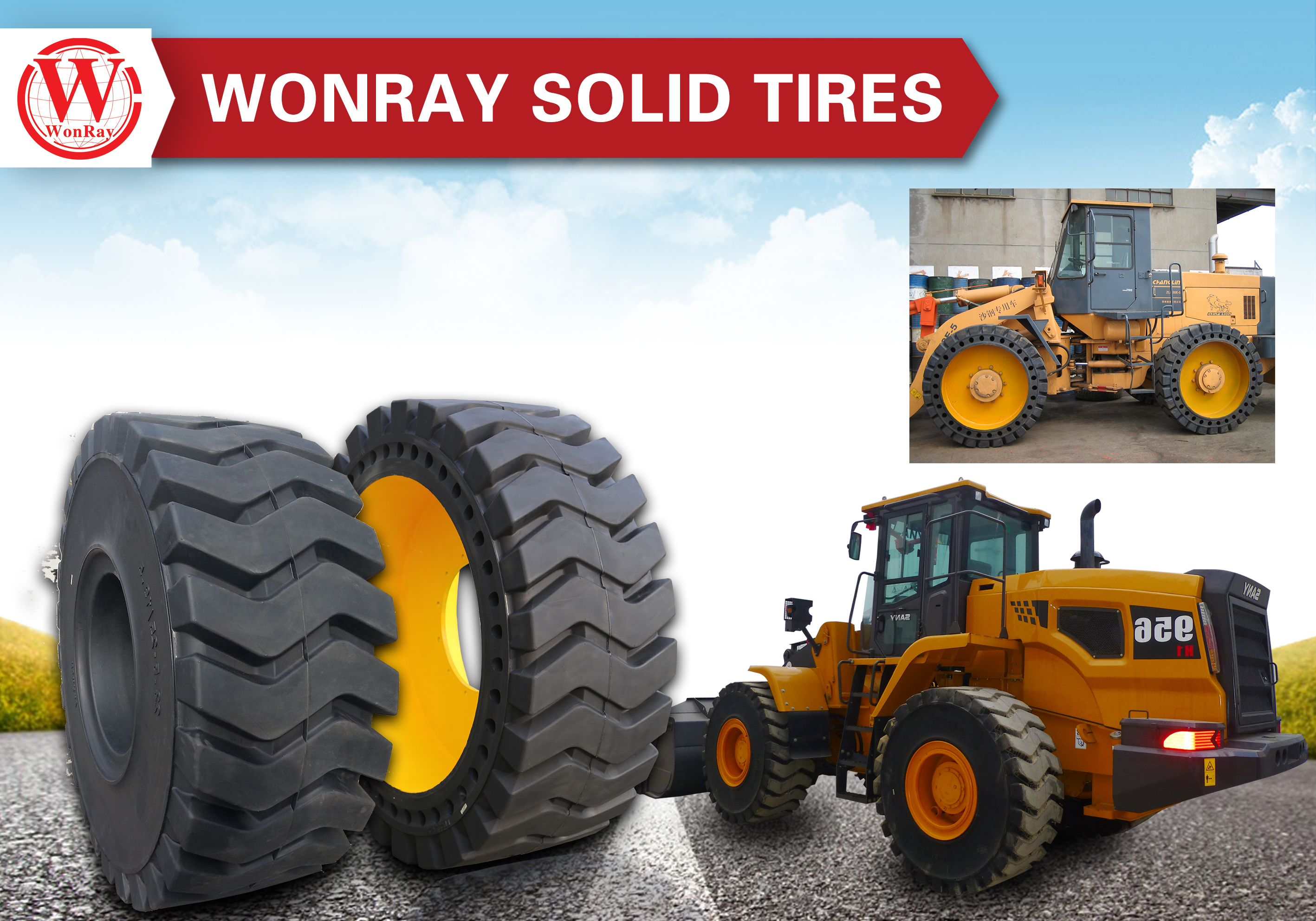
Choosing the Right Solid Tires
Selecting the correct solid tire for your vehicle involves evaluating several key factors:
● Vehicle Type: Identify whether the vehicle is a forklift, skid steer, agricultural tractor, or other heavy equipment. The tire type should match the vehicle’s operational needs.
● Terrain Conditions: Consider the surfaces on which the vehicle will operate. Rough, rocky, or muddy terrain may require tires with aggressive or all-terrain tread patterns, while smooth surfaces may benefit from a smoother tread for easier maneuverability.
● Load Capacity: Ensure the tire can handle the maximum load your vehicle carries. Exceeding load limits can reduce tire lifespan and compromise safety.
● Durability Rating: Opt for high-quality tires with proven durability ratings, especially in high-intensity work environments.
● Tread Pattern: Different tread designs provide traction, stability, and wear resistance suitable for specific terrains. For instance, lug patterns enhance grip on soft soil, while smooth treads are ideal for indoor warehouse floors.
● Size Compatibility: Match the tire size with your vehicle specifications to ensure proper fit and optimal performance.
Maintenance Tips for Solid Tires
While solid tires are low-maintenance, proper care ensures longevity and optimal performance:
-
Regular Inspection: Check for wear, cracks, or any surface damage.
-
Clean Tires: Remove debris, dirt, and foreign objects that may affect performance.
-
Check Alignment: Ensure proper wheel alignment to prevent uneven wear.
-
Monitor Vehicle Load: Avoid exceeding the recommended load capacity.
-
Rotate Tires: Periodically rotate tires for even wear and extended lifespan.
Adhering to these practices will help maintain safety and reliability throughout the tire’s service life.
FAQs: Common Questions About Solid Tires
Q1: Are solid tires suitable for all vehicles?
A1: Solid tires are primarily designed for industrial, construction, and agricultural vehicles operating in challenging environments. They are generally not suitable for standard passenger vehicles.
Q2: Do solid tires affect ride comfort?
A2: Solid tires provide a firm and stable ride, which may feel slightly different from pneumatic tires. However, they offer superior stability and durability, particularly for heavy loads.
Q3: Can solid tires be retreaded or repaired?
A3: Unlike pneumatic tires, solid tires cannot be retreaded or repaired. If a tire is damaged, it may need to be replaced entirely.
Q4: How do I select the best solid tire for my vehicle?
A4: Consider vehicle type, terrain, load capacity, tread pattern, size, and durability rating when choosing a solid tire. Prioritize high durability and matching load capacity for optimal performance.
Conclusion
Choosing the right solid tires is crucial for ensuring your vehicle’s performance, safety, and efficiency. By considering key factors such as vehicle type, terrain, load capacity, tread pattern, and durability, operators can select tires that meet their specific operational needs.
Solid tires provide long-lasting performance, minimal maintenance, enhanced stability, and cost-effectiveness. By understanding their advantages and following this guide, you can effortlessly choose the best solid tires for your vehicle, ensuring safety, reliability, and optimal productivity.
Product Selection Recommendations
When selecting solid tires, prioritize:
● Durability: High-quality materials for long-lasting performance.
● Load Capacity: Tires that safely handle your vehicle’s maximum load.
● Tread Design: Suitable for the specific terrain where the vehicle operates.
● Brand Reliability: Choose established brands with proven industrial applications.
Following these recommendations ensures that your vehicle operates safely and efficiently, while maximizing the lifespan and effectiveness of your solid tires.
Post time: 16-12-2025