
Introduction
In industrial settings, forklifts are the backbone of material handling operations, transporting heavy loads across warehouses, manufacturing floors, and distribution centers. Ensuring the safety and efficiency of forklifts is paramount, and one of the most critical factors influencing both is the choice of tires. Solid tires have emerged as a must-have component, offering unmatched durability, stability, and reliability.
Unlike pneumatic tires, which rely on air pressure and are prone to punctures or flats, solid tires are constructed from high-density rubber that provides puncture-proof performance. Coupled with modern technological enhancements, solid tires not only extend the lifespan of forklifts but also improve operator safety and operational efficiency.
Why Solid Tires Are Essential for Forklifts
Forklifts operate in demanding environments that often include rough floors, debris, and heavy loads. In such conditions, pneumatic tires can fail, causing unexpected downtime and increasing safety risks. Solid tires address these challenges effectively.
The solid construction of these tires provides consistent stability, enhanced traction, and a higher load-bearing capacity compared to traditional pneumatic tires. This means forklifts can carry heavier loads safely and maneuver smoothly, even on uneven or industrial-grade surfaces. The reduced risk of blowouts and punctures directly translates to fewer operational interruptions and safer working conditions.
Key Benefits of Solid Tires for Forklifts
Solid tires offer several distinct advantages that make them the preferred choice for forklift operations:
● Enhanced Durability and Longevity – Solid tires are designed to withstand harsh industrial conditions, resist wear and tear, and maintain performance over extended periods. Their high-density rubber composition ensures that they last significantly longer than pneumatic alternatives.
● Reduced Maintenance Costs – Unlike pneumatic tires that require frequent air pressure checks, repairs, and replacements due to flats, solid tires demand minimal maintenance. This translates to lower overall operational costs and reduced downtime.
● Increased Load Capacity – Forklifts equipped with solid tires can safely carry heavier loads without compromising stability. This increased capacity improves operational efficiency, allowing businesses to handle more goods with fewer trips.
● Improved Traction and Stability – Solid tires provide firm contact with the floor, which enhances grip and prevents slipping, even when transporting heavy or bulky loads. This stability is crucial for both operator safety and productivity.
● Resistance to Environmental Hazards – Solid tires are highly resistant to debris, sharp objects, and chemicals commonly found in warehouses and industrial settings. This durability ensures uninterrupted forklift operations.
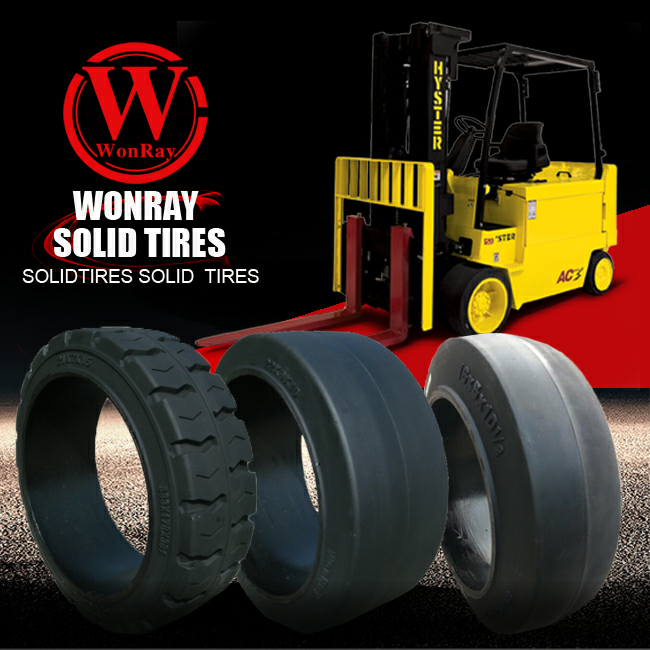
How Technology Enhances Solid Tires
Modern solid tires are not just rubber blocks—they incorporate technological innovations designed to maximize performance and safety. Features such as impact resistance, heat dissipation, and self-cleaning treads contribute significantly to forklift efficiency.
Impact resistance improves the tire’s ability to absorb shocks from heavy loads or uneven surfaces, reducing strain on both the forklift and its operator. Heat dissipation technology ensures that the tire can withstand high-friction environments without overheating or losing performance, which is especially important during continuous operations. Self-cleaning treads prevent the accumulation of debris, maintaining optimal traction and stability at all times.
In addition, technological advancements in materials science have allowed the development of composite solid tires, which combine rubber with specialized polymers. These materials provide a balance between firmness for stability and slight elasticity for operator comfort, mitigating one of the traditional drawbacks of solid tires—rigidity.
Comparing Solid Tires with Pneumatic Tires
While pneumatic tires may offer a slightly smoother ride due to air cushioning, they fall short in durability, load-bearing capacity, and puncture resistance. Forklifts with pneumatic tires are more likely to encounter flats or blowouts, leading to unscheduled maintenance and potential safety hazards.
In contrast, solid tires provide a reliable, maintenance-free option that maximizes operational uptime. Even under continuous heavy-duty use, solid tires maintain their shape, performance, and stability. The long-term cost savings from reduced maintenance, fewer replacements, and minimal downtime make solid tires a financially sound choice for industrial operations.
Selecting the Right Solid Tires
When choosing solid tires for forklifts, several factors must be considered to ensure optimal performance:
● Durability – Look for tires constructed from high-quality rubber compounds with reinforced materials to withstand heavy loads and industrial wear.
● Traction – Evaluate tread designs that offer maximum grip on your facility’s surfaces, whether smooth concrete, tiled floors, or slightly uneven areas.
● Load Capacity – Ensure the tires can safely support the forklift’s maximum operational weight, including the heaviest loads typically handled.
● Technological Features – Prioritize tires with advanced enhancements such as impact resistance, heat dissipation, and self-cleaning treads for improved performance and safety.
● Reputable Brands – Choose solid tires from manufacturers known for innovation, quality, and reliability to ensure that your forklift operates at peak efficiency.
Conclusion
Solid tires are more than just a component—they are a critical investment that can dramatically enhance the safety, efficiency, and reliability of forklifts in industrial settings. By combining durability, stability, and technological enhancements, solid tires address the limitations of pneumatic tires and provide long-term operational benefits.
Investing in high-quality solid tires ensures uninterrupted forklift operations, reduces maintenance costs, improves load-handling efficiency, and creates a safer workplace for operators. For businesses looking to maximize productivity while prioritizing safety, solid tires equipped with advanced technology are not merely an option—they are an essential part of modern forklift operations.
Post time: 22-01-2026