
In high-density industrial operations, reliable and efficient equipment is essential for smooth performance. One critical aspect of industrial machinery is the tires that support heavy operations. Solid tires have become a favored choice in industries that require high performance and durability due to their unique advantages over traditional pneumatic tires. This article explores the significant benefits of solid tires and why they are the best option for industries with demanding operational needs, including applications in machinery like forklifts, cranes, and various construction vehicles.
The Advantages of Solid Tires
Solid tires are made from solid rubber compounds and do not contain air-filled chambers. This design results in several performance benefits for industrial operations, especially in high-density environments:
● Exceptional Durability: Solid tires are resistant to punctures, cuts, and abrasions. Unlike pneumatic tires that may suffer from sudden air pressure loss or flats, solid tires maintain their integrity even in tough conditions.
● Extended Tire Life: Due to their robust construction, solid tires last longer than pneumatic tires. They are designed to withstand intense operational stresses, making them a long-term investment.
● No Downtime Due to Flats: One of the key advantages of solid tires is that they do not require constant air pressure maintenance. Since they are solid, they eliminate the risk of flat tires, reducing downtime and improving overall operational efficiency.
● Superior Stability and Load-Bearing Capacity: Solid tires offer excellent stability, especially when carrying heavy loads. This makes them ideal for machinery used in warehouses, factories, and construction sites where load-bearing capacity is crucial.
● Improved Traction and Grip: Solid tires are designed to provide superior traction, ensuring that machinery can operate on a variety of surfaces, including rough and uneven terrain, with increased grip and stability.
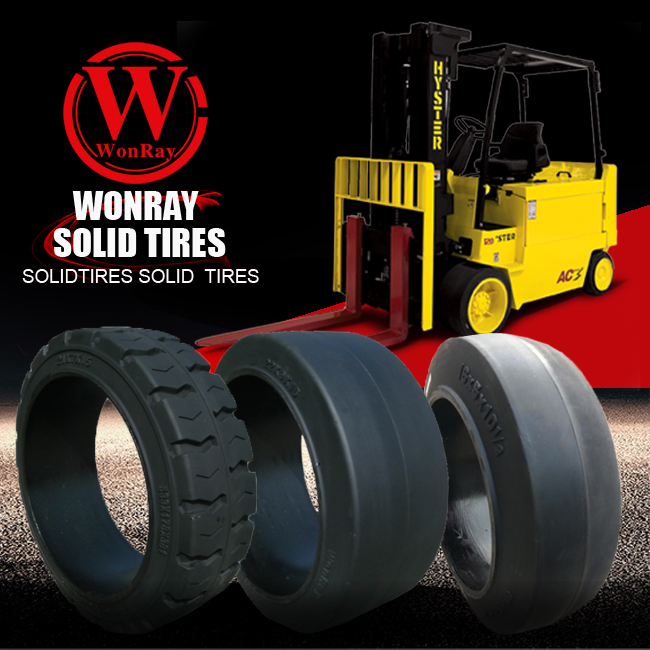
Why Choose Solid Tires for High-Density Industrial Operations?
In high-density industrial operations such as warehouses, manufacturing plants, distribution centers, and construction sites, machinery must endure continuous and heavy usage. Solid tires are the perfect solution for these environments due to their robust and reliable performance. Here’s why solid tires excel in demanding operational settings:
1. Durability
Solid tires are designed to last longer than pneumatic tires. The heavy-duty rubber compounds used in solid tires can endure challenging work environments, whether it’s extreme temperatures, rough surfaces, or heavy loads. They are highly resistant to wear and tear, which directly translates into reduced maintenance costs and higher productivity. Unlike pneumatic tires, which can suffer from flats or punctures, solid tires maintain their shape and function for long periods, even in the toughest conditions.
2. Stability and Load-Bearing Capacity
One of the defining features of solid tires is their excellent load-bearing capacity. When machines equipped with solid tires carry heavy loads, the tires provide superior stability. This is especially crucial in high-density operations where stability is essential to maintaining operational efficiency and safety. Solid tires maintain better contact with the ground, ensuring a smoother operation and reducing the risk of instability or accidents. This level of stability is beneficial in industries that require precise maneuvering and the safe transportation of materials.
3. Reduced Maintenance and Operational Costs
Solid tires require much less maintenance than pneumatic tires, reducing the time and cost associated with tire-related maintenance tasks. Pneumatic tires often need regular air pressure checks, repairs for punctures, and replacements due to wear. Solid tires, on the other hand, eliminate the risk of air leaks or punctures, making them ideal for high-density environments that experience constant operational wear. Businesses that rely on heavy-duty machinery can save money on maintenance, downtime, and replacement costs with solid tires.
4. Efficiency in High-Density Environments
High-density industrial operations often involve large machinery that operates in confined or high-traffic areas. This can put tremendous strain on the equipment, and having reliable tires is essential to ensure uninterrupted productivity. Solid tires offer the reliability and consistency needed for these environments. They excel in high-traffic conditions where pneumatic tires might fail due to wear, punctures, or air pressure issues. With solid tires, businesses can maintain consistent operations without worrying about sudden interruptions.
Comparing Solid Tires vs. Pneumatic Tires
To better understand the benefits of solid tires, it’s helpful to compare them to their pneumatic counterparts. Below is a breakdown of key characteristics for solid tires versus pneumatic tires:
| Criteria | Solid Tires | Pneumatic Tires |
|---|---|---|
| Durability | High | Moderate |
| Maintenance Requirement | Low | High |
| Load-Bearing Capacity | High | Moderate |
| Puncture Resistance | Excellent | Prone to Punctures |
| Longevity | Long-lasting | Shorter lifespan |
As illustrated, solid tires outperform pneumatic tires in several critical areas. They require significantly less maintenance, offer superior durability, and are better suited for heavy-duty operations due to their higher load-bearing capacity and resistance to punctures. These attributes make solid tires the superior choice for industries that require constant and reliable machinery performance.
Application in Machinery like Forklifts and Construction Equipment
Solid tires are commonly used in industrial machinery such as forklifts, cranes, material handling equipment, and construction vehicles. Here’s how they benefit different types of machinery:
● Forklifts and Warehouse Equipment: Forklifts are constantly in use in high-density environments, moving heavy materials across warehouse floors. Solid tires provide the necessary stability, load-bearing capacity, and traction to ensure smooth and efficient operations.
● Construction Equipment: Construction machinery, such as backhoes and bulldozers, often operates in rough, uneven terrain. Solid tires are ideal for this environment as they provide enhanced durability, better grip, and can carry heavy loads without the risk of punctures or flats.
● Material Handling Equipment: In manufacturing plants and distribution centers, material handling equipment is subjected to heavy-duty usage. Solid tires ensure that these machines perform reliably, even in challenging working conditions, reducing downtime and maintenance costs.
Conclusion and Product Selection Recommendations
Solid tires have proven to be the best choice for high-density industrial operations due to their exceptional durability, stability, and performance advantages. They provide numerous benefits, including reduced maintenance, enhanced load-bearing capacity, and superior puncture resistance. When selecting tires for machinery in industrial environments, solid tires can help businesses enhance productivity, reduce operational costs, and improve overall safety.
For companies operating in high-density industrial settings, investing in solid tires is a wise decision. They are designed to withstand the toughest conditions, ensuring that equipment operates smoothly without interruptions. Whether you’re managing a warehouse, a manufacturing plant, or a construction site, solid tires can optimize your equipment’s performance, contributing to long-term operational efficiency and profitability.
FAQ
What are the main advantages of solid tires in industrial operations?
Solid tires offer durability, excellent load-bearing capacity, superior puncture resistance, and reduced maintenance needs. These advantages make them ideal for high-density industrial operations.
How do solid tires compare to pneumatic tires in terms of maintenance?
Solid tires require significantly less maintenance than pneumatic tires, as they do not need air pressure checks and are immune to punctures, leading to fewer repairs and reduced downtime.
Are solid tires suitable for heavy-duty machinery?
Yes, solid tires are specifically designed for heavy-duty machinery, offering high load-bearing capacity and stability, making them perfect for forklifts, cranes, and construction vehicles.
Post time: 23-03-2026