
Skid steer loaders operate in demanding conditions, often handling heavy loads, making frequent turns, and traveling across rough or abrasive surfaces. These working cycles place continuous stress on their wheels. Although Skid Steer Rubber Wheels may appear similar from the outside, differences in rubber compounds, structural design, and tread construction can affect their durability and operating performance.
For equipment owners, choosing suitable wheels means looking beyond dimensions and initial cost. Understanding how wheel construction affects wear resistance, load support, and ground contact makes it easier to compare products and select replacements that match actual working conditions.
How Rubber Compound Affects Wheel Durability
The rubber compound directly influences how a wheel responds to friction, pressure, and repeated contact with the ground. Different formulations offer different combinations of hardness, elasticity, abrasion resistance, and environmental resistance. These properties determine how well the rubber withstands daily operating demands.
For skid steer loaders working on concrete, compacted ground, or abrasive construction surfaces, wear resistance is an important consideration. Frequent movement and tight turns can gradually remove rubber from the contact surface. A suitable compound can help slow this process, but high hardness alone does not guarantee longer service life.
Rubber that is too hard for an application may have limited flexibility when dealing with uneven surfaces. A softer compound may provide greater flexibility but could wear more quickly under certain operating conditions. The right balance depends on the machine’s load, speed, turning frequency, and working environment.
Environmental exposure also matters. Oil, chemicals, moisture, sunlight, and temperature changes may affect rubber performance, depending on the formulation. If a skid steer loader operates in an environment involving these conditions, buyers should confirm that the selected compound is suitable.
When comparing Skid Steer Rubber Wheels, it is therefore useful to ask about the intended application of the rubber material rather than relying only on general descriptions such as heavy-duty or wear-resistant. The goal is to find a compound that matches the actual demands placed on the equipment.
Why Wheel Structure Matters for Load Support
Rubber quality is only one part of overall wheel performance. The wheel’s construction also determines how it supports the machine and distributes forces during operation.
A skid steer loader must support its own weight as well as the additional load carried by its attachments. The pressure on the wheels can change during lifting, transporting, turning, and traveling over uneven ground. Equipment that frequently handles heavy materials may place greater demands on its wheels than a machine used for lighter tasks.
A suitable wheel structure should maintain its integrity under the required operating load. Excessive deformation can affect ground contact and may contribute to uneven wear. However, deformation or damage should not automatically be attributed to wheel construction alone. Overloading, incorrect installation, unsuitable specifications, and equipment faults may also be involved.
Before selecting replacement wheels, buyers should check the machine’s requirements and confirm that the product is compatible with its load conditions. They should also consider the operating speed and duty cycle rather than comparing load capacity in isolation.
Choosing a wheel simply because it is larger or heavier is not a reliable selection method. Correct dimensions, mounting compatibility, and suitable load capacity are more important than appearance alone.
How Tread Design Influences Traction and Wear
Tread design affects how Skid Steer Rubber Wheels interact with different ground surfaces. It influences traction, contact conditions, and the way the wheel responds when the machine accelerates, brakes, or turns.
For example, a skid steer loader operating mainly on concrete may have different requirements from one working on gravel, compacted soil, or mixed construction surfaces. A tread pattern suitable for one surface may not provide the same performance on another. Loose material, surface hardness, and moisture can all change the available grip.
Turning behavior is particularly important. Skid steer loaders change direction by controlling the movement of their wheels, which can create friction between the tread and the ground. Repeated tight turns may accelerate tread wear, especially when the machine carries heavy loads or operates on abrasive surfaces.
Buyers should therefore consider more than whether a tread looks aggressive or deep. The more useful question is whether its design suits the machine’s regular working environment. A tread pattern that provides appropriate traction without unnecessary resistance or wear can support more consistent daily operation.
Signs That the Wheels May Not Suit the Working Conditions
Premature wear does not always mean that a wheel has a manufacturing defect. It may indicate that the product is unsuitable for the application, that operating conditions are too demanding, or that another part of the machine needs attention.
During routine inspections, operators should look for several warning signs:
- Rapid tread wear: May be related to abrasive surfaces, frequent turning, wheel slipping, or unsuitable rubber properties.
- Cracks or surface damage: Can result from aging, impact, environmental exposure, or excessive operating stress.
- Uneven deformation: May indicate inconsistent loading, installation problems, or incorrect wheel specifications.
- Changes in machine handling: Unusual vibration, reduced traction, or unstable movement may be associated with wheel damage or other equipment issues.
These symptoms should be assessed alongside operating conditions and maintenance records. For example, if the same wheel position repeatedly develops abnormal wear, checking the installation and equipment condition may be more useful than simply installing another replacement.
Identifying the cause helps prevent repeated replacement costs and reduces the risk of choosing another product that encounters the same problem.
What to Check Before Buying Replacement Wheels
Once the machine’s requirements and working conditions are clear, buyers can compare replacement products more effectively. The following factors help determine whether a wheel is suitable:
- Machine compatibility: Confirm the machine make and model, wheel dimensions, mounting arrangement, and other fitment requirements.
- Load requirements: Check whether the wheel is suitable for the equipment’s weight, working load, speed, and operating cycle.
- Rubber properties: Understand the compound’s intended application and its relevant wear and environmental resistance.
- Tread suitability: Match the tread design to the actual ground conditions and turning demands.
- Manufacturing consistency: Consider whether the supplier can provide consistent product construction and quality across replacement sets.
Price should be evaluated together with expected service life and operating requirements. A lower purchase price may not offer better value if the wheels wear quickly or require frequent replacement. On the other hand, a more expensive product is not automatically the right choice if its features do not provide a practical benefit for the application.
Buyers should also avoid assuming that a wheel suitable for one skid steer model will fit another. Even when products look similar, differences in dimensions or mounting arrangements can prevent correct installation.
Matching Skid Steer Rubber Wheels to Actual Applications
There is no single wheel construction that suits every skid steer loader. Machines working on paved surfaces, construction sites, landscaping projects, and material-handling areas may face different combinations of load, friction, impact, and turning stress.
For this reason, selecting Skid Steer Rubber Wheels should begin with the equipment’s specifications and typical working conditions. Buyers should consider the surfaces the machine travels on, the materials it handles, how frequently it turns, and how intensively it operates each day.
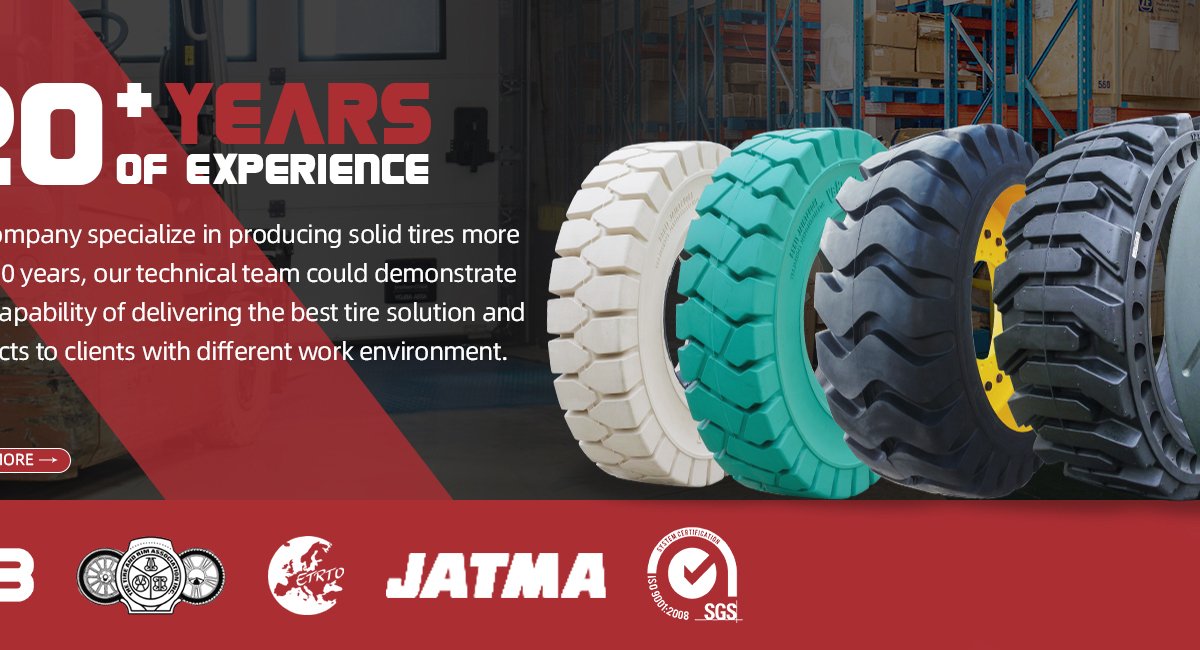
WonRay provides industrial solid tire and wheel solutions for different equipment and material-handling applications. When considering options for skid steer loaders, customers can evaluate product suitability in relation to machine specifications, load requirements, and ground conditions. Confirming these details before ordering helps reduce fitment problems and supports more reliable equipment operation.
Conclusion
The durability of Skid Steer Rubber Wheels depends on more than rubber hardness or overall size. Rubber compound, structural design, and tread construction all influence how the wheels handle loads, friction, and changing ground conditions. By comparing these characteristics with the machine’s specifications and working environment, buyers can make better replacement decisions, reduce avoidable wear, and select wheels that are more suitable for their daily operations.
FAQs
1. Does harder rubber always mean a more durable skid steer wheel?
No. Hardness is only one material property. Durability also depends on elasticity, abrasion resistance, operating conditions, and how well the compound suits the application.
2. Can the same wheel design work on concrete and gravel?
Not necessarily. Different surfaces create different traction and wear conditions. Buyers should choose a design based on the machine’s main operating environment and the balance of traction and durability required.
3. What causes skid steer wheels to wear unevenly?
Possible causes include frequent turning, uneven loading, incorrect installation, unsuitable specifications, and equipment problems. The wheel and machine should be inspected together to identify the cause.
4. Is matching wheel dimensions enough when buying replacements?
No. Dimensions are essential, but buyers must also confirm mounting compatibility, load suitability, tread design, and whether the rubber properties match the working environment.
Post time: 12-11-2026