
Wheel loaders play an important role in scrap yards, handling metal waste, moving heavy materials, and loading scrap into trucks or processing equipment. However, sharp metal fragments, uneven surfaces, heavy loads, and frequent turning create demanding conditions for their tires. Premature tire damage can lead to unexpected maintenance, replacement expenses, and equipment downtime.
Choosing suitable Scrap Yard Wheel Loader Tires requires more than matching tire dimensions to the machine. Operators must consider tire construction, load requirements, ground conditions, and daily work patterns. Understanding these factors helps reduce avoidable damage and maintain reliable equipment performance.
Why Wheel Loader Tires Are Easily Damaged in Scrap Yards
Scrap yards contain a mixture of materials, including metal sheets, broken components, sharp fragments, and irregular piles. Unlike relatively controlled warehouse environments, these surfaces can change frequently, making tire protection more difficult.
Cutting damage is a common concern. Sharp metal edges can penetrate or cut the rubber surface as a loader travels across scattered scrap. Repeated contact with the same debris may deepen existing cuts and increase the risk of more serious damage.
Impact is another source of stress. Wheel loaders often carry heavy materials across uneven ground. Contact with hard objects, loose debris, or raised surfaces can place additional pressure on the tire. Over time, repeated impacts may contribute to cracking, deformation, or localized structural damage.
Frequent turning and reversing also accelerate wear. Scrap yards often have limited working space, requiring loaders to change direction regularly while approaching material piles. These movements increase friction between the tire and the ground, particularly when the machine is carrying a heavy load.
How Tire Damage Affects Equipment Operation
Tire problems do not always cause immediate equipment failure. Some damage develops gradually, becoming more serious as the machine continues operating. A small surface cut, for example, may initially appear manageable but can expand through repeated contact with sharp debris.
Uneven wear can also affect machine handling. Differences in tire condition may influence traction, stability, and movement. Operators may notice unusual vibration, reduced grip, or changes in handling when turning. These signs should be inspected rather than treated as normal wear.
The consequences extend beyond the cost of replacing a tire. Maintenance requires labor and equipment downtime. If a loader is responsible for transporting scrap between storage and processing areas, its absence may also interrupt other operations.
Reducing downtime therefore requires two things: selecting tires suited to scrap handling and identifying damage before it becomes severe.
What Should Buyers Consider When Choosing Scrap Yard Wheel Loader Tires?
Resistance to Cutting and Surface Damage
Scrap handling exposes tires to sharp materials more frequently than many conventional applications. Rubber compound and tire construction influence how a tire responds to abrasion and contact with debris. Buyers should confirm whether the product is designed for demanding industrial conditions. However, no tire is completely immune to cutting. Even heavy-duty tires can be damaged by sufficiently sharp objects or concentrated impacts. Worksite conditions should therefore remain part of the selection decision.
Load Capacity and Structural Support
Wheel loaders handle materials with different weights and densities. Tires must support the machine and its operating load within the manufacturer’s specified limits. Overloading increases deformation and stress, potentially accelerating wear and reducing service life. Buyers should check the loader’s specifications and actual workload before choosing a tire. Matching dimensions alone does not guarantee that a tire can safely meet the machine’s requirements.
Tread Design and Ground Conditions
Tread design affects traction and the tire’s ability to operate on different surfaces. A loader working on compacted ground may need different characteristics from one moving across loose scrap, gravel, or uneven outdoor surfaces. The selected tread should provide suitable traction while accommodating frequent turning and reversing. The best option depends on the balance between surface conditions, machine movement, and material handling tasks.
Heat Resistance During Extended Operation
Repeated movement, heavy loading, turning, and braking can generate heat inside a tire. In operations involving long working hours, excessive heat may contribute to rubber deterioration, especially when the tire operates beyond its intended load or speed limits. Buyers should consider working duration, operating speed, load, and tire specifications together. A tire suitable for intermittent use may not be appropriate for continuous, demanding operations.
Matching Tires to Different Scrap Yard Operations
A loader working mainly in sorting areas may turn frequently and repeatedly encounter scattered metal fragments. In this situation, resistance to surface damage, traction, and the ability to withstand repeated directional changes deserve attention.
A machine transporting heavy scrap between storage and loading areas places greater demands on load capacity and structural support. The selected tire must match the actual load, travel distance, and operating speed.
Outdoor facilities may also have mixed ground conditions. Rain, loose gravel, compacted soil, and uneven surfaces can all affect traction. A tire suitable for smooth concrete should not automatically be considered appropriate for these environments.
Before purchasing Scrap Yard Wheel Loader Tires, operators should review four important details:
- Equipment specifications: Confirm the loader model, tire dimensions, wheel specifications, and manufacturer requirements.
- Actual workload: Consider material weight, loading frequency, and whether the machine regularly operates near its rated capacity.
- Ground conditions: Identify the main surfaces, including concrete, gravel, compacted soil, and areas containing metal debris.
- Operating patterns: Review daily working hours, turning frequency, travel distance, and time spent moving under load.
Providing this information helps manufacturers recommend products based on actual application requirements.
How to Reduce Tire Damage and Premature Replacement
Correct tire selection is only part of the solution. Daily operating practices and site management also influence tire service life. Keeping frequently used routes clear of large sharp objects can reduce unnecessary contact with hazardous debris. Loading and turning areas should also be maintained as well as practical to help operators avoid obstacles and sudden movements.
Driving behavior matters too. Excessive wheelspin creates additional friction, while sharp turns under heavy loads increase stress on the tire surface. Smooth acceleration, controlled turning, and avoiding unnecessary sudden braking can help reduce avoidable wear.
Regular inspections are equally important. Operators should check for cuts, cracks, abnormal wear, and deformation. If damage becomes deeper or expands over time, the tire should be assessed promptly.
When the same wheel position repeatedly develops problems, replacing the tire without investigating the cause may not solve the issue. Uneven loading, wheel alignment, operating routes, and equipment condition should also be checked. Serious damage that may affect safe operation requires professional assessment.
When Should Scrap Yard Wheel Loader Tires Be Replaced?
Not every visible mark requires immediate replacement. Surface wear and minor damage should be evaluated according to the tire manufacturer’s guidance and applicable equipment safety requirements.
However, deep cuts, exposed structural layers, significant deformation, abnormal cracking, and rubber separation require particular attention. Continuing to operate with serious damage may increase the risk of equipment problems and unexpected downtime.
Replacement decisions should consider both the tire’s physical condition and its effect on machine performance. Unusual vibration, reduced traction, or changes in handling are reasons to arrange an inspection.
Keeping records of installation dates, inspection results, operating hours, and replacement reasons can also help identify recurring damage patterns. This information makes it easier to determine whether a different tire specification would better suit the working environment.
Choosing Suitable Wheel Loader Tires for Scrap Handling
Selecting the right tire requires a clear understanding of the loader and its operating conditions. Cutting resistance, load capacity, tread suitability, heat behavior, and structural quality should be evaluated together. A tire that performs well in one application may not deliver the same results under different ground or loading conditions.
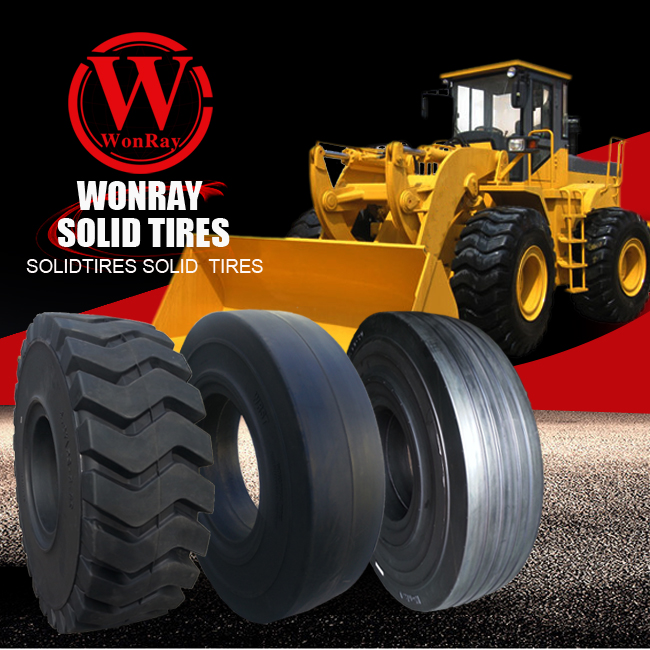
WonRay provides solid tire solutions for industrial equipment, including wheel loader applications. When evaluating options for scrap handling, operators can consider the loader model, load requirements, ground conditions, and daily operating cycle to identify a suitable product. Matching tire specifications to actual working conditions helps support reliable operation and reduce unnecessary replacement.
Conclusion
Scrap Yard Wheel Loader Tires must withstand sharp metal debris, heavy loads, frequent turning, and uneven surfaces. These conditions can contribute to premature damage and equipment downtime. By evaluating tire construction, matching specifications to actual workloads, improving operating practices, and inspecting tires regularly, operators can make better selection decisions and maintain more consistent equipment performance.
FAQs
1. What causes wheel loader tires to wear quickly in scrap yards?
Sharp metal fragments, rough ground, heavy loads, frequent turning, and wheelspin can all accelerate tire wear and damage.
2. Are solid tires suitable for scrap yard wheel loaders?
They may suit certain applications, depending on machine design, load, speed, and working conditions. Compatibility should be confirmed before selection.
3. How often should scrap yard wheel loader tires be inspected?
Follow the equipment and tire manufacturer’s recommendations. In demanding environments, operators should also check for visible damage and unusual changes in handling during routine maintenance.
4. Can a damaged wheel loader tire continue to be used?
It depends on the damage type and severity. Deep cuts, exposed structural layers, deformation, or rubber separation require professional assessment before further operation.
Post time: 17-11-2026