
Forklifts are the backbone of modern material handling operations, and the tires they run on play a pivotal role in performance, safety, and cost efficiency. Among the various options, press-on forklift tires stand out for their durability, low maintenance, and reliability under heavy loads. These solid rubber tires are designed to handle industrial demands while ensuring smooth and stable forklift operation.
Construction and Design Features
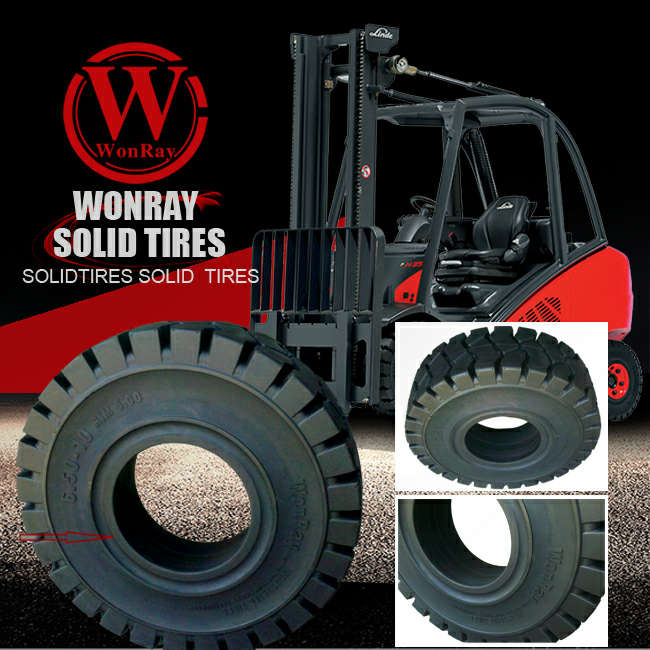
Press-on forklift tires are made from solid rubber bonded directly to steel wheels. This unique design delivers a combination of strength, stability, and resistance to damage. Key design features include:
● Solid rubber material: Provides superior resistance to wear, deformation, and punctures.
● Bonded to steel rims: Prevents wheel-tire slippage, improving handling precision.
● Smooth or treaded surface options: Adapted for different industrial surfaces, such as indoor warehouses or reinforced outdoor areas.
● Shock absorption: Reduces vibration and improves operator comfort during long shifts.
● Heat and chemical resistance: Suitable for environments with exposure to heat, oils, or chemicals.
These design elements ensure press-on tires remain functional under high-frequency and high-load operations, making them suitable for industrial environments where reliability is critical.
Performance Characteristics
The performance of press-on forklift tires extends beyond durability. Their characteristics make them particularly suitable for heavy-duty operations:
● High load-bearing capacity: Able to support the maximum rated load of forklifts without compromising stability.
● Wear resistance: Solid construction maintains shape and traction over long periods of operation.
● Puncture-proof reliability: Resistant to sharp objects and debris commonly found in warehouses or production floors.
● Stable traction: Provides consistent grip for precise movements and safe operation in tight spaces.
● Noise reduction: Solid rubber composition reduces operational noise compared to pneumatic tires, contributing to a safer and more comfortable workplace.
These performance characteristics allow forklifts to operate efficiently while reducing downtime and operational disruptions.
Industrial Applications
Press-on forklift tires are versatile and can be applied across a variety of industrial environments:
● Warehouses and distribution centers: Ideal for repetitive pallet handling and high-frequency forklift operations.
● Manufacturing facilities: Supports continuous movement of heavy machinery, components, and materials on concrete floors.
● Food and beverage industry: Smooth, non-marking options protect floors while maintaining load capacity.
● Loading docks and short-term outdoor areas: Certain reinforced models can handle smooth asphalt or concrete in brief outdoor operations.
● Heavy material handling sectors: Steel, automotive, construction, and logistics industries benefit from their durability and load capacity.
The adaptability of press-on forklift tires ensures that forklifts remain operational in a variety of demanding settings.
Maintenance and Care
One of the main advantages of press-on tires is their low-maintenance design, but proper care can significantly extend their lifespan:
● Routine visual inspections: Check for cracks, chips, and unusual wear patterns.
● Cleaning: Remove debris, oils, or chemicals that could damage the rubber over time.
● Wheel hub lubrication: Ensures smooth rotation and prevents additional stress on the tires.
● Environmental considerations: Avoid prolonged exposure to extreme temperatures or corrosive substances.
● Rotation if applicable: In high-use operations, rotating tires can help maintain even wear and extend service life.
Proper maintenance practices prevent premature wear and ensure consistent forklift performance.
Advantages Over Alternative Tire Types
Compared to pneumatic or semi-solid tires, press-on tires offer multiple advantages for industrial operations:
● Minimal downtime: Puncture-proof design eliminates unplanned stops due to flats or leaks.
● Cost efficiency: Long service life reduces replacement frequency and maintenance costs.
● Operational stability: Solid construction improves handling precision and reduces the risk of accidents.
● Environmentally resilient: Resistant to oils, chemicals, and temperature variations commonly found in industrial settings.
● Indoor suitability: Ideal for warehouses and manufacturing facilities where smooth, consistent traction is critical.
These advantages make press-on tires a preferred choice for businesses seeking reliable and efficient forklift performance.
Conclusion
Press-on forklift tires are an essential component for industrial efficiency, offering durability, low maintenance, and exceptional load-handling capabilities. Their solid construction, puncture-proof design, and stable traction ensure forklifts operate safely and efficiently in demanding environments. By understanding their performance characteristics, applications, and proper maintenance practices, businesses can maximize forklift productivity and reduce operational disruptions.
FAQ
Q1: What makes press-on forklift tires different from solid pneumatic tires?
● Press-on tires are bonded solid rubber, preventing flats and minimizing maintenance, while solid pneumatic tires offer some cushioning but may require inspection and repair.
Q2: Can press-on forklift tires handle heavy loads continuously?
● Yes, their solid construction allows them to support maximum rated loads for extended periods without losing stability.
Q3: What maintenance is recommended for press-on forklift tires?
● Conduct regular visual inspections, clean debris or chemicals, lubricate wheel hubs, and rotate tires if necessary to maintain even wear.
Q4: Are press-on forklift tires suitable for outdoor use?
● Primarily designed for indoor use on smooth surfaces; reinforced variants can handle short-term outdoor operations on concrete or asphalt.
Post time: 29-01-2026