
Warehouse operations depend on different types of material handling equipment to move goods between storage areas, loading zones, and production spaces. Although these machines may operate on the same floor, they do not place identical demands on their wheels. Load weight, turning frequency, travel distance, and operating speed all influence wheel performance.
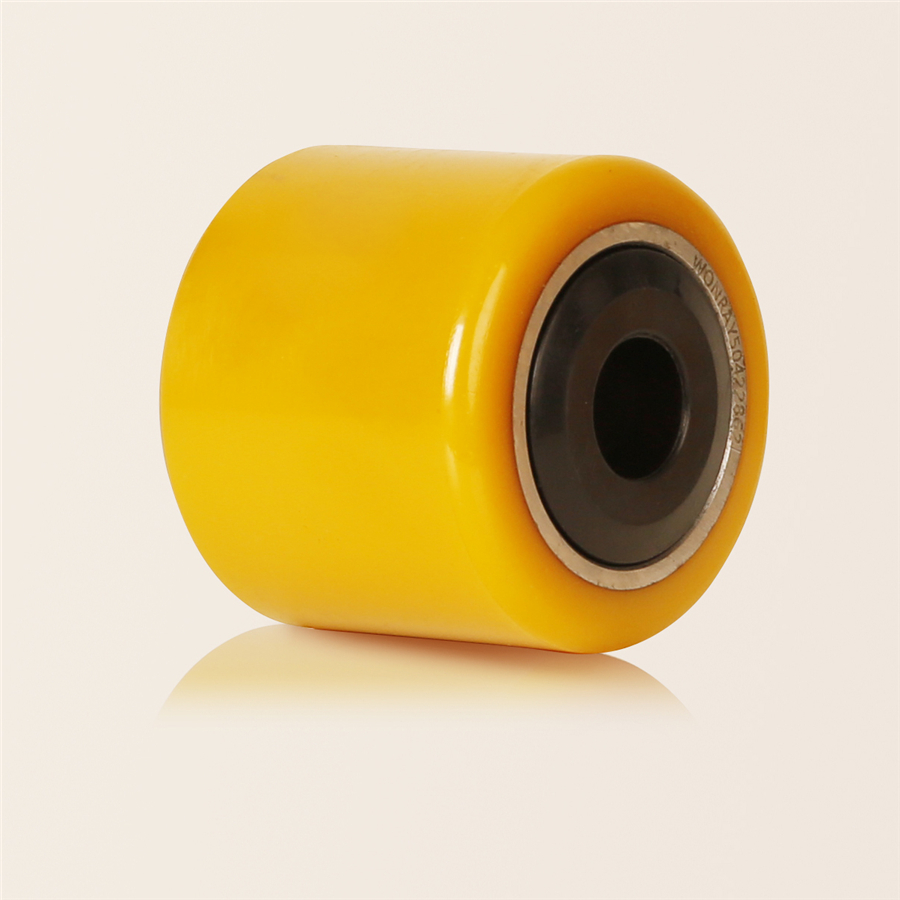
Polyurethane Tires For Warehouses are commonly used in applications that require a balance of load support, rolling performance, wear resistance, and floor compatibility. However, choosing the right option involves more than checking wheel dimensions. The tire must match the equipment’s structure, working load, and operating environment.
Why Different Warehouse Equipment Needs Different Polyurethane Tires
Warehouses may use forklifts, pallet trucks, stackers, and other powered or manual handling equipment. Each machine performs different tasks, so its wheels experience different forces.
Forklifts carry heavy loads and may turn while transporting materials. Their tires must support the equipment and cargo while maintaining stable handling. Pallet trucks generally move goods over shorter distances, often with frequent starts, stops, and steering movements. Stackers operate in narrower spaces, where controlled movement and stability are especially important.
These differences affect tire selection. A wheel suitable for a lightly loaded pallet truck may not be appropriate for a heavier powered machine. Similarly, a tire designed mainly for straight-line movement may wear more quickly when used on equipment that turns frequently.
Matching Polyurethane Tires to Common Material Handling Equipment
| Equipment type | Typical operating conditions | Important wheel considerations |
|---|---|---|
| Forklifts | Heavy loads, frequent turning, varied travel routes | Load capacity, stability, wear resistance, and traction |
| Pallet trucks | Short-distance movement, frequent starts and stops | Rolling resistance, floor contact, and maneuverability |
| Electric stackers | Narrow aisles, lifting operations, controlled movement | Stability, dimensional compatibility, and predictable steering |
| Reach trucks | Indoor operation, precise positioning, repeated movement | Consistent rolling performance, wear resistance, and equipment compatibility |
These are general selection considerations rather than fixed specifications. Actual requirements depend on the equipment design, wheel position, rated load, and working environment.
The distinction between drive wheels and load wheels is particularly important for forklifts. Drive wheels transfer power to the floor and help control vehicle movement, while load wheels support the carried weight. Because their functions differ, they may require different dimensions and performance characteristics.
For pallet trucks, rolling resistance and maneuverability can have a direct effect on daily operation. A wheel with unsuitable rolling characteristics may make manual movement more difficult or increase the energy required by powered equipment.
How Load Capacity and Wheel Position Affect Selection
Load capacity is one of the most important factors when choosing Polyurethane Tires For Warehouses. The combined weight of a vehicle and its cargo is not necessarily distributed evenly across all wheels. During lifting, turning, or movement over uneven floor sections, some wheels may carry a greater share of the load.
Selecting a wheel based only on the vehicle’s total weight can therefore lead to an incorrect choice. Equipment managers should consider the manufacturer’s rated capacity, the number of load-bearing wheels, and the maximum load that each wheel position may experience.
Wheel position also determines the forces a tire must handle:
- Drive wheels: These transfer driving forces to the floor. Selection should account for traction, repeated acceleration, braking, and operating speed.
- Load wheels: These support transported goods and may experience concentrated pressure. Load capacity and resistance to deformation are important.
- Steering wheels: These influence directional control and experience additional lateral forces during turns. Their dimensions and rolling characteristics should suit the steering mechanism.
Dimensions, mounting methods, and bearing arrangements must also match the equipment. Even a polyurethane tire with suitable material properties may cause operating problems if it does not fit the original wheel assembly correctly.
Choosing Wheel Performance for Different Warehouse Floor Conditions
Smooth concrete generally allows consistent rolling, while damaged joints, surface irregularities, dust, and debris can increase resistance or create localized stress.
In warehouses with narrow aisles, equipment may need to turn frequently and position loads precisely. Wheel stability and predictable steering may therefore be more important than maximum straight-line speed. In larger distribution facilities, equipment may travel longer distances, making rolling resistance and wear behavior more significant.
Floor coatings also deserve attention. Some warehouses use epoxy-coated or other treated surfaces, but their condition can change with use. Dust, moisture, oil, and cleaning residues may affect traction regardless of the wheel material.
Before selecting a tire, consider four factors:
- Floor material: Identify whether the equipment operates on concrete, epoxy-coated floors, or mixed surfaces.
- Surface condition: Check for cracks, joints, debris, and uneven areas that may increase impact forces.
- Operating route: Determine whether the equipment mainly travels in straight lines or frequently turns in confined spaces.
- Environmental exposure: Consider moisture, oil, dust, and cleaning chemicals that may influence wheel performance.
This assessment helps narrow the selection to tires suited to the actual warehouse environment instead of relying only on general product descriptions.
Balancing Hardness, Rolling Resistance, and Wear
Polyurethane hardness affects how a wheel responds to loads and contacts the floor. Harder wheels may offer lower rolling resistance on smooth surfaces, but they can transmit more vibration when traveling over joints or uneven areas. Softer wheels may provide more cushioning and floor contact, although their rolling behavior and wear characteristics can differ.
There is no single hardness level that works best for every warehouse application. The appropriate choice depends on equipment weight, load distribution, floor condition, operating speed, and turning frequency.
Wear resistance is equally important. Frequent turning creates additional friction, particularly when a wheel moves sideways rather than rolling in its normal direction. Overloading, incorrect installation, and unsuitable wheel dimensions may also accelerate deterioration.
For this reason, polyurethane tires should be evaluated as part of the complete equipment system. Choosing the hardest or most wear-resistant option without considering the working conditions does not necessarily deliver the best overall performance.
Common Selection Mistakes That Increase Operating Costs
Common mistakes include:
- Ignoring wheel position: Applying the same selection criteria to drive, load, and steering wheels can result in unsuitable performance.
- Checking dimensions but overlooking load requirements: Correct diameter and width do not automatically mean a wheel can support the required working load.
- Choosing hardness without considering the floor: A wheel suitable for smooth concrete may perform differently on damaged or uneven surfaces.
- Overlooking mounting compatibility: Incorrect hubs, bearings, or installation arrangements can affect movement and cause premature damage.
When recurring wear appears, inspect the equipment, floor, and operating pattern together. Replacing wheels without identifying the underlying cause can increase maintenance costs and unnecessary downtime.
What to Check Before Replacing or Ordering Polyurethane Tires
Before purchasing replacement wheels, collect the equipment information needed to confirm compatibility. This reduces the risk of ordering products that require modification or cannot be installed.
Important details include the equipment brand and model, original wheel dimensions, wheel position, mounting arrangement, load requirements, and typical working environment. If the original wheel has worn unevenly or failed prematurely, photographs and a description of the operating conditions can also help identify possible causes.
For facilities using several types of material handling equipment, organize wheel requirements by machine and position rather than treating all warehouse wheels as interchangeable. This makes replacement decisions more consistent and helps maintenance teams keep suitable spare wheels available.
Finding Suitable Polyurethane Tires For Warehouse Applications
Selecting the right Polyurethane Tires For Warehouses means matching wheel construction and performance to the equipment’s actual working conditions. WonRay offers industrial wheel and tire solutions for material handling applications, including equipment used in warehouse environments. When evaluating suitable options, users should confirm dimensions, load requirements, wheel position, and floor conditions together. This helps reduce compatibility problems and supports more reliable daily equipment operation.
Conclusion
Different material handling machines place different demands on their wheels, even when they operate in the same warehouse. Forklifts require attention to load support and handling stability, pallet trucks depend on suitable rolling performance, and stackers need predictable movement in confined spaces.
Choosing Polyurethane Tires For Warehouses should involve more than comparing size or hardness. Equipment type, wheel position, load distribution, floor condition, and operating patterns all influence the final selection. Matching these factors helps improve equipment compatibility, manage wear, and maintain reliable warehouse operations.
FAQs
1. Are polyurethane tires suitable for all warehouse handling equipment?
Not automatically. They are used in many material handling applications, but suitability depends on equipment design, load requirements, wheel position, and floor conditions.
2. Do polyurethane tires protect warehouse floors?
They can be suitable for indoor floor applications, but floor protection depends on the polyurethane compound, wheel condition, load, and surface characteristics. No wheel material guarantees that floor damage will never occur.
3. Why do polyurethane wheels wear unevenly on warehouse equipment?
Uneven wear may result from frequent turning, uneven load distribution, incorrect installation, alignment issues, or damaged floor surfaces. The equipment should be inspected before replacement.
4. What information is needed to select replacement polyurethane tires?
Useful information includes the equipment model, wheel dimensions, mounting details, wheel position, load requirements, and working environment.
Post time: 17-11-2026