
Mining operations place demanding requirements on off-the-road tires. Vehicles may travel over sharp rocks, abrasive surfaces, uneven haul routes, and areas containing loose debris. At the same time, they may carry heavy materials and operate for extended periods. These conditions make tire selection an important part of equipment reliability and daily productivity.
However, not every OTR Tire is suitable for every mining application. Different machines have different load requirements, operating speeds, travel distances, and ground conditions. Choosing the right product means understanding how tire construction, tread design, load capacity, and operating conditions work together.
Understanding the Tire Demands of Mining Operations
Mining sites include several types of working areas, from extraction zones and loading points to material transfer areas and maintenance routes. Each area creates different demands on tires.
Equipment working near excavation areas may encounter sharp rocks and irregular surfaces. Vehicles moving materials between processing areas may experience repeated loading, braking, and turning. Support vehicles operating around workshops or stockpiles may face frequent contact with debris and rough ground.
These conditions can affect tire performance in different ways. Sharp objects may cause cuts or punctures, abrasive surfaces can accelerate tread wear, and repeated impacts may damage the tire structure. Heavy loads also increase the stress placed on the tire during operation.
This is why OTR Tires should be selected according to the actual equipment and working environment rather than simply choosing a product described as suitable for mining. A tire designed for a low-speed industrial support vehicle may not be appropriate for a large, high-speed mining haul truck. Understanding this distinction is essential before comparing products.
Load Capacity: Matching Tires to Equipment Requirements
Load capacity is one of the first considerations when selecting tires for mining equipment. A tire must support the machine’s own weight as well as the materials it carries. The load distribution can also change depending on the equipment design, attachment, and operating task.
When a vehicle regularly carries heavy materials, its tires experience greater pressure during movement and turning. If the selected tire does not meet the required load rating, excessive deformation and accelerated wear may occur. In demanding conditions, this can also affect equipment stability and operating safety.
- Machine and working load: Consider the equipment’s operating weight, maximum working load, and how weight is distributed across the wheels.
- Operating speed: Load capacity can vary with speed. A tire suitable for slow industrial movement should not automatically be used for faster applications.
- Duty cycle: Frequent loading, continuous operation, and repeated movement can create different demands from occasional use.
- Wheel and rim compatibility: Correct dimensions and mounting arrangements are necessary for proper installation and load support.
Resistance to Cuts, Punctures, and Abrasion
Mining environments expose tires to materials that can damage their surfaces. Sharp stones, broken rock, metal fragments, and loose debris may cause cuts or punctures, while repeated contact with rough ground gradually wears down the tread.
The level of protection required depends on the working area and equipment type. A vehicle traveling across relatively maintained routes may face different risks from one operating close to rock piles or handling abrasive materials throughout the day.
Tire construction plays an important role in determining how the product responds to these conditions. Rubber compound, tread depth, pattern design, and overall structure all influence wear and damage resistance. However, no tire can be considered completely immune to cuts or impact damage simply because it is designed for heavy-duty use.
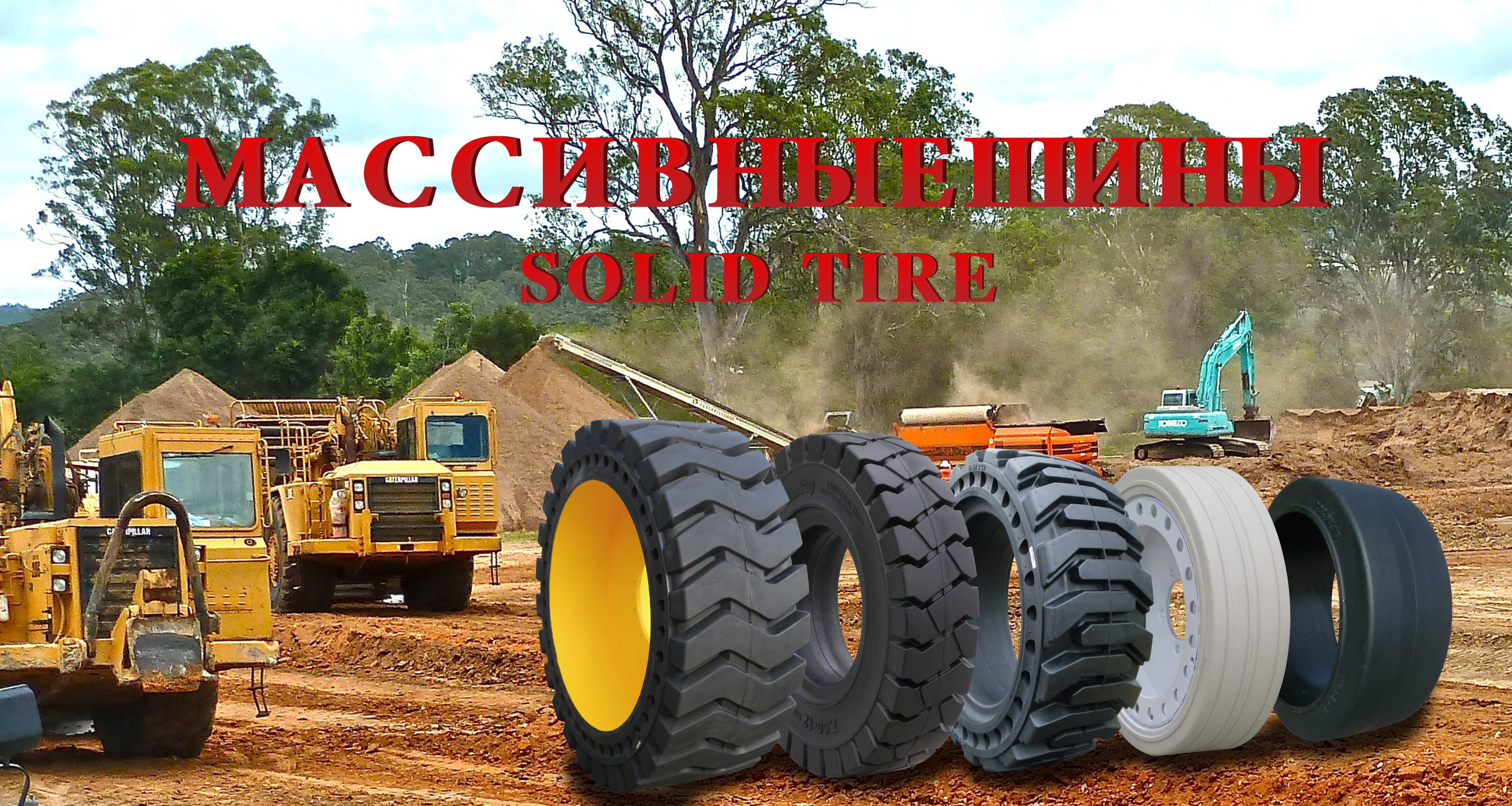
For mining support vehicles operating in areas with sharp debris, puncture resistance may be especially important. In applications where tire damage frequently interrupts work, solid OTR Tires can be worth considering. Their solid construction eliminates air loss caused by punctures, although surface damage, excessive heat, and structural deterioration still require attention.
Tread Design and Ground Conditions
Tread design affects how an OTR tire interacts with the ground. It influences traction, surface contact, and the way forces are transferred during acceleration, braking, and turning.
Mining sites rarely have completely uniform surfaces. Some areas may consist of compacted soil or gravel, while others contain loose stones, rough rock, or hard industrial flooring. A tread pattern that performs well on one surface may not provide the same traction or wear characteristics on another.
For example, equipment operating on loose ground needs sufficient grip to move materials without excessive wheelspin. On hard and abrasive surfaces, tread durability becomes an important consideration. Frequent turning can also increase friction between the tire and ground, particularly when the equipment carries heavy loads.
When comparing OTR Tires, buyers should consider the machine’s main travel routes and the surfaces it encounters most often. Choosing a tread pattern based on actual working conditions is more useful than assuming that deeper or more aggressive tread is always better.
Managing Heat During Continuous Operation
Heat is another important factor in mining tire performance. Tires generate heat as they deform under load and maintain contact with the ground. Friction, operating speed, heavy loads, and extended working periods can increase this thermal demand.
If heat builds up faster than it can dissipate, the tire may experience accelerated material aging and deterioration. The consequences depend on tire construction, rubber formulation, load, speed, ambient temperature, and the length of each operating cycle.
Mining operations should therefore consider more than the maximum load rating. A tire that supports a particular load under one speed and duty cycle may not be suitable for continuous operation under more demanding conditions.
Operators should monitor changes in tire condition and look for warning signs such as unusual cracking, deformation, or abnormal wear. If a tire becomes noticeably hotter than comparable tires operating under similar conditions, the equipment and operating conditions should be inspected.
Choosing Between Solid and Pneumatic OTR Tires
The choice between solid and pneumatic tires depends on the machine and the conditions in which it operates. Neither construction is the best option for every mining vehicle.
Pneumatic tires are commonly used where cushioning, flexibility, and the ability to operate across varying surfaces are important. Their air-filled construction can help absorb some surface irregularities, but punctures and pressure loss may interrupt work in areas containing sharp debris.
Solid OTR tires offer a different set of advantages. Their puncture-proof construction removes the need for inflation and helps prevent air-loss-related downtime. They can be useful for selected low-speed industrial vehicles and support equipment working in harsh environments. However, their suitability must be checked against load, speed, heat generation, surface conditions, and equipment specifications.
The important point is to match tire construction to the machine’s actual role. Large mining haul trucks and low-speed industrial support vehicles do not necessarily require the same tire solution. Treating all mining equipment as one application can lead to incorrect product selection.
Evaluating OTR Tires Before Making a Purchase
Before selecting OTR Tires for mining operations, buyers should establish the equipment requirements and identify the main causes of tire wear or failure in their working environment. This makes product comparison more practical and helps avoid decisions based only on price.
Useful information includes the machine type and model, existing tire dimensions, required load capacity, operating speed, working hours, and typical ground conditions. Buyers should also explain whether punctures, tread wear, heat buildup, or frequent replacement are the main concerns.
WonRay offers solid OTR tire solutions for selected heavy-duty industrial applications, including mining-related environments. Its product range covers industrial equipment that operates under heavy loads and at relatively low speeds. When considering a solid OTR tire, customers should compare the machine’s specifications and working conditions with the product’s intended application, rather than assuming that solid construction is suitable for every mining vehicle. Confirming these requirements before selection helps identify a more appropriate tire solution.
Conclusion
Choosing suitable OTR Tires for heavy-duty mining operations requires more than checking tire size or load capacity. Buyers need to consider the equipment’s role, ground conditions, cut and puncture risks, tread requirements, operating speed, and heat generation. Matching tire construction to these factors helps reduce avoidable damage, improve equipment reliability, and support more consistent mining operations.
FAQs
1. Are all OTR tires suitable for mining equipment?
No. Mining equipment varies in size, load, speed, and operating conditions. Tires should be selected according to the specific machine and its working requirements.
2. Are solid OTR tires a good choice for mining applications?
They can be suitable for selected low-speed industrial vehicles where puncture resistance and reduced inflation-related maintenance are priorities. They are not automatically suitable for every mining machine.
3. What causes OTR tires to wear quickly in mining areas?
Common causes include abrasive surfaces, sharp rocks, frequent turning, excessive loads, unsuitable tread design, and operating conditions that generate excessive heat.
4. What information is needed when requesting mining OTR tires?
Buyers should provide the equipment model, tire dimensions, load requirements, operating speed, working environment, and main performance concerns. This information helps determine whether a product is suitable for the application.
Post time: 13-11-2026