
OTR tires, also known as off-road tires, play a critical role in industries where machines operate under extreme conditions. Whether in mining, construction, agriculture, or port handling, tire performance directly affects productivity, safety, and operating costs. Selecting the right OTR tire is not just a technical decision—it is a strategic one for long-term efficiency.
What Are OTR Tires (Off-Road Tires)?
OTR (Off-The-Road) tires are specially designed for heavy-duty equipment working on rough, uneven, and unpaved surfaces. Unlike standard road tires, they feature reinforced structures, deeper tread patterns, and durable rubber compounds that can withstand high loads, abrasion, and harsh environments.
These tires are widely used in:
● Earthmoving equipment such as loaders and bulldozers
● Mining trucks operating in abrasive and rocky terrains
● Agricultural machinery working in soil and muddy fields
● Port and industrial vehicles handling heavy cargo
Their core function is to deliver traction, stability, and durability where standard tires cannot perform reliably.
Types of OTR Tires and Their Applications
Understanding different types of OTR tires helps match the product to real working conditions.
Pneumatic OTR Tires
Pneumatic tires are air-filled and commonly used in construction and mining operations where comfort and flexibility are important.
● Provide strong shock absorption for uneven terrain
● Offer better traction and ride stability
● Available in radial and bias constructions
● Suitable for higher speeds and longer working cycles
However, they are more vulnerable to punctures and cuts in debris-heavy environments.
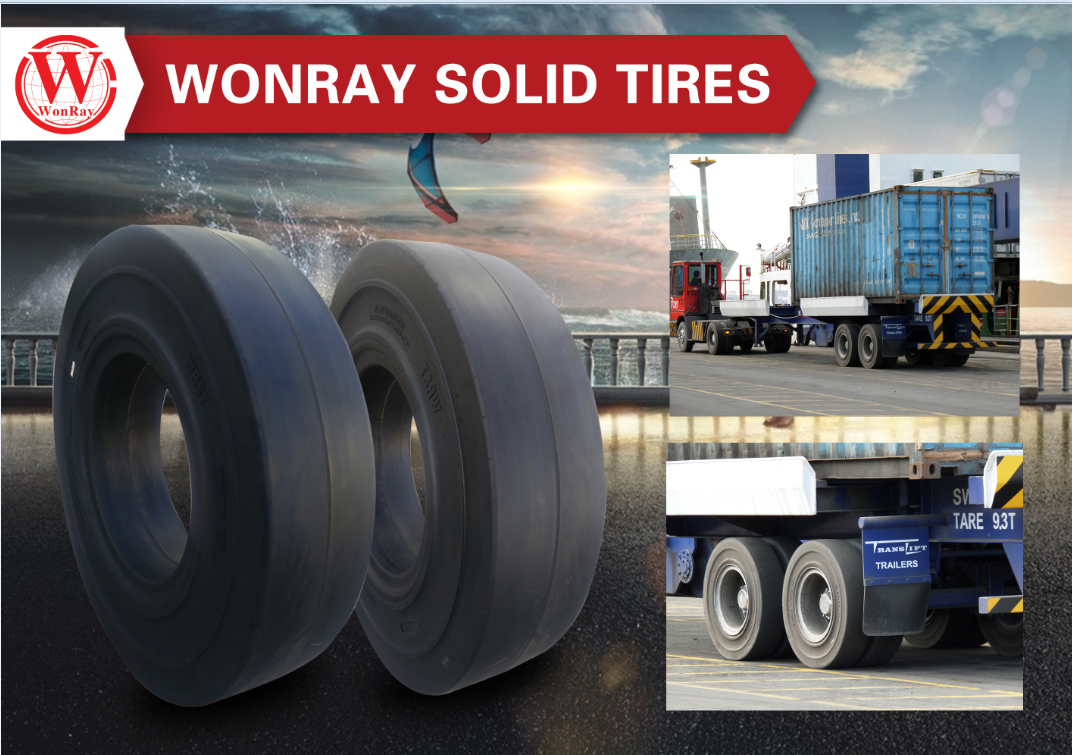
Solid OTR Tires
Solid tires are made entirely of rubber or composite materials and contain no air.
● Completely resistant to punctures and blowouts
● Ideal for scrap yards, ports, and recycling facilities
● Require minimal maintenance
● Deliver longer service life in harsh environments
They are typically used on forklifts and industrial vehicles where durability is more important than ride comfort.
Foam-Filled OTR Tires
Foam-filled tires act as a hybrid solution by replacing air with polyurethane foam.
● Eliminate the risk of sudden air loss
● Maintain structural integrity under heavy loads
● Reduce downtime caused by tire failures
● Suitable for extreme environments like mining and demolition
These tires are widely adopted when reliability and safety are critical priorities.
Key Performance Factors of Off-Road Tires
Choosing the right OTR tire requires evaluating several technical and operational factors.
● Load Capacity
OTR tires must support heavy machinery and payloads without deformation. Insufficient load capacity can lead to premature failure and safety risks.
● Tread Design
Different tread patterns are engineered for specific terrains. Deep treads improve traction in mud and loose soil, while smoother patterns reduce wear on hard surfaces.
● Cut and Wear Resistance
In mining and construction, tires are exposed to sharp rocks and abrasive materials. High-quality compounds significantly extend tire life.
● Heat Resistance
Continuous operation generates heat, especially in large equipment. Tires must dissipate heat effectively to avoid structural damage.
● Traction and Stability
Reliable grip ensures safe operation on slopes, loose ground, and wet conditions, reducing the risk of slippage or accidents.
OTR Tire Applications Across Industries
OTR tires are not one-size-fits-all. Each industry has specific performance requirements.
Construction Industry
Construction sites demand tires that can handle mixed terrains, heavy loads, and continuous movement.
● Wheel loaders require strong traction and wear resistance
● Dump trucks need heat-resistant tires for long cycles
● Graders benefit from stable tread patterns for precision work
Mining Industry
Mining is one of the most demanding environments for OTR tires.
● Tires must resist cuts from sharp rocks
● High load capacity is essential for large haul trucks
● Heat resistance is critical for long operating hours
Durability and reliability are the top priorities in this sector.
Agriculture
Agricultural machinery operates on soft soil and requires minimal ground disturbance.
● Wide tires help distribute weight evenly
● Deep tread improves traction in muddy conditions
● Reduced soil compaction protects crop productivity
Ports and Industrial Handling
Port equipment and forklifts often operate in confined spaces with heavy loads.
● Solid tires are preferred for puncture resistance
● Stability is crucial for lifting operations
● Long service life reduces maintenance frequency
How to Choose the Right OTR Tire
Selecting the correct OTR tire depends on matching technical specifications with real working conditions.
● Identify the working environment (rocky, muddy, paved, mixed)
● Determine load requirements and machine type
● Evaluate operating hours and working intensity
● Consider maintenance capabilities and downtime tolerance
A well-matched tire improves efficiency while reducing long-term operational costs.
Trends in OTR Tire Technology
The OTR tire industry continues to evolve with advancements in materials and design.
● Improved rubber compounds for longer wear life
● Radial tire technology for better fuel efficiency
● Smart tire monitoring systems for real-time performance tracking
● Eco-friendly materials to meet sustainability requirements
These innovations help businesses optimize performance while controlling costs.
Conclusion
OTR tires (off-road tires) are a fundamental component of heavy machinery performance across multiple industries. The right choice ensures stability, durability, and efficiency in challenging environments. By understanding tire types, performance factors, and application requirements, businesses can significantly reduce downtime and maximize productivity.
FAQ
1. What does OTR mean in tires?
OTR stands for “Off-The-Road,” referring to tires designed for heavy equipment operating on unpaved or rough surfaces.
2. What is the difference between radial and bias OTR tires?
Radial tires offer better heat dissipation and fuel efficiency, while bias tires provide stronger sidewalls and resistance to cuts.
3. Are solid OTR tires better than pneumatic tires?
It depends on the application. Solid tires are better for puncture resistance, while pneumatic tires offer better comfort and traction.
4. How long do OTR tires typically last?
Service life varies depending on usage, terrain, and maintenance, but high-quality OTR tires can significantly extend operating cycles and reduce replacement frequency.
Post time: 08-04-2026