
Non-Marking Solid Tires are a type of solid tire used in industrial equipment where tire structure, material characteristics, and working conditions all influence their operation. Unlike pneumatic tires that rely on internal air pressure, solid tires use a rubber-based structure to support loads and maintain their shape during movement. The actual operating condition of a tire is not determined by the tire itself alone. Factors such as equipment type, load distribution, floor characteristics, movement patterns, and environmental conditions can all affect how the tire interacts with the working environment. Understanding these factors helps provide a clearer view of how Non-Marking Solid Tires perform in different situations.
Tire Specifications and Their Influence on Operation
The basic specifications of a tire, including size and overall design, influence how forces are transferred during operation. The relationship between the tire dimensions and the equipment determines the contact area between the tire and the ground.
A larger contact area may distribute pressure differently compared with a smaller contact area, while tire dimensions can also affect movement characteristics and the way the equipment responds during operation. These factors are closely related to the load conditions and working requirements of the equipment. For Non-Marking Solid Tires, specifications need to be considered together with the equipment design. A tire does not operate independently but works as part of a complete system that includes the wheel assembly, axle structure, and working environment.
The Impact of Equipment Type on Tire Operation
Different types of industrial equipment create different operating conditions for tires. Equipment weight, movement method, and working frequency all influence the forces applied to the tire during use. For example, equipment used for material handling may frequently accelerate, stop, and change direction, while other machines may mainly perform straight-line movement. These different operating patterns create different contact conditions between the tire and the ground. The design requirements of Non-Marking Solid Tires can vary depending on the equipment they are installed on. The same tire characteristics may produce different operating results when used under different mechanical conditions.
Load Conditions and Pressure Distribution
Load is one of the important factors affecting solid tire operation. When equipment carries weight, the load is transferred through the tire contact area to the ground. The way this pressure is distributed affects how the tire material responds during movement.
Changes in load conditions may influence:
- Contact pressure: The amount of force applied between the tire and the surface.
- Tire deformation: How the rubber structure changes under pressure.
- Movement response: How the tire behaves during rolling, turning, and stopping.
Because solid tires rely on their rubber structure for support, understanding load distribution is important when evaluating their operating characteristics.
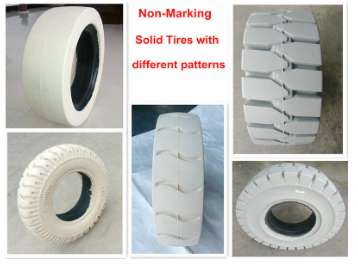
Floor Characteristics and Tire Interaction
Although Non-Marking Solid Tires are designed as products with specific material characteristics, their operating conditions are also influenced by the surfaces they contact. Different floors have different levels of hardness, roughness, and friction. These differences affect the way forces are transferred between the tire and the surface.
For example, smooth coated floors may create different contact conditions compared with rough concrete surfaces. The same tire may show different interaction characteristics depending on the surface it operates on. Therefore, analyzing tire operation requires considering both the tire characteristics and the floor conditions together.
Working Patterns and Movement Frequency
The way equipment moves also affects tire operation. Industrial vehicles often experience repeated movement cycles, including acceleration, braking, turning, and stopping. Frequent changes in movement direction can create additional forces on the tire surface. Turning movements, in particular, can change the distribution of forces compared with straight movement. Long-term operation under repeated cycles means that the tire continuously experiences similar mechanical processes. Therefore, movement frequency and working patterns are important factors when considering tire application conditions.
Environmental Factors That Affect Tire Conditions
Environmental conditions can also influence how Non-Marking Solid Tires operate. Temperature, workplace conditions, and surrounding surfaces may affect the behavior of rubber materials. Rubber characteristics can change under different environmental conditions. Temperature variations, for example, may influence material flexibility and response during operation.
In addition, working environments with different levels of cleanliness, surface conditions, or operating intensity may create different requirements for tire selection and usage.
Considering Multiple Factors When Evaluating Non-Marking Solid Tires
The operating condition of Non-Marking Solid Tires is the result of multiple factors working together. It is difficult to evaluate tire performance based on a single element because material properties, tire design, equipment conditions, and working environments are interconnected. When analyzing a tire for a specific application, factors such as equipment structure, load requirements, movement patterns, and surface conditions should be considered together. This approach provides a more complete understanding of how the tire functions during actual operation.
Conclusion
Non-Marking Solid Tires are influenced by various operating factors, including tire specifications, equipment type, load conditions, floor characteristics, movement patterns, and environmental conditions. The interaction between these elements determines how the tire behaves during operation. Understanding these factors provides a clearer perspective on solid tire selection and explains why different working conditions may require different tire designs.
Frequently Asked Questions
1. Do operating conditions affect the performance of Non-Marking Solid Tires?
Yes. Equipment type, load conditions, movement patterns, and floor characteristics can all influence how the tire operates.
2. Why does equipment type matter when using solid tires?
Different equipment creates different forces through weight, movement speed, and operating methods, which can affect tire behavior.
3. Can the same Non-Marking Solid Tires perform differently in different environments?
Yes. Differences in load, floor surface, and working conditions may influence the interaction between the tire and the operating environment.
4. Are tire specifications important when selecting Non-Marking Solid Tires?
Yes. Tire dimensions and design characteristics influence contact conditions and how forces are transferred during operation.
Post time: 14-10-2026