
In modern industrial operations, efficiency, safety, and surface protection are top priorities. Non marking solid rubber tires have emerged as a leading solution for industries where equipment operates on sensitive surfaces, such as warehouses, manufacturing facilities, and retail centers. Unlike traditional pneumatic tires, these tires leave no black marks, while offering durability, low maintenance, and long-term performance. This article explores how non marking solid rubber tires are transforming industrial operations and why they are increasingly preferred in a variety of applications.
What Are Non Marking Solid Rubber Tires?
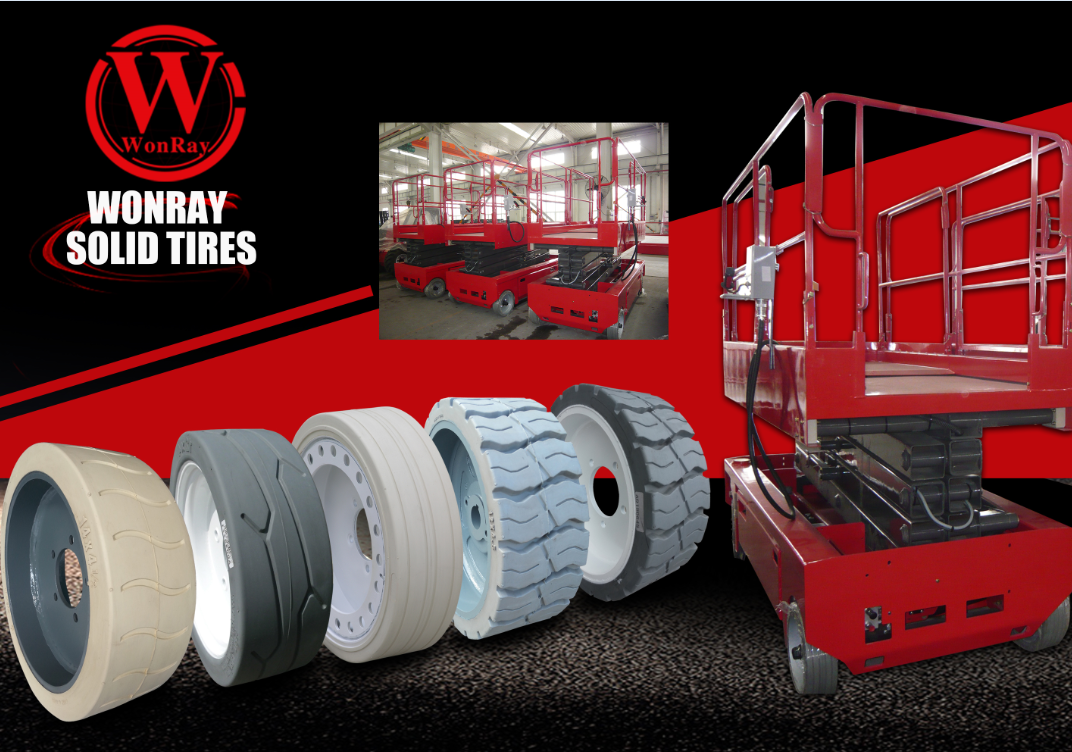
Non marking solid rubber tires are airless tires made entirely from a solid rubber compound designed to avoid leaving marks on floors. They are often used in indoor environments where floor aesthetics and cleanliness are critical. In addition to their cosmetic benefits, these tires are engineered for durability, puncture resistance, and load-bearing capability, making them suitable for high-frequency industrial use.
● Airless Design: Unlike pneumatic tires, non marking solid rubber tires do not require air inflation, eliminating the risk of flats or blowouts.
● Floor Protection: Special rubber compounds prevent black scuffs or streaks, preserving the integrity of polished concrete, tiles, or epoxy-coated floors.
● Enhanced Durability: Solid construction allows these tires to handle heavy loads and high-traffic industrial settings.
Key Advantages of Non Marking Solid Rubber Tires
Non marking solid rubber tires offer a wide range of benefits that improve both operational efficiency and safety in industrial environments.
● Reduced Downtime: Because they are puncture-proof and do not rely on air pressure, these tires minimize unplanned stops due to flats or tire repairs.
● Low Maintenance: Solid rubber tires require minimal maintenance, reducing operational costs and the time spent on tire inspections or replacements.
● High Load Capacity: Designed for heavy-duty equipment, non marking solid rubber tires can handle forklifts, stackers, and other industrial machinery without compromising stability.
● Improved Safety: Enhanced traction and stability reduce the risk of equipment slippage, especially in environments with smooth or wet floors.
● Environmentally Friendly: Longer lifespan and fewer replacements contribute to less rubber waste and lower environmental impact.
Applications Across Industries
Non marking solid rubber tires are increasingly used in diverse industrial settings due to their unique properties:
● Warehousing and Logistics: Forklifts and pallet trucks benefit from these tires as they provide smooth operation on polished concrete and avoid marking floors, reducing maintenance costs for flooring.
● Retail and Commercial Spaces: In supermarkets, shopping centers, and airports, non marking tires help maintain clean, professional-looking floors while supporting material handling equipment.
● Manufacturing Facilities: High-density operations, such as automotive assembly lines or electronics production, require reliable tires that withstand heavy loads and frequent use without leaving marks.
● Food Processing Plants: Hygienic environments demand tires that do not leave residues or damage flooring, making non marking solid rubber tires ideal for safety and compliance.
Selecting the Right Non Marking Solid Rubber Tires
Choosing the correct tire requires careful consideration of operational conditions, equipment specifications, and safety requirements.
● Load Requirements: Select tires rated to carry the maximum weight of your equipment, including the cargo.
● Floor Type: Ensure the rubber compound is suitable for the specific flooring—epoxy, polished concrete, or tile.
● Maneuverability Needs: Consider tread pattern and hardness to achieve optimal grip, turning radius, and motion control in confined spaces.
● Durability Considerations: Choose tires designed for your frequency of use and exposure to abrasive surfaces, chemicals, or temperature variations.
Maintenance and Longevity
Despite being low maintenance, proper care of non marking solid rubber tires can extend their service life and maximize performance.
● Regular Inspections: Check tires for cracks, excessive wear, or embedded debris.
● Cleaning: Remove dirt and dust regularly to prevent abrasion on both tires and floor surfaces.
● Load Management: Avoid overloading equipment to prevent premature wear or damage to the tires.
● Rotation: Rotate tires periodically for even wear if the equipment operates in heavy-use environments.
Non Marking Solid Rubber Tires vs Pneumatic Tires
| Feature | Non Marking Solid Rubber Tires | Pneumatic Tires |
|---|---|---|
| Floor Protection | Excellent ● No marks | Poor ● May leave black streaks |
| Puncture Resistance | High ● Airless design | Low ● Prone to flats |
| Maintenance | Low ● Minimal upkeep | High ● Needs regular checks |
| Lifespan | Long ● Durable and robust | Shorter ● Wears faster under heavy loads |
| Stability | High ● Suitable for heavy equipment | Moderate ● Can deflate or lose traction |
This comparison highlights why non marking solid rubber tires are increasingly preferred for indoor industrial applications and high-density operations.
Conclusion
Non marking solid rubber tires are transforming industrial operations by combining durability, safety, and floor protection. Their airless design, puncture resistance, and non-marking properties make them ideal for warehouses, manufacturing plants, retail spaces, and other sensitive environments. By selecting the right tires tailored to load capacity, floor type, and operational requirements, businesses can improve efficiency, reduce maintenance costs, and maintain professional, safe working spaces.
Investing in high-quality non marking solid rubber tires is not just a functional decision; it is a strategic choice that enhances operational reliability, protects flooring, and supports sustainable industrial practices. For modern businesses seeking reliable, low-maintenance, and eco-friendly tire solutions, non marking solid rubber tires present a compelling and practical option.
Post time: 13-01-2026