
In modern industrial and commercial environments, equipment performance is no longer measured only by load capacity or speed. Cleanliness, safety, and maintenance efficiency have become equally important. Warehouses, food plants, shopping centers, airports, and pharmaceutical facilities all share one common requirement: tires must protect the floor while delivering long-term reliability. This is where non marking solid rubber tires provide a clear operational advantage.
By combining puncture-proof construction with non-staining rubber compounds, these tires help businesses maintain spotless surfaces, reduce downtime, and lower total operating costs. For B2B buyers managing fleets of forklifts, scissor lifts, or material handling equipment, they represent a practical and future-proof solution.
Why Floor Protection Matters in Industrial Facilities
Many facilities invest heavily in polished concrete, epoxy coatings, or specialized flooring systems. Traditional black rubber tires often leave scuff marks or carbon stains that are difficult to remove. Over time, these marks affect both appearance and maintenance expenses.
In industries such as food processing, healthcare, and electronics manufacturing, visible tire marks may also create hygiene concerns or compliance issues. Cleaning crews spend additional time scrubbing floors, which increases labor costs and interrupts daily operations.
Non marking tires eliminate this problem at the source. Instead of constantly cleaning marks, companies prevent them entirely.
What Are Non Marking Solid Rubber Tires
Non marking solid rubber tires are air-free industrial tires made from specially formulated rubber compounds that do not contain carbon black, the primary ingredient responsible for dark streaks on floors. Without this component, the tires maintain a light color and leave minimal or no marks during operation.
At the same time, the solid construction ensures:
● No punctures
● No air pressure loss
● No unexpected blowouts
● Consistent load capacity
This combination of cleanliness and durability makes them particularly suitable for indoor industrial applications.
Key Benefits for B2B Operations
For equipment managers and purchasing teams, tire selection directly affects uptime, maintenance workload, and operating budgets. Non marking solid rubber tires deliver several measurable advantages.
● Protect floors from black streaks, stains, and scuffing
● Eliminate flats and air leaks
● Reduce maintenance and inspection time
● Provide stable load-bearing performance
● Extend service life compared to pneumatic tires
● Improve overall equipment reliability
● Support cleaner and more professional facilities
These benefits translate into lower total cost of ownership and higher productivity across the entire fleet.
Common Equipment Applications
Non marking solid rubber tires are widely used across multiple types of material handling and aerial work equipment. Their versatility makes them ideal for both light-duty and heavy-duty indoor operations.
● Electric forklifts
● Reach trucks and pallet movers
● Scissor lifts and aerial platforms
● Tow tractors and carts
● Automated guided vehicles (AGVs)
● Warehouse logistics systems
Because they are resistant to punctures and abrasion, they perform reliably even under continuous, multi-shift operations.
Industries That Require Non Marking Tires
While any indoor facility can benefit from cleaner floors, certain industries rely heavily on non marking performance due to stricter cleanliness standards.
● Food and beverage production
● Pharmaceutical manufacturing
● Hospitals and healthcare centers
● Electronics assembly plants
● Retail stores and supermarkets
● Airports and exhibition halls
In these environments, floor appearance directly affects safety, brand image, or regulatory compliance, making non marking tires a necessity rather than a luxury.
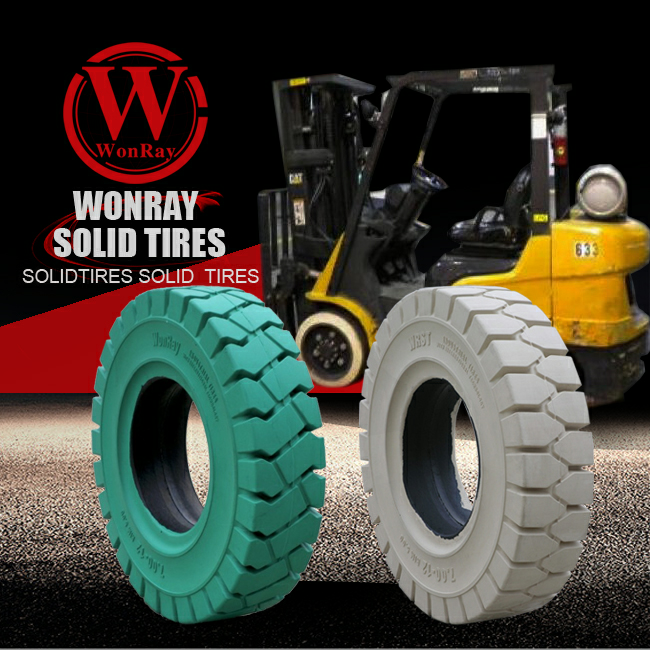
Comparing Non Marking Solid Tires with Standard Black Tires
Standard black rubber tires are often cheaper initially, but they create long-term issues. Floor stains, frequent cleaning, and potential damage add hidden costs.
Non marking solid rubber tires offer a different value proposition. Instead of focusing on short-term savings, they emphasize lifecycle efficiency. Businesses gain fewer interruptions, less cleaning, and better facility presentation.
From a performance perspective, both types can handle similar loads. However, only non marking tires combine strength with cleanliness. For indoor operations, this distinction makes a significant difference.
Technical Features That Enhance Performance
Modern non marking tires are not simply “white versions” of standard tires. Manufacturers use advanced engineering to maintain durability while removing staining materials.
Typical technical improvements include:
● High-density wear-resistant compounds
● Multi-layer or cushion constructions for shock absorption
● Steel band or press-on mounting systems
● Heat-resistant formulations for continuous use
● Low rolling resistance for energy efficiency
● Anti-static options for sensitive environments
These features ensure that non marking tires perform just as well as, or better than, traditional alternatives.
Maintenance and Service Advantages
One of the most attractive benefits for industrial operators is simplified maintenance. Because these tires are solid, there is no need for inflation checks, pressure monitoring, or frequent patching.
Routine care typically involves visual inspection for wear and alignment only. This reduces labor requirements and makes maintenance schedules more predictable.
For large warehouses operating dozens or hundreds of vehicles, this time saving can significantly improve workforce efficiency.
Cost Efficiency and Long-Term Value
Although non marking solid rubber tires may have a higher purchase price, their long-term value often outweighs the initial investment. Fewer replacements, reduced cleaning, and lower downtime quickly offset the difference.
Companies often notice cost reductions in:
● Floor cleaning labor
● Replacement frequency
● Emergency tire repairs
● Equipment downtime
● Facility maintenance budgets
When calculated across several years, the total savings can be substantial, making non marking tires a smart financial decision.
Future Trends in Non Marking Tire Technology
As industrial environments become more automated and sustainability-focused, tire technology continues to evolve. Manufacturers are introducing lighter compounds, eco-friendly materials, and improved wear resistance to extend service life further.
Smart wear indicators and energy-efficient designs are also gaining popularity, helping businesses monitor tire condition and reduce power consumption.
These innovations suggest that non marking solid rubber tires will remain a key component of modern indoor equipment strategies.
Conclusion
Choosing the right tires is about more than mobility—it directly impacts cleanliness, safety, maintenance, and cost control. Non marking solid rubber tires offer a practical solution by combining floor protection with the durability of solid construction.
For B2B operations running forklifts, aerial lifts, or warehouse vehicles, these tires provide fewer disruptions, lower maintenance requirements, and a cleaner professional environment. Investing in non marking solid tires is not just a product upgrade; it is a strategic step toward higher operational efficiency and long-term savings.
FAQ
Q1: Do non marking solid rubber tires really prevent floor stains?
Yes. They use carbon-free compounds that minimize or eliminate black marks on floors.
Q2: Are non marking tires as durable as standard black tires?
Modern formulations offer comparable or even better wear resistance and load capacity.
Q3: Can these tires be used outdoors?
They can, but they are primarily designed for indoor or clean-surface environments.
Q4: Do non marking solid tires require special maintenance?
No. Since they are solid, there is no need for inflation or puncture repairs—only basic inspections.
Post time: 06-02-2026