
In industrial and construction environments, lifting platforms are essential for performing tasks at height safely and efficiently. The performance of these platforms largely depends on the tires used. Solid tires, specifically designed for lifting platforms, have become the preferred choice due to their durability, stability, and low maintenance requirements. This article explores the advantages of using solid tires on lifting platforms, provides guidance for selecting the right tires, and outlines best practices for ensuring long-term reliability and performance.
Why Solid Tires Matter for Lifting Platforms
Solid tires, also known as non-pneumatic or resilient tires, are made entirely of solid rubber. Unlike pneumatic tires, they do not contain air, eliminating the risk of punctures, flats, or sudden deflation. This feature is particularly important for lifting platforms, where tire failure can lead to accidents or costly downtime.
The use of solid tires enhances both safety and efficiency. Their robust design ensures stable platform operation, even under heavy loads or on uneven surfaces. For operators, this translates into smoother movements, improved precision during lifting, and increased confidence in handling high-value equipment at height.
Key Benefits of Solid Tires for Lifting Platforms
● Durability and Longevity: Solid tires are built to withstand high loads and challenging working conditions, lasting significantly longer than pneumatic tires. Their resistance to cuts, abrasions, and deformation reduces replacement frequency and long-term operational costs.
● Enhanced Safety: Solid tires provide superior stability, reducing the risk of tipping or accidents. This is critical when lifting heavy materials or personnel to elevated work areas.
● Low Maintenance: Unlike pneumatic tires, solid tires require minimal upkeep. There is no need to monitor air pressure or repair punctures, saving time and labor costs.
● Consistent Performance: These tires maintain consistent traction and stability across various surfaces, including rough floors, gravel, or concrete, ensuring reliable lifting platform operation.
● Cost Efficiency: Although solid tires may have a higher upfront cost than pneumatic tires, their durability, minimal maintenance, and reduced downtime make them a cost-effective solution over the long term.
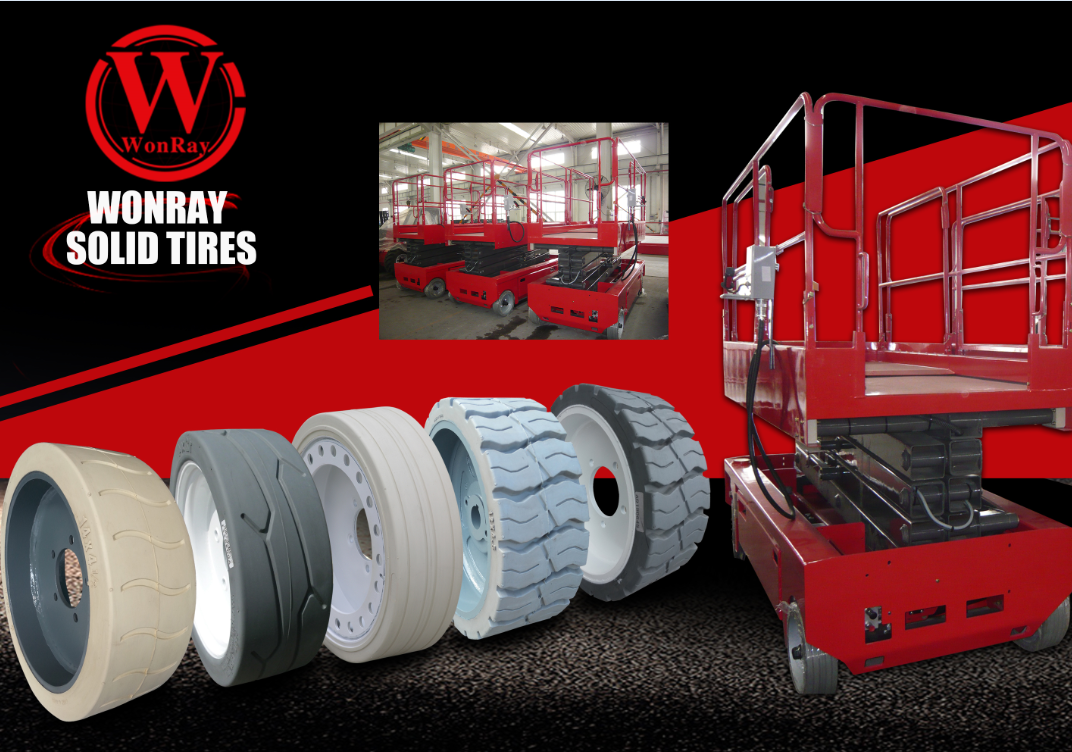
Selecting the Right Solid Tires for Your Lifting Platform
When choosing solid tires, several factors should be considered to ensure optimal performance and safety:
● Load Capacity: Match the tire’s load rating with the lifting platform’s maximum operational weight, including equipment and personnel. Overloading a tire can compromise safety and accelerate wear.
● Surface Conditions: Consider the primary working environment. Smooth indoor surfaces may allow for standard solid tires, while rough outdoor terrain may require heavy-duty, reinforced tires.
● Tire Size and Fit: Ensure compatibility with the lifting platform’s wheel hub and mounting configuration. Correct sizing maintains platform stability and prevents operational issues.
● Durability Requirements: For platforms used frequently or in harsh conditions, choose tires with high abrasion resistance and enhanced structural strength to extend service life.
By carefully evaluating these factors, businesses can select solid tires that enhance operational safety and reliability while reducing long-term costs.
Best Practices for Maintaining Solid Tires
Even though solid tires are low-maintenance, proper care is essential to maximize their lifespan and performance:
● Regular Inspections: Check tires for visible signs of wear, cracks, or damage. Early detection allows for timely replacement before performance is affected.
● Cleaning: Remove dirt, debris, and chemicals that can degrade the rubber surface. Clean tires help maintain optimal traction and reduce slip hazards.
● Correct Installation: Proper mounting ensures even wear and prevents issues such as misalignment or wobbling.
● Storage: If tires are removed or platforms are stored, keep tires in a cool, dry environment away from direct sunlight and extreme temperatures to prevent deformation or rubber degradation.
By adhering to these maintenance practices, companies can ensure that lifting platforms remain safe and efficient in daily operations.
Common Questions About Solid Tires for Lifting Platforms
● Q: Can solid tires be used for all types of lifting platforms?
A: Yes, solid tires are suitable for scissor lifts, boom lifts, and other high-lift equipment. They perform well in indoor, outdoor, and uneven surface applications.
● Q: Do solid tires affect ride comfort for operators?
A: While slightly firmer than pneumatic tires, solid tires provide stable, vibration-free operation, improving control and safety during high-elevation tasks.
● Q: How long do solid tires typically last compared to pneumatic tires?
A: Depending on usage and surface conditions, solid tires can last two to three times longer than pneumatic tires, making them a cost-effective investment.
● Q: What maintenance is required for solid tires?
A: Minimal maintenance is needed. Regular inspections, cleaning, and proper storage are sufficient to maintain optimal performance.
Conclusion
Solid tires for lifting platforms are a vital investment for ensuring safety, stability, and efficiency in industrial and construction operations. Their durability, low maintenance requirements, and resistance to punctures make them ideal for environments where reliability is critical.
Selecting the right tires requires careful consideration of load capacity, surface conditions, and platform compatibility. Proper maintenance and inspection practices further extend tire life, reduce downtime, and ensure smooth, reliable operation.
For businesses relying on lifting platforms, solid tires not only enhance safety but also improve productivity and operational efficiency. Investing in high-quality solid tires is a strategic choice that provides long-term value, reduces maintenance costs, and ensures a safer working environment for operators.
Post time: 23-12-2025