
Lift trucks (forklifts) are crucial equipment for material handling in warehouses, distribution centers, and manufacturing facilities. A key component that often gets overlooked is the lift truck tire. The right tire choice can greatly impact the safety, performance, and operating costs of your fleet. Among the various types of lift truck tires, solid tires stand out for their durability, low maintenance, and superior performance in indoor environments. This article will highlight the benefits of solid lift truck tires and why they are the preferred choice for many businesses.
What Are Solid Lift Truck Tires?
Solid lift truck tires are made from solid rubber, offering a durable and puncture-proof solution for material handling operations. Unlike pneumatic tires, which are air-filled and prone to punctures, solid tires provide a maintenance-free solution that lasts longer and performs consistently. They are ideal for indoor environments where durability and safety are paramount.
Advantages of Solid Lift Truck Tires
Solid tires offer several significant advantages that make them the preferred choice for businesses relying on indoor material handling:
● Puncture-Proof: Solid tires are made of solid rubber, which means there is no risk of punctures or blowouts, making them ideal for environments with debris, sharp objects, or rough surfaces.
● Low Maintenance: Unlike pneumatic tires that require regular checks for air pressure and maintenance, solid tires require minimal upkeep, saving both time and money.
● Durable and Long-Lasting: Solid tires have a longer lifespan than pneumatic tires because they are resistant to wear and tear.
● Consistent Performance: Solid tires provide consistent traction and performance throughout their lifespan, helping to maintain efficiency and safety.
● Reduced Downtime: With no risk of flats or punctures, businesses experience less downtime, leading to improved productivity and reduced operational disruptions.
Ideal Environments for Solid Lift Truck Tires
While solid tires offer remarkable benefits, they are particularly well-suited for certain environments. Solid lift truck tires excel in conditions where performance and floor protection are critical.
● Indoor Warehouses and Manufacturing Facilities: Solid tires perform exceptionally well in environments with smooth floors, such as warehouses and factories. They provide excellent traction on flat, clean surfaces and eliminate the need for frequent tire replacements.
● Food Processing and Pharmaceutical Industries: Hygiene is crucial in these sectors, and solid tires ensure there are no risks of punctures that could lead to contamination. Their smooth, reliable performance is a perfect match for these highly regulated environments.
● Retail and Distribution Centers: Solid tires are ideal for lift trucks in retail or distribution centers, where floors need to be maintained free of scuffs, marks, and dirt.
● Heavy-Duty Industrial Settings: In environments where heavy loads are common, solid tires can withstand the increased weight without compromising safety or efficiency.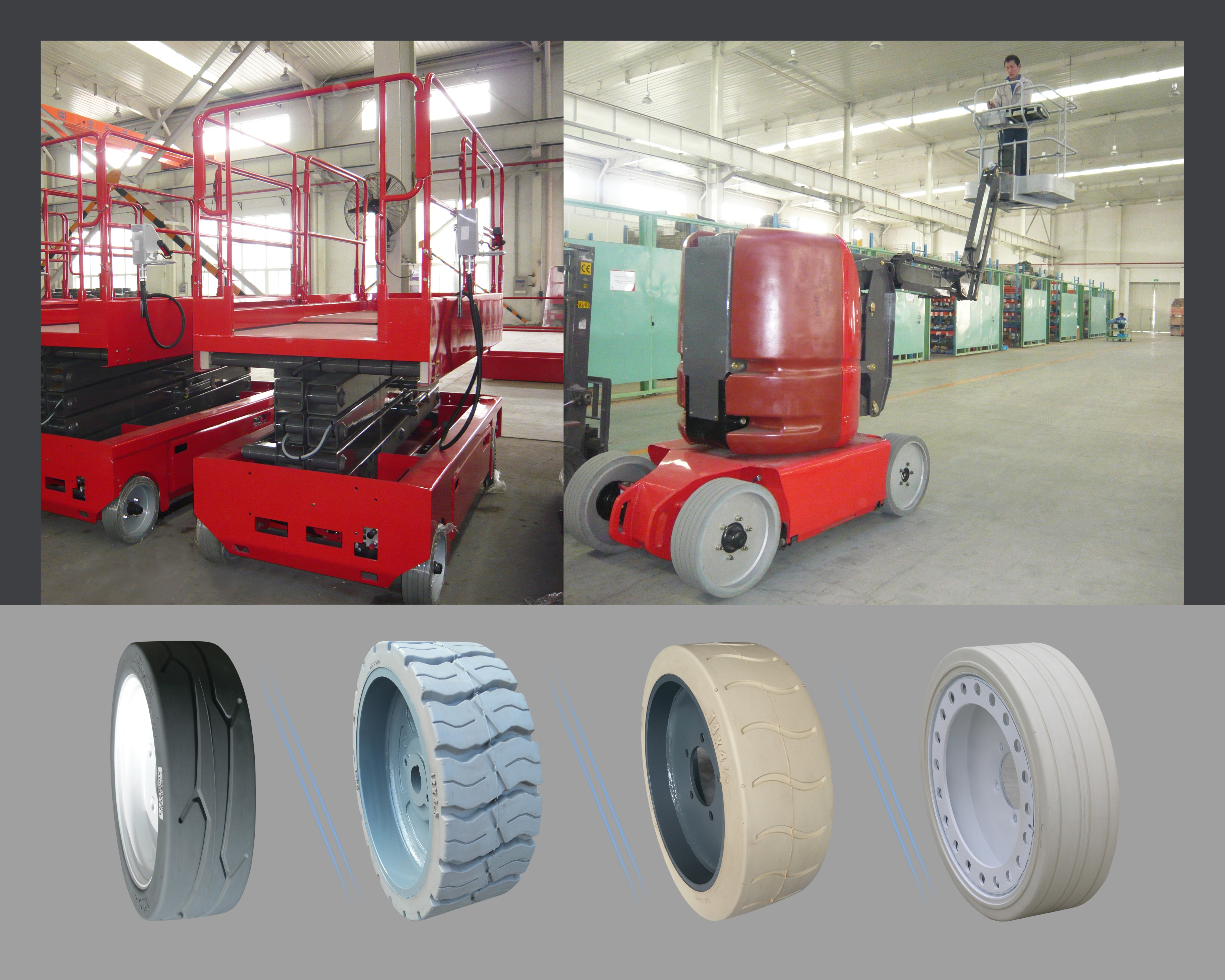
How Solid Lift Truck Tires Compare to Pneumatic Tires
While pneumatic tires have their place, especially for outdoor use, solid tires offer distinct advantages when it comes to indoor use. Let’s look at a comparison:
|
Feature |
Pneumatic Tires |
Solid Tires |
| Puncture Resistance | Vulnerable to punctures and flats | Puncture-proof and maintenance-free |
| Durability | Less durable, especially on rough terrain | Extremely durable and long-lasting |
| Maintenance | Requires regular air pressure checks | Minimal maintenance required |
| Comfort | Provides better shock absorption | Less shock absorption but steady performance |
| Cost | Lower upfront cost, higher maintenance | Higher upfront cost, lower long-term maintenance |
Benefits of Solid Tires for Your Business
For B2B operations, the choice of tires for your lift trucks can affect both your bottom line and operational efficiency. Solid tires provide several business advantages:
● Increased Productivity: Solid tires reduce downtime because they are less likely to be damaged or wear out prematurely. This allows your lift trucks to work longer without interruptions, increasing operational efficiency.
● Lower Long-Term Costs: Though solid tires have a higher initial cost than pneumatic tires, their durability and low maintenance make them a cost-effective choice in the long run. Businesses can save on frequent replacements and maintenance expenses.
● Improved Safety: Since solid tires are puncture-proof, they eliminate the risk of unexpected breakdowns, which can result in accidents or injuries.
● Floor Protection: Solid tires are perfect for facilities that need to maintain clean, damage-free floors. Unlike pneumatic tires, which may leave black marks, solid tires provide a cleaner solution, especially in industries where floor aesthetics and cleanliness are crucial.
Key Factors to Consider When Choosing Solid Lift Truck Tires
When selecting solid lift truck tires, several factors must be taken into account to ensure they are the right fit for your operations:
● Load Capacity: Solid tires must be able to support the weight of both the lift truck and the load being carried. Be sure to check the load rating of the tires to match your operational needs.
● Operational Environment: If your operations are based indoors with smooth, hard surfaces, solid tires are the ideal choice. However, for outdoor environments with rough or uneven terrain, pneumatic tires may be more suitable.
● Cost-Effectiveness: While the initial investment in solid tires may be higher than pneumatic tires, they can save money over time due to their durability and minimal maintenance requirements.
● Maneuverability: Solid tires may not provide the same level of shock absorption as pneumatic tires, which could affect comfort, especially on uneven surfaces. However, for indoor applications where maneuverability is important, solid tires offer excellent control and reliability.
Conclusion
Solid lift truck tires are an excellent choice for businesses that rely on forklifts and material handling equipment in indoor environments. Their durability, low maintenance, and puncture resistance make them ideal for warehouses, manufacturing facilities, and other settings where reliability and safety are paramount. By opting for solid tires, businesses can reduce downtime, improve safety, and protect their floors, all while benefiting from long-term cost savings. If you’re looking for a solution that offers consistent performance and minimal maintenance, solid lift truck tires are the ideal investment.
FAQ
Q1: What makes solid lift truck tires the best option for indoor use?
A: Solid lift truck tires are puncture-proof, durable, and require minimal maintenance, making them ideal for smooth indoor surfaces where downtime and tire replacements can be costly.
Q2: Are solid tires more expensive than pneumatic tires?
A: Yes, solid tires generally have a higher upfront cost compared to pneumatic tires, but they provide long-term savings by reducing maintenance, replacements, and downtime.
Q3: Can solid lift truck tires be used outdoors?
A: While solid tires are ideal for indoor environments, they are not designed for rough, uneven outdoor terrain. Pneumatic tires are more suitable for outdoor use where terrain is rugged.
Q4: How do solid tires improve workplace safety?
A: Solid tires are puncture-resistant, reducing the risk of tire blowouts or flats, which can lead to accidents or injuries. This enhances both the safety of operators and the stability of the equipment.
Post time: 09-03-2026