
In industrial operations, machinery breakdowns are often blamed on engines, hydraulics, or operator error. But in real working environments, a large number of unexpected stoppages actually start from one overlooked component — the tire.
Industrial tires are not just rubber components under machinery. They are the direct interface between equipment and ground conditions, and any mismatch between tire type and working environment can silently accelerate wear, instability, and even safety risks.
Understanding industrial tires is less about product definition and more about recognizing how they influence real operational outcomes.
When Does an Industrial Tire Become a Hidden Failure Risk?
Most tire problems in industrial environments do not appear suddenly. They develop gradually through mismatched usage conditions that are often ignored during selection.
Typical early warning scenarios include:
● Equipment vibrating more than usual during low-speed operation
● Uneven tire wear appearing on one side of the machinery
● Frequent steering resistance or directional drift
● Increasing energy consumption due to rolling inefficiency
● Minor surface cracking that spreads over time
These symptoms are often treated as minor maintenance issues, but in reality, they are early indicators of system imbalance caused by improper tire selection.
The Real Role of Industrial Tires in Equipment Behavior
Instead of viewing industrial tires as separate components, it is more accurate to see them as part of the machine’s operating system.
They influence:
● How force is transferred from motor to ground
● How load stress is distributed during movement
● How vibration is absorbed or transmitted into the frame
● How stable the machine remains under shifting weight
A small change in tire structure can significantly alter the entire behavior of a forklift, loader, or transport vehicle.
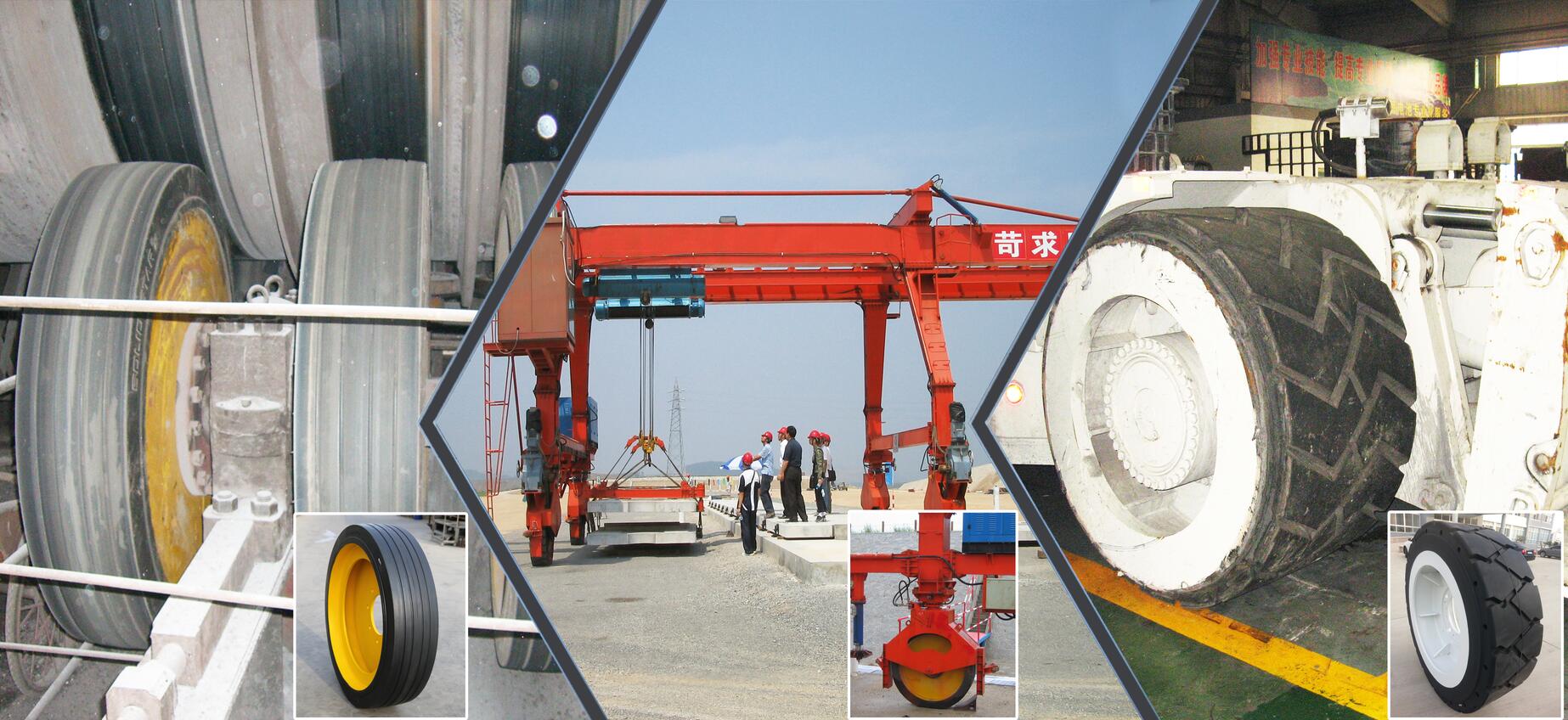
Why Different Worksites Require Completely Different Tire Logic
One of the most common mistakes in industrial operations is assuming that one tire type can perform across all environments.
In reality, working conditions vary more than most users expect:
● Indoor warehouses prioritize smooth rolling and floor protection
● Construction sites require impact resistance and structural durability
● Mining environments demand extreme cut resistance and load stability
● Port operations require continuous heavy-load endurance
● Recycling facilities expose tires to sharp and irregular debris
Each environment creates a different failure pattern. That is why industrial tires are designed in multiple structural categories rather than a single universal model.
The Trade-Off Hidden in Every Industrial Tire Design
Every industrial tire is a balance between four competing performance factors:
● Durability
● Shock absorption
● Traction
● Energy efficiency
Improving one usually affects the others. For example:
● A harder compound increases durability but reduces comfort
● A softer structure improves grip but increases wear rate
● Deeper tread improves traction but may reduce rolling efficiency
● Solid structure eliminates puncture risk but reduces cushioning
This is why selecting industrial tires is not about “best product”, but about “best compromise for your specific environment”.
How Tire Structure Affects Long-Term Operating Cost
Most buyers evaluate tires based on purchase price, but in industrial systems, the real cost is not the tire itself — it is downtime and inefficiency caused by tire performance.
Poor tire matching can lead to:
● More frequent equipment shutdowns for replacement
● Increased energy consumption during operation
● Higher mechanical stress on axles and suspension systems
● Reduced productivity due to slower operational speed
In contrast, properly matched industrial tires reduce hidden operational losses that are not immediately visible in procurement budgets.
Why Tire Failure Rarely Starts With a Blowout
In industrial environments, catastrophic tire failure is actually less common than gradual performance degradation.
Most failures begin with:
● Micro surface damage that expands under load cycles
● Heat accumulation caused by continuous operation
● Structural fatigue from repeated compression patterns
● Uneven wear caused by directional workload imbalance
By the time visible damage appears, the performance decline has usually already affected machine efficiency for a long period.
Decision Factors That Matter More Than Tire Size
When selecting industrial tires, technical specifications like diameter or width are only secondary considerations.
More important decision factors include:
● Expected daily operating duration
● Surface consistency and material composition
● Average and peak load conditions
● Turning frequency and directional stress
● Environmental exposure such as heat, oil, or debris
These factors determine how the tire behaves over time, which is more important than initial appearance or dimension matching.
Future Direction of Industrial Tire Development
Industrial tire technology is gradually moving away from traditional rubber-based design toward performance-optimized engineering systems.
Emerging trends include:
● Hybrid structures combining solid and flexible zones
● Advanced compounds designed for specific industry environments
● Smart monitoring systems for wear prediction
● Low-resistance materials for energy efficiency improvement
The focus is shifting from “longer life” to “smarter performance management”.
Conclusion
Industrial tires are not passive components. They actively shape how equipment performs, how long it operates, and how efficiently it uses energy. Most operational issues in heavy equipment do not begin with machinery failure, but with gradual mismatches in tire selection and working conditions.
Understanding industrial tires means understanding how machines interact with the ground in real environments, not just in technical specifications.
In industrial operations, tire choice is not a detail — it is part of the system design.
FAQ
1. Why do industrial tires fail even when they look normal?
Because most failures start internally through heat buildup, structural fatigue, or uneven stress distribution before visible damage appears.
2. Can one type of industrial tire be used in all environments?
No. Different environments create different stress patterns, so tire design must match specific working conditions.
3. What is the most important factor when choosing an industrial tire?
Working environment is more important than size or brand, because surface and load conditions determine long-term performance.
4. Why do industrial tires affect machine performance so much?
Because they are the only contact point between machine and ground, influencing load transfer, stability, and vibration behavior.
Post time: 10-06-2026