
Industrial Solid Tire products are designed for industrial vehicles that need dependable load support, stable dimensions and continuous operation without the risk of air-pressure loss. Unlike pneumatic tires, an Industrial Solid Tire uses solid rubber as the load-carrying structure, so punctures from nails, metal fragments, pallet debris or rough yard surfaces do not lead to sudden deflation. This makes the product especially relevant to forklifts, loaders, trailers, port vehicles and other low-speed industrial equipment that works around heavy loads and difficult ground conditions.
The value of an Industrial Solid Tire is not limited to being “flat-free.” A properly matched product also affects steering stability, vibration, tread wear, traction, heat generation and the amount of maintenance a vehicle needs during its service cycle. For industrial fleets, the tire becomes part of the machine’s working foundation. The best result comes from matching the tire construction, dimensions and tread design to the actual vehicle, wheel position, surface and duty cycle.
What an Industrial Solid Tire Is Designed to Deliver
Industrial equipment places very different demands on tires than road vehicles. A forklift may turn repeatedly in a narrow aisle, a trailer may remain loaded for long periods, and a loader may travel over rough concrete, gravel or debris. In each case, the tire has to carry weight while resisting deformation and surface damage. Industrial Solid Tire products are therefore built around several practical performance goals: load support, puncture resistance, wear resistance, dimensional stability and predictable service life.
- No air chamber, reducing sudden downtime caused by punctures or pressure loss.
- Stable tire dimensions under repeated low-speed, high-load operation.
- Rubber tread designed to handle abrasion, turning forces and industrial surfaces.
- Low routine maintenance because daily inflation checks are not required.
- Product options that can be matched to forklifts, loaders, trailers and specialized equipment.
These advantages are most useful when the tire is selected for the actual job. A very hard tire may wear well on smooth concrete but transmit more impact on damaged ground. A softer or more resilient construction may improve cushioning, yet it still needs enough strength for the load. Industrial Solid Tire selection is therefore a balance rather than a search for one maximum performance number.
Product Construction Matters as Much as Tire Size
Size is the first fitment requirement, but it does not describe how a solid tire will perform. The rubber compound, tread thickness, internal resilience, base strength and rim fit all influence how the product behaves under load. For forklifts and other material-handling vehicles, the tire must remain securely seated while torque, braking and steering forces pass through the wheel. For loaders and heavier equipment, the structure must also resist impact and repeated compression.
Tread design is another product decision. Smooth or closely patterned treads can provide a large contact area and even wear on prepared floors. More open or block-style patterns may provide better engagement on outdoor yards, compacted gravel or mixed surfaces. The correct tread should support the normal route rather than simply look more aggressive. Excessive tread movement on hard floors can increase wear and heat, while a pattern that is too smooth may offer less usable grip on contaminated or loose ground.
Where Industrial Solid Tires Add the Most Practical Value
Industrial Solid Tire products are most useful where tire failure would interrupt material movement or where sharp debris is part of the normal environment. Warehouses and factories use them on forklifts because repeated turning and loading can be managed without daily pressure checks. Ports and logistics yards use solid tires on trailers and handling vehicles where metal fragments and long shifts make puncture resistance important. Recycling plants, scrap yards and heavy workshops benefit from solid construction because damaged pallets, wire, glass or metal offcuts may be difficult to remove completely from the route.
- Forklifts in warehouses, factories and loading areas.
- Industrial trailers and tow vehicles operating on prepared yards.
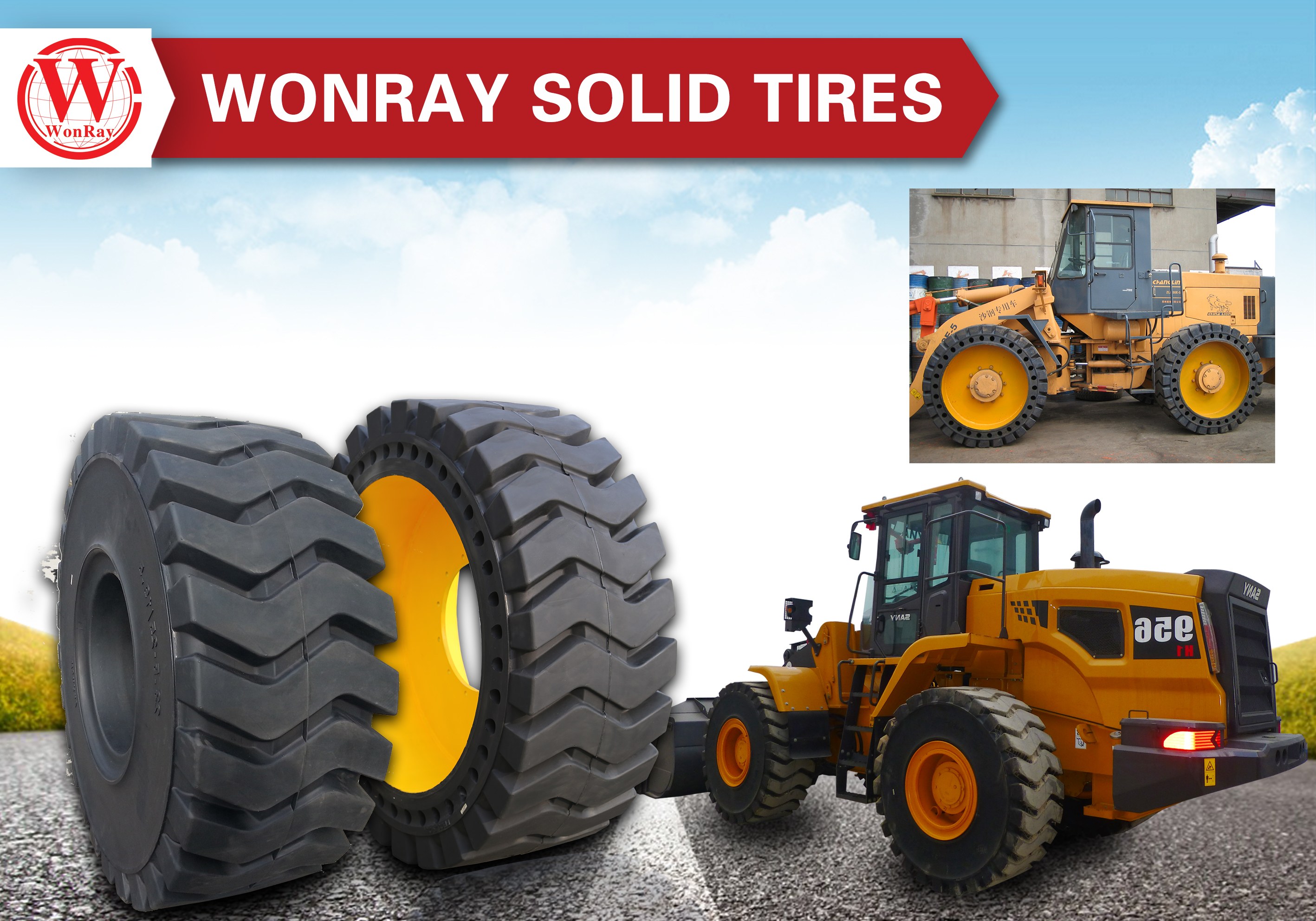
- Loaders and skid-steer equipment in rough industrial sites.
- Port and container-handling vehicles working long shifts.
- Specialized industrial machines where predictable tire dimensions are important.
How to Match the Product to the Vehicle
A useful Industrial Solid Tire specification starts with the existing tire and rim, but it should also include the vehicle’s real operating conditions. Confirm the tire size, rim type, axle or wheel position, maximum operating load and normal travel speed. Then consider the route: smooth indoor floor, rough concrete, compacted gravel, outdoor yard or mixed surface. Daily working hours and turning frequency are also important because long travel and repeated turning can increase internal heat and shoulder wear.
The current tire’s wear pattern can provide useful information. Fast shoulder wear often indicates repeated tight turns. Chunking may point to cuts, impact or excessive heat. Uneven diameter between paired tires can change load distribution. Repeated punctures on pneumatic tires are a strong reason to consider a solid alternative, but the replacement still needs to fit the vehicle and duty cycle correctly.
Maintenance Is Simpler, but Inspection Still Matters
Industrial Solid Tire products do not need air-pressure maintenance, but they should still be inspected regularly. A visual inspection helps confirm that wear remains gradual and that the tire is not developing large cracks, missing tread blocks, bonding problems or severe flat spots. Rims and mounting components should also be checked after heavy impacts or when abnormal vibration appears. This approach keeps the low-maintenance advantage of solid tires without treating them as maintenance-free in every respect.
Product Value Comes From Predictable Operation
The strongest reason to use an Industrial Solid Tire is predictable industrial operation. The product removes one major failure mode—air loss—while providing stable load support and durable rubber contact with the working surface. When tread, construction, size and rim fit are matched to the machine, the tire can support longer service intervals and more consistent vehicle availability.
WonRay’s industrial tire range includes solid tire solutions for forklifts, loaders, trailers, port vehicles, access equipment and other industrial applications. The practical focus is to match the product to the machine and working environment rather than rely on size alone.
Frequently Asked Questions
1. What is an Industrial Solid Tire used for?
It is used on forklifts, loaders, trailers, port vehicles and other industrial equipment that needs puncture-free load support and stable performance.
2. Does an Industrial Solid Tire need air pressure?
No. Its load-bearing structure is solid rubber, so there is no pneumatic chamber to inflate or lose pressure.
3. How should an Industrial Solid Tire be selected?
Confirm tire size, rim, wheel position, load, speed, surface, turning frequency and daily operating hours.
4. Can Industrial Solid Tires be used outdoors?
Yes, when the tread, compound and tire construction are matched to outdoor or mixed industrial surfaces.
Post time: 20-08-2026