
Industrial Solid Rubber Tires for Trailers are often selected for one practical reason: a trailer should remain available when the tow vehicle is ready to move. In factories, warehouses, airports and industrial yards, trailers may complete hundreds of short movements during a shift. They start under load, follow a tow tractor through tight corners, cross floor joints, stop at workstations and repeat the same route. A tire that cannot tolerate this cycle becomes a bottleneck even if the trailer itself is mechanically simple.
For this reason, Industrial Solid Rubber Tires for Trailers should be evaluated by duty cycle rather than by static load alone. The critical questions are how often the trailer moves, how sharply it turns, what surfaces it crosses, how many axles share the load, and how much heat develops during repeated flexing. These factors explain why a tire that works well on a light cart may not perform equally well on a heavily loaded industrial tow train.
A trailer tire experiences load differently from a powered vehicle tire
A trailer does not generate tractive force through its own wheels, but that does not make tire service easy. During acceleration, the drawbar pulls the trailer from rest while the load resists motion. During braking, the trailer mass continues forward. In turns, every axle must follow a different radius, which creates lateral scrub across the tread. The tire therefore manages a combination of vertical load, rolling resistance and side force.
Industrial Solid Rubber Tires for Trailers are well suited to repetitive low-speed movement because the solid body cannot lose inflation pressure and is not disabled by common punctures. However, the rubber still deforms under load. If the trailer is overloaded, if the wheels are misaligned or if the route includes frequent sharp turns, that deformation becomes concentrated and wear accelerates.
This is why simply multiplying the number of tires by a nominal load figure can be misleading. Real axle loading, uneven cargo distribution and turning behavior can place much greater stress on individual wheels than a static calculation suggests.
The tow route can predict the wear pattern
One of the most useful ways to understand trailer tire performance is to walk the route. Long straight aisles, polished concrete, expansion joints, ramps, loading dock plates and tight workstation turns each affect the tire differently. A route with smooth flooring may still be severe if the trailer turns sharply every few meters. A rough outdoor path may create impact and abrasion even when steering angles are modest.
On multi-trailer tow trains, the rear units can also track differently from the lead trailer. Corners create additional scrub because each trailer follows an offset path. Over time, shoulder wear or localized flat areas can reveal where the route is imposing the greatest stress.
Industrial Solid Rubber Tires for Trailers therefore perform best when route design and tire design are considered together. Reducing unnecessary stationary steering, smoothing damaged thresholds and correcting wheel alignment can often extend service life without changing the tire specification.
Heat accumulation is a cycle problem, not only a speed problem
Industrial trailers usually travel at moderate speeds, so heat may be underestimated. Yet heat is generated every time rubber flexes. A heavily loaded trailer that starts and stops repeatedly can accumulate significant internal temperature even at low speed. Tight cornering adds more deformation, while long operating hours limit the time available for the tire to cool.
Excessive heat changes rubber behavior and can accelerate cracking, chunking or bond fatigue. The middle layer and tread compound of Industrial Solid Rubber Tires for Trailers therefore need to manage both deformation and heat according to the application. A tire designed only around hardness may carry the load but transmit too much shock; a compound that is too soft may flex excessively and build heat rapidly.
When tire damage repeatedly appears after similar operating hours, the correct investigation should include load, speed, route length, ambient temperature and duty cycle. Replacing the tire without examining those variables may reproduce the same failure.
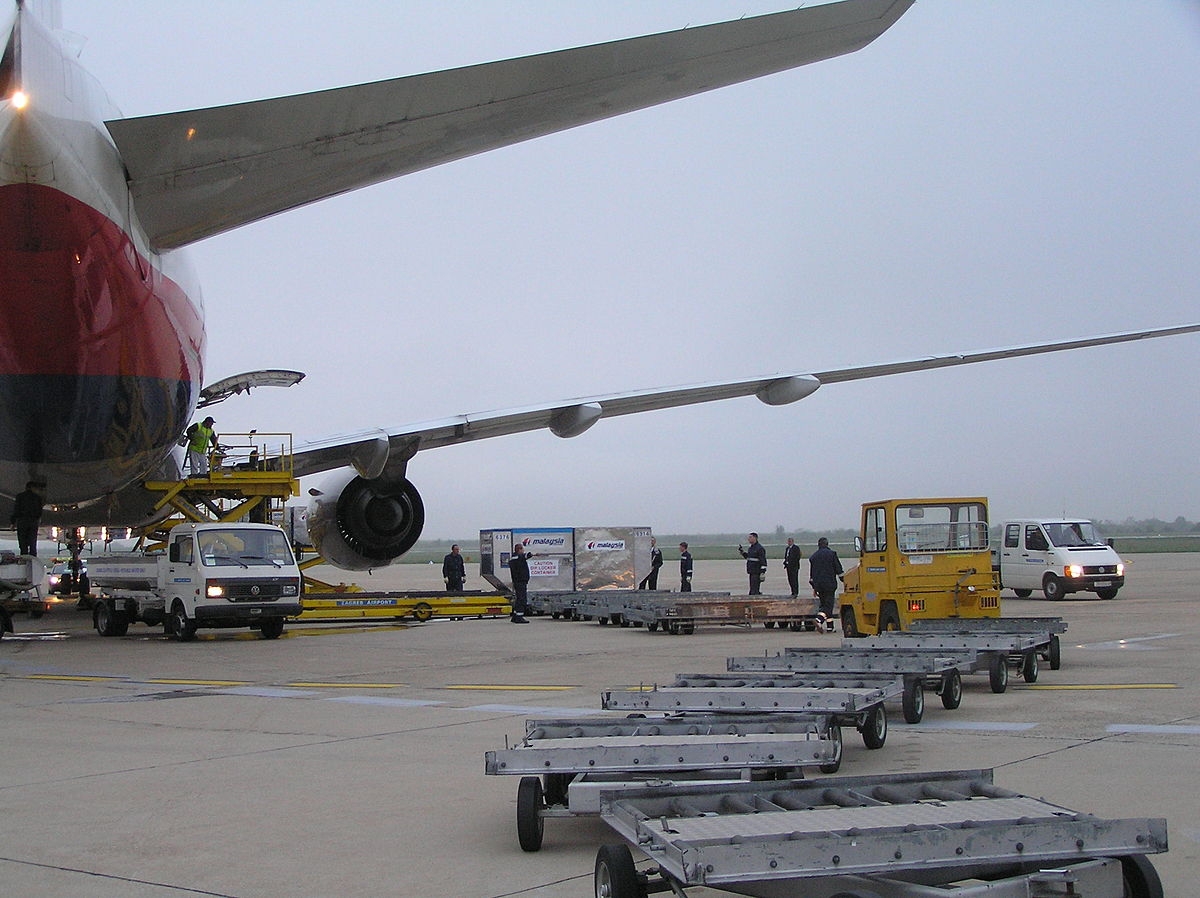
Small wheel diameter makes surface defects more important
Many industrial trailers use relatively small wheels. A floor joint or dock plate that seems minor to a forklift can create a much sharper impact for a small-diameter trailer tire. The wheel has less ability to roll gradually over the obstacle, so the load rises quickly at the contact point.
This makes tread condition and wheel integrity important. Repeated impacts can damage rubber, bearings, hubs and trailer frames. Solid tires remove the puncture risk, but they do not remove mechanical shock. Selecting an appropriate tire diameter and resilient construction can help, while good floor maintenance prevents the tire from becoming the first component to absorb every defect in the route.
For trailers that move between indoor and outdoor surfaces, transitions deserve special attention. Drainage channels, rails, curb edges and rough concrete can impose far higher local loads than the main travel surface.
The lowest-maintenance tire still requires the right inspection
“Maintenance-free” is often used to describe solid tires because there is no air pressure to check. That does not mean the wheel assembly can be ignored. Industrial Solid Rubber Tires for Trailers should still be inspected for uneven wear, cuts, chunking, bond separation, damaged rims, loose fasteners and bearing problems.
Wear patterns can be diagnostic. Rapid wear on one side may indicate alignment error. Repeated flat spots can be associated with dragging brakes or skidding. Shoulder damage may point to excessive cornering force, while cracking and chunk loss can be linked to heat, overload or abrasive debris.
Periodic inspection is therefore less about routine servicing of the tire and more about identifying problems elsewhere in the trailer system before they shorten tire life.
Match the tire to the trailer system, not the other way around
Tire size, rim or hub dimensions, bearing arrangement, axle rating and intended load all need to be confirmed before replacement. For tow trains, it is also useful to know whether all trailers carry similar loads or whether certain units consistently handle heavier material. A single tire specification may not be ideal if duty varies widely across the fleet.
Industrial Solid Rubber Tires for Trailers are most effective when the wheel assembly supports the actual operating pattern: reliable low-speed rolling, repeated turning, predictable load support and resistance to floor debris. When these factors are aligned, the solid tire reduces one major source of unscheduled interruption without creating new issues in ride, heat or wear.
Yantai WonRay Rubber Tire Co., Ltd. supplies industrial solid tire and wheel solutions for trailer applications. Matching can be based on tire dimensions, wheel data, axle load, route conditions and operating intensity so that the selected assembly reflects the real logistics cycle rather than a single catalogue figure.
FAQ
Are solid rubber tires suitable for trailers that operate all day?
Yes, provided the tire is correctly matched to load, speed, wheel size, route and duty cycle. Continuous operation increases heat accumulation, so service intensity should be considered rather than assuming low speed means low stress.
Why do trailer tires wear quickly in tight factories?
Frequent turning creates lateral scrub because trailer axles do not steer like powered vehicle axles. Multi-trailer tow trains can amplify this effect, especially on high-friction floors.
Do industrial solid trailer tires need maintenance?
They do not need inflation maintenance, but wheel assemblies should still be checked for wear, chunking, alignment problems, loose fasteners, bearing issues and rim damage.
What information is useful when selecting a replacement?
Tire size, wheel or hub dimensions, axle load, maximum trailer load, travel speed, route surface, turning frequency and daily operating hours are all useful for matching.
Post time: 10-08-2026