
Hyster Forklift Tire selection begins with the forklift itself. Hyster trucks are used in warehouses, factories, loading areas and mixed indoor-outdoor routes, so the tire must match more than a brand name or a visible size marking. Tire construction, wheel design, axle position, floor condition and working load all influence how the truck steers, brakes and carries weight during a shift.
A Hyster Forklift Tire that fits correctly but does not suit the working environment can still wear quickly, generate excessive heat or lose traction. For that reason, replacement should start with the original truck configuration and then consider the conditions in which the forklift spends most of its time.
Start With the Tire Construction Used by the Forklift
Hyster forklifts can be configured with different tire systems depending on the model and intended working environment. These constructions are not interchangeable simply because the outside dimensions appear close. The wheel center, rim profile, available clearance and chassis geometry are designed around a specific tire format.
• Solid pneumatic tires use a solid rubber body with a profile similar to a pneumatic tire. They are commonly considered where punctures are frequent and stable load support is required.
• Cushion or press-on tires use a compact rubber-and-steel arrangement on forklifts designed for this wheel format. They are generally associated with smooth, hard industrial floors and tight turning spaces.
• Pneumatic tires use air pressure for cushioning and can provide a softer ride on uneven ground, but they require inflation control and remain vulnerable to puncture-related downtime.
Before changing a Hyster Forklift Tire from one construction to another, confirm that the forklift and wheel system are designed to accept the alternative. Tire height, wheel dimensions and load characteristics can affect ground clearance, steering response and stability.
Drive Tires and Steer Tires Do Different Work
The drive axle transfers acceleration and braking forces into the floor while also carrying a substantial share of the truck load. A drive-position Hyster Forklift Tire therefore needs consistent contact, suitable traction and enough rubber volume to tolerate repeated compression. Heavy loads, long travel distances and frequent starts can increase heat in this position.
Steer tires face a different pattern of stress. Tight aisle turns and low-speed steering create lateral scrub, especially at the shoulders. A steer-position tire can therefore show edge wear even when the center tread still appears usable. Comparing front and rear wear separately gives a clearer picture than judging all four tires by the same standard.
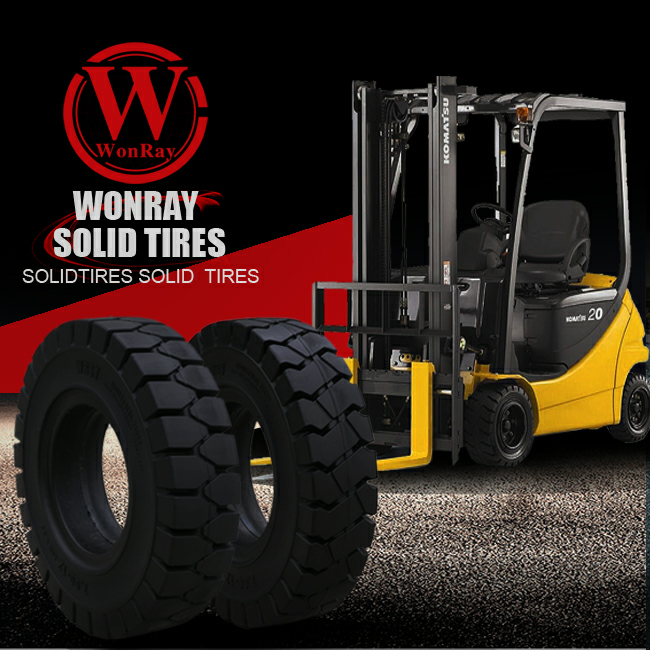
Match the Tire to the Route the Forklift Actually Uses
Floor condition changes the demands placed on the rubber. A warehouse route with smooth concrete creates different wear from a yard with expansion joints, broken pavement, gravel or metal debris. The most suitable Hyster Forklift Tire should reflect the surface that dominates daily operation rather than the easiest section of the route.
• Smooth indoor floors favor stable rolling, controlled turning and even wear across the tread.
• Mixed indoor-outdoor routes need a balance of cut resistance, traction and resistance to shoulder wear.
• Debris-prone yards place greater emphasis on puncture resistance, tread strength and protection against chunking.
• Clean or finished floors may require non-marking rubber, but traction, load and heat performance still need to be checked separately.
The Existing Tire Provides Useful Replacement Information
The old Hyster Forklift Tire should be treated as a source of operating information. Uniform wear usually indicates a different situation from one-sided shoulder loss, flat spotting or deep chunking. If the same abnormal pattern appears repeatedly, the cause may involve alignment, braking, bearings, overload, turning habits or the floor rather than the tire alone.
Effective diameter is also important. Tires on the same axle should remain reasonably similar in rolling diameter so the truck does not carry and drive through significantly different wheel heights. When only part of a set is replaced, compare the remaining tire diameter rather than relying only on the original size marking.
A Hyster Forklift Tire Should Be Chosen as Part of the Running System
The most reliable Hyster Forklift Tire specification combines the truck model with the original wheel arrangement and the real operating cycle. This keeps the tire aligned with the forklift’s intended geometry while addressing the surface, load and wear conditions that determine service behavior.
WonRay supplies industrial solid tire and wheel solutions for forklift applications, including different solid and cushion-style configurations. Final matching should be based on confirmed dimensions, wheel structure and actual operating conditions rather than brand name alone.
Frequently Asked Questions
1. Can one Hyster Forklift Tire fit every Hyster model?
No. Hyster models can use different sizes, tire constructions, wheel systems and load specifications. The exact truck and existing wheel data should be confirmed.
2. When is a solid Hyster Forklift Tire useful?
It is useful when the forklift is compatible with solid tires and the route has puncture hazards, high utilization or a need to reduce inflation-related maintenance.
3. Why do steer tires often wear faster at the shoulders?
Frequent tight turns create lateral scrub. Alignment, overload and rough floor conditions can increase the same type of wear.
4. What should be checked before replacing only two tires?
Confirm axle position, remaining tire diameter, wheel dimensions, load condition and whether the new tires will create a large rolling-diameter difference.
Post time: 25-08-2026