
Industrial Solid Tires are heavy-duty rubber tires designed for forklifts, wheel loaders, skid steer loaders, port vehicles, mining equipment, metallurgical vehicles, airport ground support equipment, and other industrial machines that operate under demanding conditions. Unlike pneumatic tires, industrial solid tires do not depend on air pressure, so they can resist punctures, support heavy loads, and provide stable performance in workplaces where sharp debris, rough ground, and continuous operation are common. For companies that want reliable tire performance and lower downtime, choosing the right industrial solid tires is an important purchasing decision.
Many buyers search for industrial solid tires because their machines work in tough environments and ordinary tires fail too often. However, the correct choice is not only about tire size. A suitable tire should match the equipment type, load requirement, ground condition, working temperature, operation intensity, and safety expectations. This purchasing guide explains how to evaluate industrial solid tires before placing an order.
Confirm the Equipment Type First
The first step in choosing industrial solid tires is to confirm which machine will use the tire. Different equipment types create different pressure on the tire, even when the tire size looks similar.
Industrial solid tires are commonly used for:
- Forklifts in warehouses and factories
- Skid steer loaders in construction and waste handling
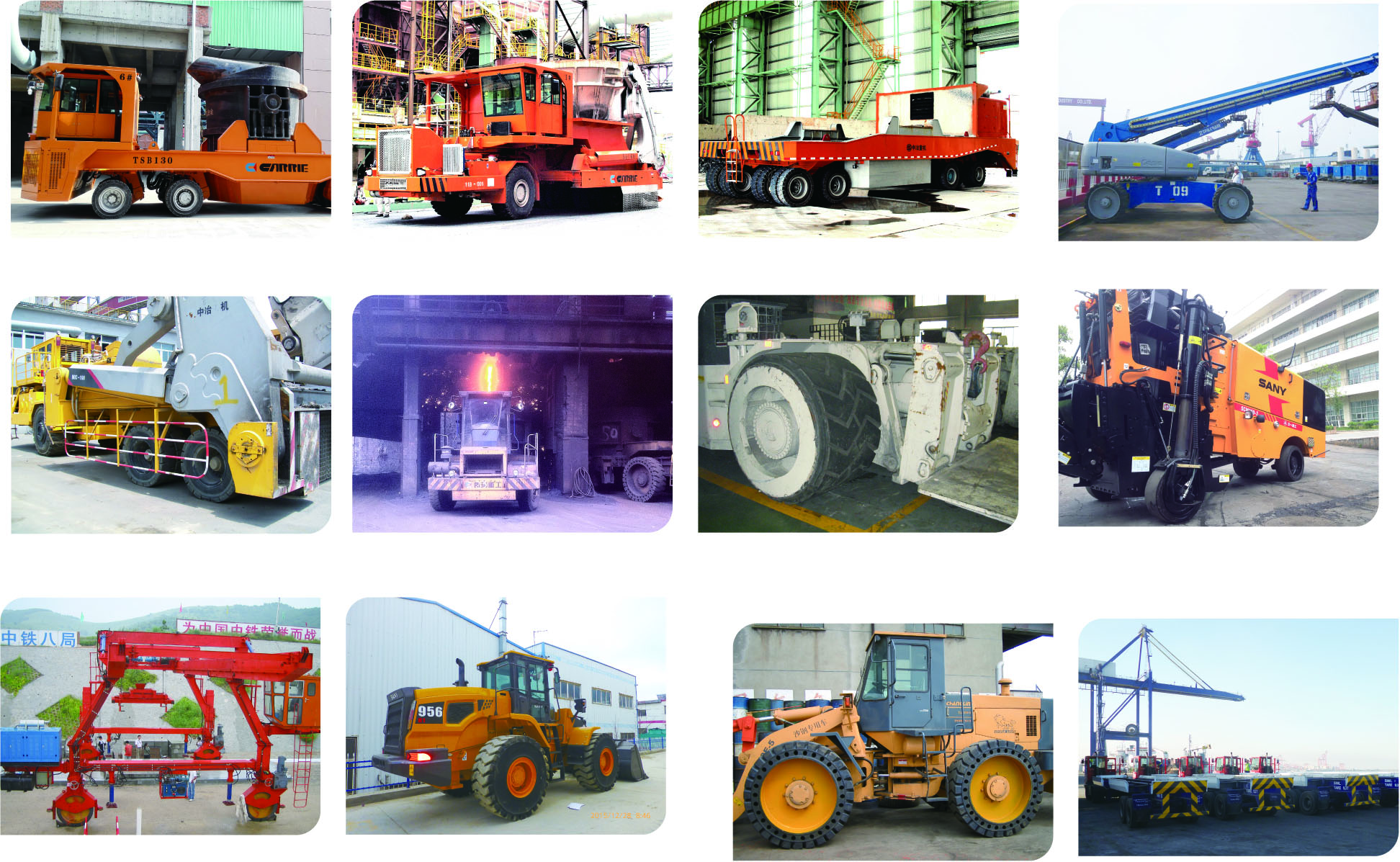
- Wheel loaders in industrial yards and mines
- Port trailers and terminal vehicles
- Metallurgical transport vehicles in steel plants
- Airport baggage carts and ground support equipment
- Aerial work platform wheels and lift equipment
A forklift tire may need excellent stability and low rolling resistance, while a port vehicle tire may need stronger resistance to cuts and heavy impact. A tire for a steel plant may need better heat resistance, while a tire for indoor warehouse equipment may require cleaner operation or non-marking performance. Matching industrial solid tires to the real equipment type helps prevent early wear and unsafe operation.
Check the Tire Size and Rim Specification
Correct tire size is one of the most basic but most important details. If the industrial solid tire does not match the rim, the equipment may experience installation problems, unstable movement, or abnormal tire wear.
Before purchasing industrial solid tires, buyers should confirm:
- Current tire size
- Rim diameter and rim width
- Equipment model
- Front and rear tire positions
- Load capacity requirement
- Original tire type and replacement standard
Some industrial solid tires are designed as standard solid tires, while others may be press-on band tires, cushion tires, or specialized tires for specific equipment. Accurate size confirmation can reduce installation risks and ensure stable performance after replacement.
Match Industrial Solid Tires with the Working Surface
Ground condition has a major effect on tire life. A machine working on clean indoor concrete does not need the same tire as a machine working in a scrap yard, mine, port, or steel mill.
For smooth indoor floors, industrial solid tires should focus on:
- Stable movement
- Low vibration
- Low rolling resistance
- Good steering control
- Non-marking performance when required
For rough outdoor or industrial surfaces, the tire should focus on:
- Cut resistance
- Chunking resistance
- Stronger tread compound
- Better impact resistance
- Longer wear life under abrasive conditions
If the working ground contains metal scraps, stones, broken concrete, or sharp waste materials, choosing industrial solid tires with stronger cut-resistant compounds is more important than simply choosing a standard tire.
Evaluate Load Capacity and Working Intensity
Industrial equipment often carries heavy loads for long hours. If the tire cannot support the real working load, it may heat up quickly, deform, crack, or wear faster than expected.
When evaluating industrial solid tires, buyers should consider:
- Maximum machine load
- Average working load
- Daily working hours
- Travel distance per shift
- Frequency of turning and braking
- Operating speed
- Whether the machine works continuously
Heavy-duty applications such as ports, mines, steel mills, and recycling yards usually require industrial solid tires with stronger internal structure and better heat resistance. For long continuous operation, heat build-up should not be ignored because excessive heat can shorten tire life.
Choose the Right Tread Pattern and Compound
The tread pattern and rubber compound affect traction, wear resistance, stability, and operating comfort. A smooth tire may work well indoors, but rough industrial ground may require deeper tread and stronger rubber.
Common selection points include:
- Smooth tread for clean indoor floors
- Traction tread for outdoor industrial yards
- Wear-resistant compound for high-frequency operation
- Cut-resistant compound for sharp debris environments
- Heat-resistant compound for long shifts or high-load work
- Non-marking compound for clean warehouses and food-related facilities
Good industrial solid tires should not only be strong. They should be suitable for the actual application. The wrong compound may cause fast wear, poor traction, or unnecessary floor damage.
Consider Downtime and Long-Term Cost
Some buyers compare only the purchase price of industrial solid tires, but the real value should be measured by total operating cost. A cheaper tire may become expensive if it fails early, causes downtime, or needs frequent replacement.
Industrial solid tires can help reduce long-term cost by:
- Reducing puncture-related failures
- Lowering emergency repair needs
- Extending replacement intervals
- Improving equipment availability
- Supporting safer heavy-load operation
For companies that use machines every day, tire downtime can affect production, loading schedules, warehouse circulation, and delivery efficiency. In these cases, a durable industrial solid tire with stable performance may create better value than a low-cost tire with short service life.
When Should Industrial Solid Tires Be Replaced?
Industrial solid tires are durable, but they still need replacement after long-term use. Running equipment on over-worn tires can reduce safety and damage the machine.
Replacement should be considered when:
- The tire reaches the wear limit
- Large cracks appear
- Rubber chunks fall off
- The tire becomes uneven
- Vibration increases during operation
- The equipment becomes less stable
- The tire no longer supports the load safely
Regular tire inspection helps maintenance teams replace tires before serious failure occurs. This is especially important for heavy-duty fleets that operate in ports, factories, and industrial yards.
Conclusion
Choosing the right industrial solid tires requires more than selecting a size from a catalog. Buyers should evaluate the equipment type, rim specification, load requirement, working surface, operation intensity, tread pattern, rubber compound, and long-term operating cost. High-quality industrial solid tires can help reduce downtime, improve safety, and support stable performance for forklifts, loaders, port vehicles, mining equipment, and other heavy-duty machines. For industrial operations where reliability matters, the right tire choice can directly improve productivity and equipment efficiency.
FAQ
Q1: What are industrial solid tires used for?
A1: Industrial solid tires are used for forklifts, skid steer loaders, wheel loaders, port vehicles, mining equipment, metallurgical vehicles, airport ground support equipment, and other heavy-duty industrial machines.
Q2: How do I choose the right industrial solid tires?
A2: You should check tire size, rim specification, equipment type, load capacity, working surface, daily operating hours, tread pattern, and rubber compound before choosing industrial solid tires.
Q3: Are industrial solid tires better than pneumatic tires?
A3: Industrial solid tires are better for harsh environments where punctures, sharp debris, and heavy loads are common. Pneumatic tires may provide more cushioning, but they are more vulnerable to air leakage and tire damage.
Q4: How long do industrial solid tires last?
A4: The service life depends on load, ground condition, operating hours, driving habits, and tire quality. In tough industrial environments, high-quality industrial solid tires usually provide longer and more stable service than ordinary air-filled tires.
Post time: 25-06-2026