
Wheel Loader Tires are one of the most important working parts on loaders used in industrial yards, recycling sites, ports, construction material areas, steel plants, and heavy material handling operations. A wheel loader does not simply roll from one point to another. It carries bulk material, turns under load, crosses rough surfaces, and often works long shifts. Because of these conditions, Wheel Loader Tires must provide more than basic size matching. They need load support, traction, resistance to cutting, stable rim fit, and predictable wear.
Start with the working site, not only the tire size
Size is essential, but it is not enough. Two loaders may use similar tire sizes but face completely different working conditions, from prepared concrete to scrap metal, slag, broken stone, or waste handling areas.
Before choosing Wheel Loader Tires, the site should be described clearly:
- Ground type: concrete, gravel, slag, scrap, mud, or mixed surface
- Debris risk: sharp metal, broken pallets, stones, or waste material
- Main task: carrying, pushing, truck loading, or yard cleaning
- Working hours and indoor or outdoor use
- Priority between puncture resistance and driving comfort
This site-first method helps prevent choosing a tire that matches the rim but not the actual job.
Why wheel loaders create severe tire pressure
Wheel loaders create demanding tire pressure because they combine weight, impact, steering force, and uneven ground. When the bucket enters a material pile, the front tires may receive strong compression. When the loader turns with a full bucket, the tire side area must resist lateral stress. When the machine crosses broken surfaces, the tread may face cutting, tearing, and impact. These repeated forces can quickly expose weak tire construction.
For this reason, industrial Wheel Loader Tires should be evaluated by several performance factors:
- Load capacity: the tire must support the operating weight and working load without serious deformation.
- Tread strength: the surface should resist cutting, chunking, and rapid wear.
- Traction: the pattern should match the ground and reduce slipping during pushing or loading.
- Heat control: long shifts may create heat build-up, especially under high load.
- Rim fit: the tire must remain stable during turning, braking, and impact.
A tire that performs well on light duty may not survive heavy industrial loading, so heavy-duty options are selected for repeated pressure.
Solid tires for loaders in puncture-prone work zones
Pneumatic loader tires can provide cushioning, but air pressure becomes a weakness in areas filled with sharp objects. In recycling yards, demolition material sites, steel plants, and waste management areas, metal fragments, wire, glass, and sharp stone can create constant puncture risk. Once air escapes, the loader stops and the site must arrange emergency repair.
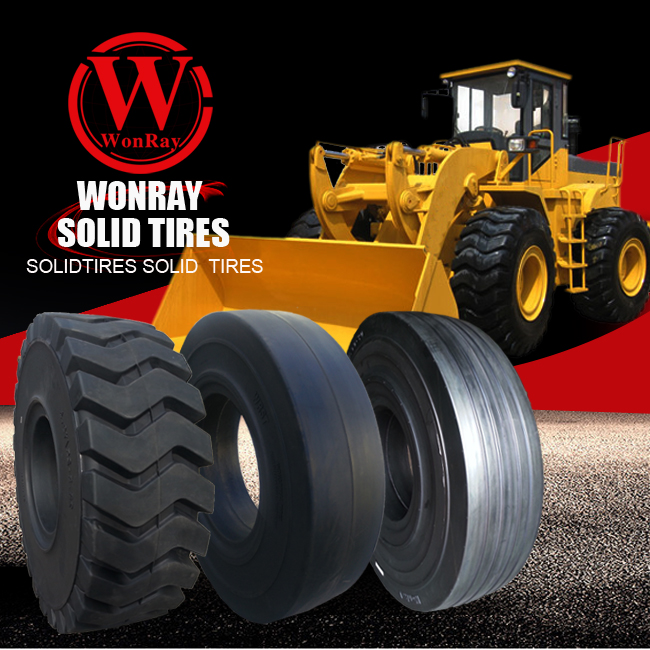
Solid Tires For Loaders solve this problem differently. Because they do not rely on air, they reduce sudden flat failures. The tire may still wear, but the loader is less likely to stop immediately because of a puncture. This is especially useful where continuous movement matters more than high-speed travel comfort.
Typical applications for loader solid tires include:
- Scrap yards and recycling centers
- Waste handling and transfer stations
- Steel mills and slag handling areas
- Ports and bulk cargo yards
- Construction material storage sites
- Industrial plants with sharp debris or rough ground
In these areas, puncture resistance and working continuity often matter more than the softer ride of a pneumatic tire.
Matching tread design to loader movement
The tread pattern of Wheel Loader Tires should reflect how the machine moves. Deeper tread can improve traction in rougher areas, while a stable pattern may be better for prepared yards and frequent travel. Buyers should not select the most aggressive tread automatically. The best choice depends on route length, ground friction, load weight, and turning frequency.
How Wheel Loader Tires influence operating cost
The lowest purchase price does not always create the lowest operating cost. Loader tire cost should include service life, downtime, repair labor, replacement frequency, and the effect of machine availability. A tire that is replaced frequently may cost more over time even if the first order price is lower.
Wheel Loader Solid Tires and OTR Solid Tires can support cost control when they are used in the right application. They may reduce emergency flat repairs, make replacement planning more predictable, and keep the loader available during busy work periods. For companies operating several machines, predictable tire wear is valuable because maintenance can be planned instead of handled as a sudden problem.
A practical cost review should include working hours before replacement, tire-related stoppages, repair labor, material handling delays, and whether wear is even enough to plan replacement. This helps buyers focus on real working value instead of unit price alone.
WonRay wheel loader tire application support
WonRay solid rubber tire applications cover wheel loader solid tires, skid steer solid tires, industrial solid tires, port vehicle tires, steel mill tires, trailer tires, forklift solid tires, non-marking solid rubber tires, AWP wheels, mold-on tires, and rims. For Wheel Loader Tires, the focus is matching tire structure to ground condition, load demand, rim size, and operating intensity.
A loader working in a port yard may need high-load support and long-shift durability. A machine in a recycling yard may need stronger cut resistance and puncture protection. A loader in a steel plant may need heat resistance and impact stability. When the tire is chosen based on the real environment, it can help reduce downtime and improve daily working reliability.
Summary
Wheel Loader Tires should be selected according to site conditions, machine load, ground surface, route, and working hours, not only by size. Industrial wheel loaders need tires that can resist impact, carry heavy loads, maintain traction, and reduce puncture-related downtime. For rough and puncture-prone environments, solid tire options can help loaders keep working with fewer unexpected stops. A correct tire match supports safer operation, more predictable maintenance, and better long-term value.
FAQ
Q1: What are Wheel Loader Tires used for?
Wheel Loader Tires are used on loaders working in ports, recycling yards, construction material sites, factories, steel plants, waste handling areas, and other heavy-duty industrial locations.
Q2: When should buyers choose Wheel Loader Solid Tires?
Wheel Loader Solid Tires are suitable when the loader works in puncture-prone areas with sharp debris, scrap metal, broken stone, rough concrete, or heavy industrial waste.
Q3: How do I choose the right Wheel Loader Tires?
Check tire size, rim size, machine model, load weight, ground condition, working hours, traction needs, and whether puncture resistance or heat resistance is required.
Q4: Are solid loader tires suitable for every wheel loader?
No. Solid loader tires are best for low-speed, heavy-duty, puncture-prone site operations. The buyer should confirm rim compatibility, load requirement, and working environment before replacement.
Post time: 16-07-2026