
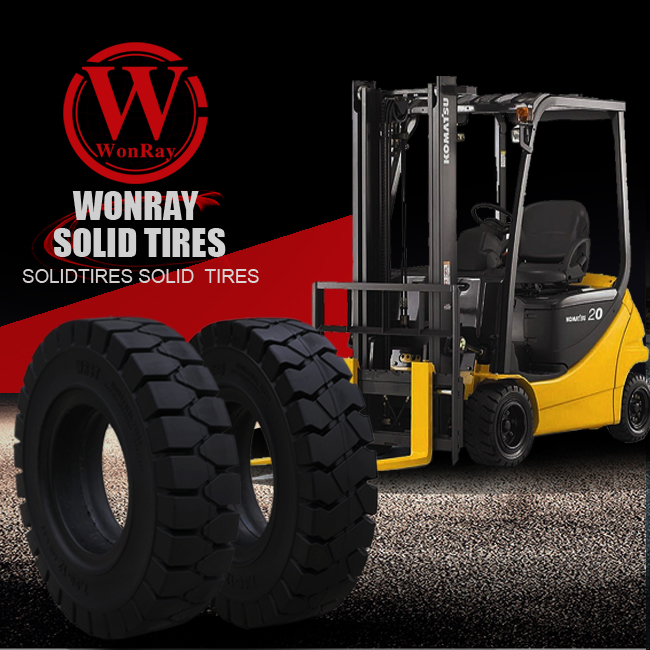
Forklift Solid Tires are durable industrial tires designed for forklifts used in warehouses, factories, ports, logistics centers, recycling yards, and heavy-duty material handling environments. Because forklift solid tires do not rely on air pressure, they can resist punctures, support heavy loads, and reduce unexpected downtime compared with pneumatic tires. However, even though forklift solid tires are strong and low-maintenance, they still need regular inspection and proper use if companies want longer service life, safer forklift operation, and lower replacement costs.
Many users choose forklift solid tires because they want a more reliable solution for demanding daily work. But after installation, tire life can still be affected by overloading, poor driving habits, rough ground, wrong tire selection, and lack of inspection. Maintenance is not only about repairing problems after they appear. It is about controlling wear, protecting the forklift, and keeping material handling work stable.
Check Forklift Solid Tires Regularly
Regular inspection is the first step in maintaining forklift solid tires. Since solid tires do not go flat like pneumatic tires, some operators may ignore them until they are seriously worn. This can create safety risks and increase equipment stress.
A basic inspection should include:
- Tire tread wear
- Sidewall cracks
- Rubber chunking
- Uneven wear
- Cuts from sharp debris
- Loose rubber sections
- Abnormal vibration during driving
Forklift solid tires should be checked more often in high-intensity environments such as steel plants, ports, construction material yards, and recycling areas. When small damage is found early, maintenance teams can decide whether the tire can continue working or should be replaced.
Avoid Overloading the Forklift
Overloading is one of the main reasons forklift solid tires wear faster than expected. Even high-quality forklift solid tires have load limits. When the forklift carries more than the recommended capacity, the tires experience excessive compression, heat build-up, and structural stress.
Overloading may cause:
- Faster tread wear
- Cracking
- Higher heat generation
- Poor stability
- Increased steering pressure
- Shorter tire life
Forklift operators should follow the rated load capacity of both the forklift and the tires. If the working environment often requires heavy loads, the tire specification should be selected based on real operating weight rather than only the original tire size.
Improve Driving Habits
Driving behavior directly affects forklift solid tires. Sharp turns, sudden braking, high-speed cornering, and frequent spinning can all increase tire wear. In narrow warehouse aisles, operators often turn repeatedly in the same areas, which can cause uneven tire wear and floor marks.
Good driving practices include:
- Avoid sudden braking when carrying loads
- Reduce sharp turning under heavy weight
- Keep a steady driving speed
- Avoid unnecessary wheel spinning
- Turn smoothly in narrow aisles
- Slow down on rough or uneven surfaces
Training operators to drive correctly can extend forklift solid tire life and improve workplace safety. This is especially important for companies with multiple forklift drivers and long daily shifts.
Keep the Working Ground Clean
Forklift solid tires are more resistant to punctures than pneumatic tires, but sharp debris can still cut, damage, or tear the rubber. Metal pieces, stones, broken pallets, glass, and concrete fragments can reduce tire life, especially in recycling yards, manufacturing plants, and loading zones.
To protect forklift solid tires, companies should:
- Remove sharp debris from work routes
- Repair damaged floor sections
- Keep loading areas clean
- Avoid driving through metal scraps
- Clean outdoor yards regularly
- Mark unsafe routes clearly
A cleaner working surface does not only protect the tires. It also improves forklift stability, reduces vibration, and creates a safer environment for operators.
Monitor Uneven Wear
Uneven wear is a common issue for forklift solid tires. It may appear when forklifts frequently turn in one direction, carry unbalanced loads, work on sloped surfaces, or operate with mechanical alignment problems.
Uneven tire wear can lead to:
- Poor driving comfort
- Increased vibration
- Reduced stability
- Higher stress on the forklift
- Earlier tire replacement
If one tire wears much faster than others, maintenance teams should check the forklift alignment, axle condition, driving route, and loading habits. Replacing the tire without solving the cause may lead to the same problem again.
Replace Forklift Solid Tires at the Right Time
Some companies continue using forklift solid tires until they are extremely worn, hoping to reduce cost. In reality, this can increase safety risks and damage the forklift. A worn tire may reduce ground contact, affect braking, and increase vibration.
Forklift solid tires should be replaced when:
- The tire reaches the wear line
- Deep cracks appear
- Large rubber chunks fall off
- The tire becomes uneven
- Vibration becomes obvious
- The forklift loses stability
- The tire can no longer safely support the load
Timely replacement helps prevent accidents and protects other forklift components.
Choose the Right Tire for the Environment
Maintenance starts before the tire is installed. If forklift solid tires are not suitable for the working environment, even careful maintenance cannot deliver the expected service life.
For indoor warehouses, buyers may need:
- Low rolling resistance
- Smooth operation
- Non-marking performance
- Stable turning control
For rough industrial sites, buyers may need:
- Cut-resistant rubber
- Strong tread structure
- Better impact resistance
- Good heat resistance
Correct selection can reduce maintenance pressure from the beginning.
Conclusion
Forklift solid tires are a reliable tire choice for heavy-duty material handling, but long service life depends on proper inspection, correct loading, good driving habits, clean working surfaces, and timely replacement. Companies should treat forklift solid tire maintenance as part of daily fleet management, not as an occasional repair task. With the right maintenance habits, forklift solid tires can help reduce downtime, improve safety, and lower long-term operating costs.
FAQ
Q1: Do forklift solid tires need maintenance?
A1: Yes. Forklift solid tires do not need air pressure checks, but they still need regular inspection for wear, cracks, cuts, chunking, and uneven damage.
Q2: What causes forklift solid tires to wear quickly?
A2: Overloading, sharp turning, rough ground, poor driving habits, incorrect tire selection, and debris on the floor can all cause faster wear.
Q3: When should forklift solid tires be replaced?
A3: They should be replaced when they reach the wear limit, show deep cracks, lose rubber chunks, create strong vibration, or affect forklift stability.
Q4: How can I extend forklift solid tire life?
A4: Use the correct tire size, avoid overloading, train drivers, keep the ground clean, inspect tires regularly, and replace worn tires before they become unsafe.
Post time: 26-06-2026