
Industrial trailers are commonly used for transporting materials, components, and heavy equipment in factories, warehouses, and other controlled environments. Unlike road vehicles that focus on high-speed operation, many industrial trailers work at low speeds with repeated loading, stopping, and movement cycles. In these conditions, tires mainly handle load support, force transfer, and continuous contact with the working surface. Trailer Solid Rubber Tires are designed around these operating conditions through their solid structure, rubber composition, and overall construction. Their performance is closely connected with how they interact with the trailer system, including load distribution, movement forces, and working conditions. Understanding how these tires function helps explain their role in low-speed transportation applications.
Understanding the Working Role of Trailer Solid Rubber Tires
In a low-speed transport system, the tire is not only a supporting component but also an important part of the force transfer process. The weight of transported materials passes through the trailer frame, axle system, wheels, and finally reaches the ground through the tires. During this process, the tire needs to maintain a stable connection between the trailer and the surface while responding to different mechanical forces.
Compared with tires used on high-speed vehicles, industrial trailer tires generally operate under different conditions. They often experience repeated loading cycles, limited travel distances, and frequent starts and stops. Therefore, the design focus is usually related to load support, structural stability, and consistent movement characteristics rather than high-speed handling.
How Solid Rubber Tires Transfer Loads During Transportation
Load transfer is one of the most important functions of trailer tires. When a trailer carries heavy materials, the vertical load is distributed through the entire support system. The tire structure influences how this pressure is transferred and how the tire responds under compression.
The solid construction of Trailer Solid Rubber Tires allows the tire body to maintain a consistent shape when exposed to continuous pressure. Unlike pneumatic tires, their support does not depend on internal air pressure, which changes the way the tire reacts to loading conditions. The contact area between the tire and the ground also affects pressure distribution. A larger or more stable contact area can influence how the trailer responds when carrying different loads. This relationship between tire structure and load transfer is an important consideration in industrial transportation equipment.
The Relationship Between Tire Structure and Trailer Movement
Although industrial trailers usually move at low speeds, the tires still experience various forces during operation. Starting, stopping, and turning create different types of mechanical stress that must be managed by the tire and trailer system. During acceleration, the tires transfer movement forces from the towing equipment to the ground. During braking, they help manage the forces created by the moving load. When the trailer changes direction, the tires experience additional side forces caused by turning movements.
The design of Trailer Solid Rubber Tires influences how these forces are distributed throughout the tire structure. Factors such as rubber characteristics, tire dimensions, and internal construction determine how the tire responds during repeated movement cycles.
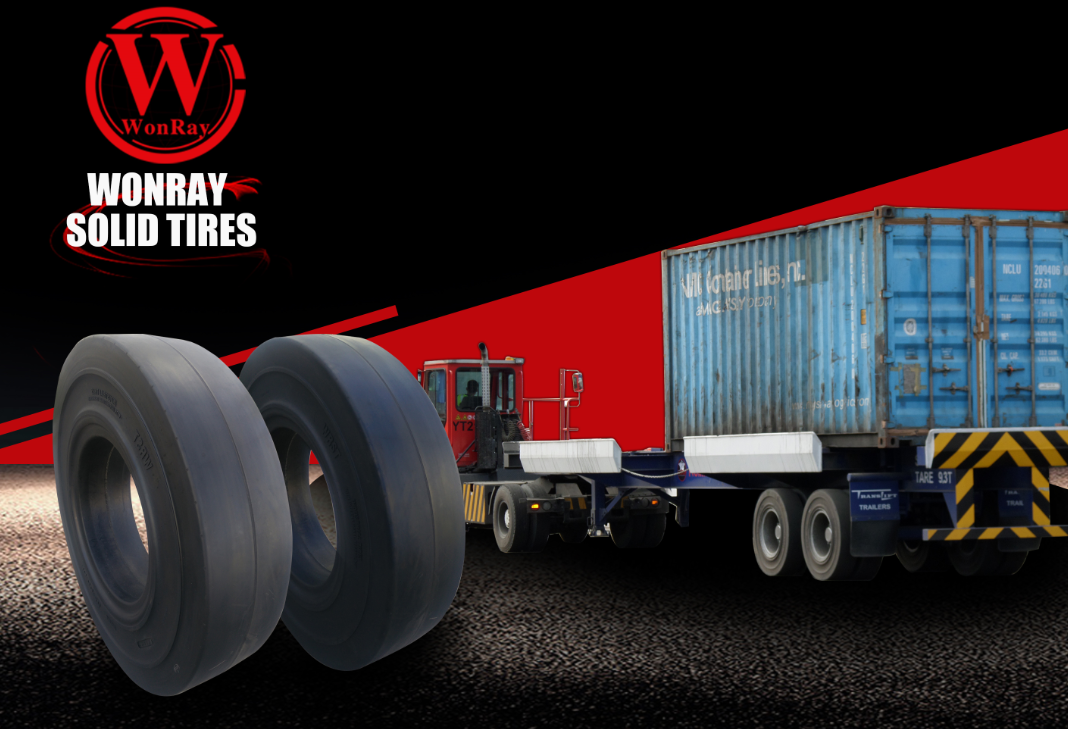
Key Factors That Influence Trailer Solid Rubber Tires Design
The design of solid rubber tires is closely related to the requirements of the trailer system. Different transportation conditions create different demands on tire structure and material selection.
Important factors include:
- Load requirements: The weight of transported materials and the way loads are distributed influence the amount of pressure applied to the tires. Tire structure needs to provide suitable support under the expected working conditions.
- Trailer configuration: Axle arrangement, wheel quantity, and trailer structure affect how forces are transferred through the tires. Different trailer designs may create different pressure patterns during operation.
- Operating conditions: Travel frequency, movement distance, and working environment can influence the required balance between support, flexibility, and structural stability.
These factors work together to determine how a solid rubber tire performs as part of a complete transportation system.
How Rubber Materials Affect Solid Tire Performance
The rubber composition of a solid tire plays an important role in determining how the tire responds to mechanical stress. Different rubber formulations can influence hardness, elasticity, compression behavior, and resistance to external forces. A harder rubber compound may provide stronger structural support, while a more flexible compound may allow greater deformation when absorbing forces. The appropriate balance depends on the operating requirements of the trailer and the type of loads being transported.
For Trailer Solid Rubber Tires, material selection is not focused on a single characteristic. Instead, the interaction between hardness, elasticity, and structural design determines how the tire behaves during continuous low-speed operation.
The Importance of Tire Dimensions in Trailer Applications
Tire dimensions affect how the tire interacts with both the trailer and the working surface. Diameter, width, and overall structure influence load distribution, installation compatibility, and movement characteristics. A larger diameter can affect rolling behavior, while tire width changes the contact area between the tire and the ground. These factors are closely related to the trailer’s weight, axle design, and operating requirements.
In industrial applications, tire dimensions are usually determined as part of the overall trailer design. The relationship between the tire size and the equipment structure helps ensure that forces are transferred in a controlled manner during transportation.
Applications of Trailer Solid Rubber Tires in Industrial Transportation
Trailer Solid Rubber Tires are commonly used in controlled transportation environments where trailers move materials within specific areas. These applications may include factory material transfer, warehouse handling, production line transportation, and internal equipment movement. Unlike highway transportation, these systems often involve predictable routes and repeated operating cycles. The tire needs to work together with the trailer structure and operating process to handle continuous movement and load changes.
Understanding the application environment is important because tire performance depends on the interaction between the tire, trailer design, transported load, and operating conditions. A complete evaluation requires considering the entire transportation system rather than looking at the tire as an independent component.
Conclusion
Trailer Solid Rubber Tires play an important role in low-speed transport systems by supporting loads, transferring movement forces, and maintaining consistent contact between trailers and the ground. Their working characteristics are determined by the combination of tire structure, rubber materials, dimensions, and trailer design.
Rather than focusing on a single specification, understanding how the tire functions within the complete transportation system provides a clearer view of its role in industrial applications. The relationship between the tire and the trailer determines how loads are carried and how movement forces are managed during daily operations.
FAQ
1. Are Trailer Solid Rubber Tires Suitable for Continuous Operation?
Trailer Solid Rubber Tires are often used in applications where trailers operate repeatedly over fixed routes or within controlled areas. Their solid structure allows them to maintain consistent characteristics during frequent movement cycles.
2. How Do Solid Rubber Tires Differ from Pneumatic Trailer Tires?
The main difference is the internal structure. Solid rubber tires use a fully rubber-based construction, while pneumatic tires rely on air pressure for support. This difference affects how the tires respond to load, deformation, and operating conditions.
3. Can Trailer Solid Rubber Tires Be Used on Different Types of Industrial Trailers?
The suitability depends on factors such as trailer structure, axle configuration, load requirements, and operating environment. Different trailer designs may create different demands on tire size and construction.
4. Why Is Tire Structure Important for Industrial Trailer Applications?
The tire structure determines how forces are distributed during transportation. It affects how the tire supports loads, responds to movement, and works together with the trailer system during operation.
Post time: 12-10-2026