
Skid steers are commonly used in construction sites, agricultural areas, warehouses, and material handling applications, where ground conditions can vary significantly. Since tires are the only direct connection between the machine and the surface, their structure and performance have a direct impact on traction, load distribution, and overall operating behavior. Solid Tires For Skid Steers are designed through a combination of rubber compounds, structural construction, and tread patterns to adapt to different surface conditions. Understanding how solid tires interact with concrete, gravel, mud, and uneven terrain helps explain the relationship between tire design and actual working environments.
The Relationship Between Solid Tires For Skid Steers and Ground Conditions
The performance of skid steer tires depends not only on the tire itself but also on surface hardness, ground consistency, friction conditions, and operating methods. Different surfaces create different forces on the tire. Hard surfaces mainly affect contact pressure and friction, while loose or uneven surfaces increase impact forces and deformation loads.
Solid Tires For Skid Steers use a solid structure that does not rely on internal air pressure to maintain their shape. This allows the tire to remain relatively consistent when carrying machine weight and operating loads. However, actual performance is still influenced by factors such as rubber formulation, tread design, and specific working conditions.
Performance on Concrete and Hard Surfaces
Concrete, asphalt, and other hard surfaces are common in warehouses, industrial facilities, and some construction environments. These surfaces are generally flat and stable, but their high hardness creates different requirements for tire design, especially in terms of support, vibration response, and surface contact.
When operating on hard surfaces, the interaction between the rubber compound and the ground affects how the tire responds during movement. A harder rubber structure can maintain a stable shape, while a properly balanced compound can provide controlled deformation to absorb part of the impact from the surface. Tread design also influences how the tire contacts the ground, as overly deep or aggressive patterns may not always be suitable for smooth surfaces.
For skid steers mainly operating on flat ground, tire design often focuses on maintaining consistent contact, supporting repeated loads, and providing predictable movement characteristics during continuous operation.
Performance on Rough and Uneven Surfaces
Construction areas, quarries, and outdoor job sites often contain gravel, rocks, soil, and irregular obstacles. These conditions create higher impact forces and place greater demands on tire structures. During operation on uneven terrain, the tire must support the weight of the skid steer while responding to repeated impacts from the ground.
The solid construction of Solid Tires For Skid Steers helps reduce changes caused by air pressure variations, allowing the tire to maintain a more stable shape under load. However, the way a tire absorbs and transfers impact forces depends heavily on rubber characteristics and structural design. Differences in rubber hardness, elasticity, and internal construction affect how the tire reacts under continuous impact.
Tread design is also an important factor in rough environments. A suitable tread pattern can improve the interaction between the tire and uneven surfaces, helping maintain more consistent contact during operation.
Performance in Mud and Loose Materials
Mud, soil, sand, and loose materials create different challenges compared with hard surfaces because they cannot provide the same level of support. In these conditions, tires need to manage surface slip, material buildup, and changes in contact conditions.
Tread patterns become especially important when operating in loose environments. The spaces between tread blocks influence how effectively mud and loose materials can move away from the contact area, while also affecting how the tire transfers forces to the ground.
In addition to tread design, rubber properties also influence how the tire performs when moving between different surfaces. Solid Tires For Skid Steers need to balance support, controlled deformation, and surface adaptation through material selection and structural design.
How Tread Design Influences Surface Adaptation
Tread patterns are not only a visual feature of a tire; they determine how forces are transferred between the tire and the ground. Different tread designs are developed for different operating conditions, including hard surfaces requiring stable support, loose terrain requiring stronger ground interaction, and mixed environments involving multiple surface types.
Common tread designs include:
- Block tread patterns: Often used where stable contact and load support are important, helping maintain a consistent footprint under heavy loads.
- Open tread designs: Provide more space for mud, soil, and loose materials to move away from the tread area, making them suitable for softer surfaces.
- Mixed tread patterns: Balance traction and contact stability for applications where ground conditions frequently change.
Therefore, tread design needs to be considered together with the actual operating environment rather than focusing on one performance characteristic alone.
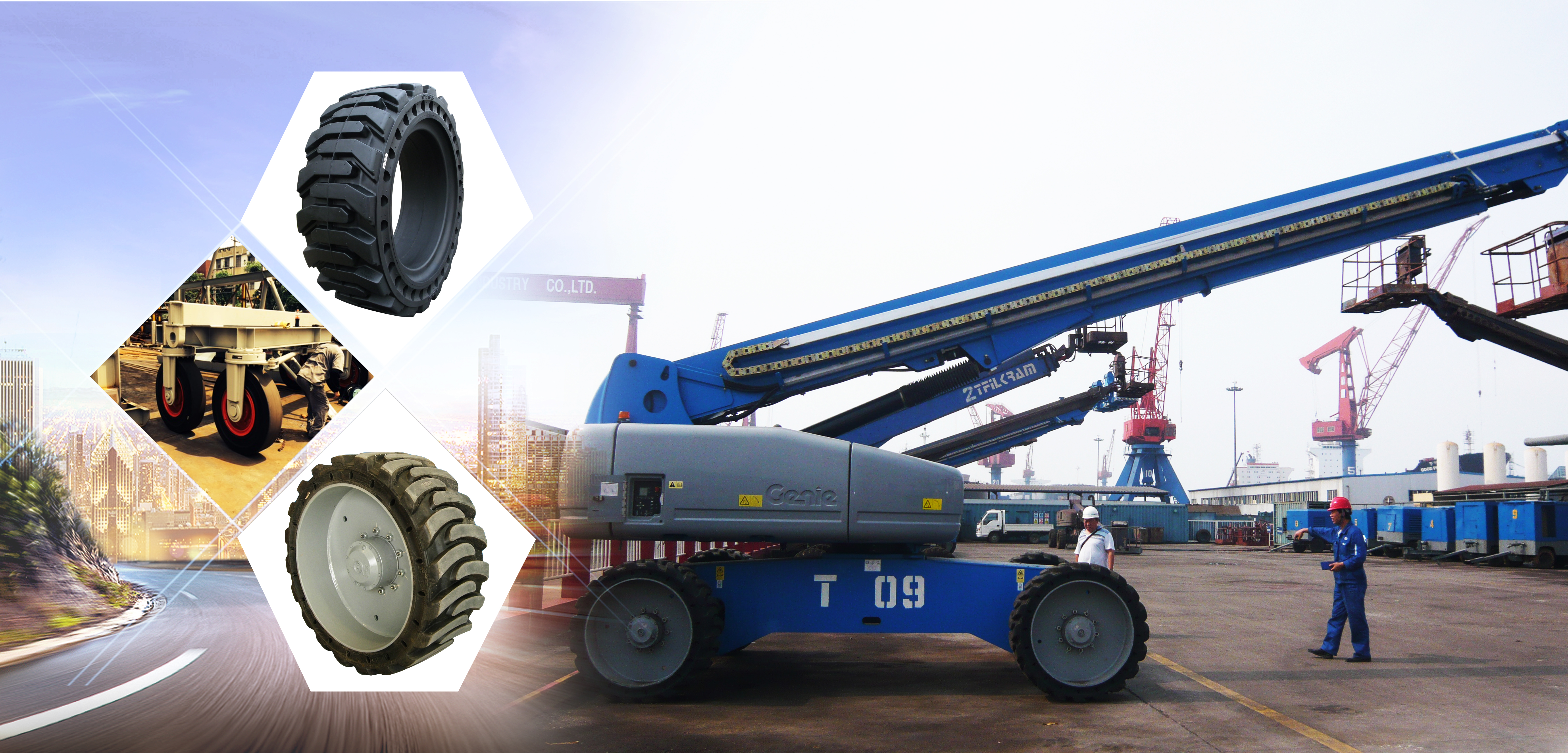
The Influence of Rubber Compound on Different Surfaces
Rubber compounds determine how tires respond to friction, temperature changes, and mechanical stress. Different working environments create different material requirements. For example, abrasive surfaces may require stronger resistance to material loss, while impact-heavy applications may require better flexibility and crack resistance.
The performance of Solid Tires For Skid Steers is not determined by a single material property. Instead, hardness, elasticity, wear resistance, and structural design work together to influence how the tire behaves during operation.
When evaluating solid tires, both material characteristics and actual working conditions should be considered. Tire size or appearance alone cannot fully represent how a tire will perform in a specific environment.
Matching Solid Tire Design with Working Applications
Different applications create different requirements for skid steer tires. Construction operations may expose tires to gravel, debris, and impact loads, while industrial applications may focus more on stable movement across smooth floors. Agricultural applications may involve changing surfaces such as soil, grass, and paved areas.
For Solid Tires For Skid Steers, the relationship between tire design and ground conditions plays an important role in determining operating characteristics. Understanding equipment weight, workload, surface type, and operating patterns helps provide a more complete evaluation of tire suitability.
In practical applications, tire performance is not determined by one specification alone. It is the result of interaction between tire structure, material properties, machine conditions, and the working environment.
Conclusion
Solid Tires For Skid Steers respond differently to various ground surfaces depending on their structure, rubber compound, and tread design. Concrete, gravel, mud, and uneven terrain create different levels of friction, impact, and pressure, requiring different design considerations.
Understanding the relationship between tires and ground conditions provides a more complete view of how solid tires perform in skid steer applications. Instead of focusing on a single specification, evaluating tire structure together with the working environment allows for a clearer understanding of tire characteristics and application requirements.
Frequently Asked Questions
1. Can Solid Tires For Skid Steers be used on different types of ground surfaces?
Yes. However, different surfaces create different requirements for tire structure and tread design, so the tire needs to match the actual working environment.
2. Why do ground conditions affect solid tire performance?
Different surfaces change the friction, impact forces, and contact pressure experienced by the tire, which influences traction, stability, and operating behavior.
3. What role does tread design play in skid steer solid tires?
Tread design affects how the tire contacts the ground and how forces are transferred on surfaces such as mud, gravel, and hard flooring.
4. Do all Solid Tires For Skid Steers perform the same in different environments?
No. Differences in tire structure, rubber formulation, and tread design can create different performance characteristics under the same working conditions.
Post time: 12-10-2026