
Industrial Non-Marking Solid Rubber Tires are solid tires made with special rubber compounds that help reduce black marks on indoor floors while supporting forklifts, warehouse vehicles, electric handling equipment, and industrial machines. These tires are used in food warehouses, pharmaceutical plants, electronics factories, shopping centers, airport facilities, logistics centers, and other indoor environments where floor cleanliness and stable material handling are both important. Unlike standard black rubber tires, industrial non-marking solid rubber tires are designed to protect floor appearance while keeping the puncture-resistant and low-maintenance advantages of solid tires.
For many facilities, floor marks are more than a cosmetic problem. They increase cleaning work, affect workplace image, may create hygiene concerns, and can make a clean production area look poorly managed. At the same time, using a soft or weak wheel only to protect the floor can reduce load support and tire life. Industrial non-marking solid rubber tires solve this conflict by combining floor-friendly performance with industrial strength.
The Real Cost of Black Floor Marks
Black tire marks usually appear when ordinary rubber tires rub against indoor floors during turning, braking, or loaded movement. Forklifts often turn in narrow aisles, stop near racks, and move repeatedly across the same routes. Over time, visible marks appear on polished concrete, epoxy floors, tiles, or coated surfaces.
These marks create hidden costs. Cleaning teams spend more time removing stains. Floor coatings may wear faster. Visitors and customers may view the facility as less professional. In food, pharmaceutical, and electronics environments, visible dirt can also create management pressure because clean production areas must look controlled and orderly.
Why Non-Marking Tires Are Different
Industrial non-marking solid rubber tires are produced with compounds that reduce visible black residue during operation. They are not simply painted or covered with a light color. The material itself is designed to limit floor marking while still supporting industrial use.
The tire must balance several needs at once: it should not leave obvious marks, it should support the forklift load, it should wear slowly, and it should maintain stable movement. This balance is important because a clean warehouse still needs efficient material handling. Floor protection should not come at the cost of unsafe or unstable operation.
Clean Industries Need More Than Clean Floors
Food storage, pharmaceutical production, beverage plants, packaging workshops, electronics assembly, and airport terminals often require cleaner operation standards. In these places, floor appearance is connected with hygiene, brand image, and operational discipline.
Industrial non-marking solid rubber tires are especially useful for:
- Food and beverage warehouses
- Pharmaceutical factories
- Electronics manufacturing facilities
- Cold storage and packaging areas
- Shopping malls and exhibition centers
- Airport terminals and service areas
- Clean logistics and distribution centers
In these environments, tire marks can create extra work and negative impressions. Non-marking tires help reduce these problems while still allowing equipment to work efficiently.
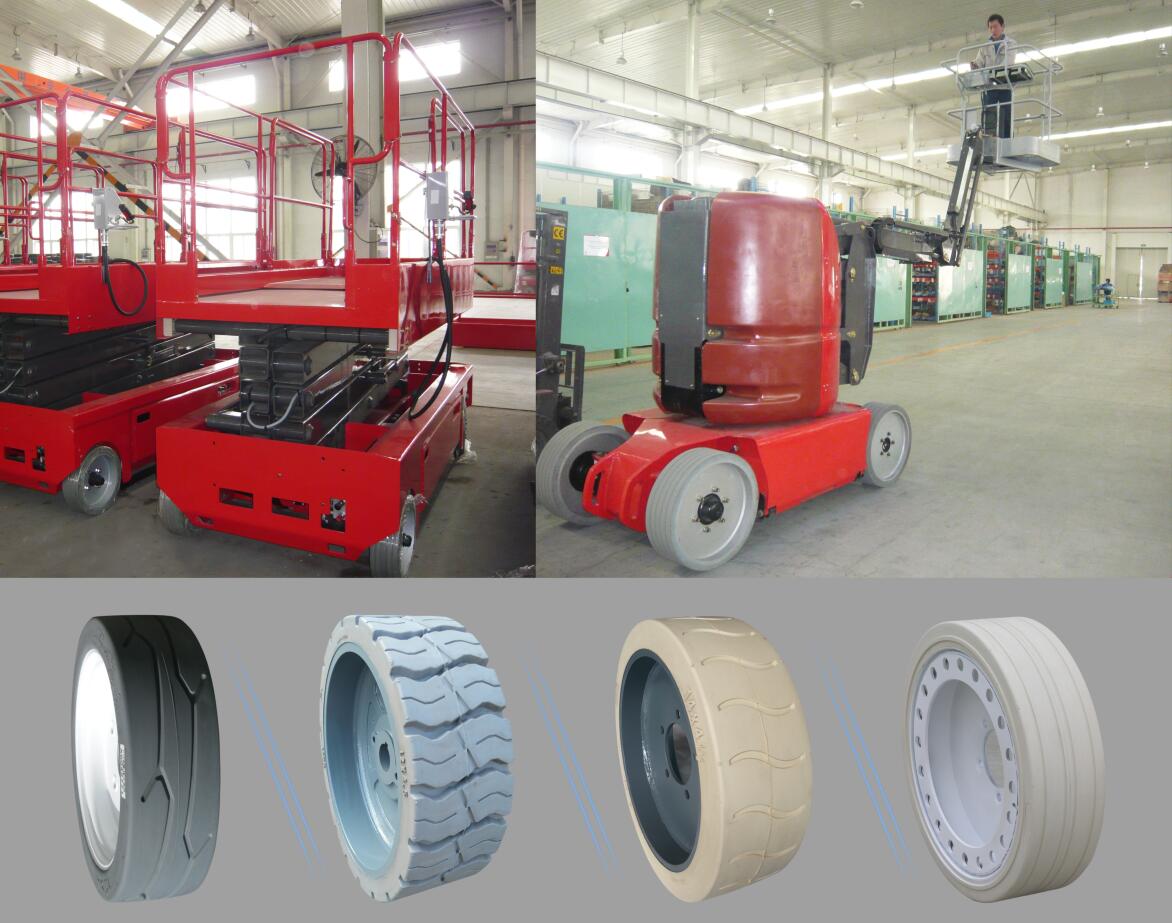
Load Support Still Matters
Some buyers focus only on floor protection and forget that a forklift tire is still a load-bearing part. Industrial non-marking solid rubber tires must carry the machine, goods, pallets, and attachments. If the tire compound is not strong enough, the tire may wear quickly, deform, or produce unstable handling.
A suitable non-marking tire should provide stable compression resistance, good bonding, and reliable wear performance. For busy warehouses, the tire should also handle frequent turning and braking without excessive heat buildup or fast material loss.
Choosing the Right Tire for the Right Floor
Not all indoor floors are the same. A polished concrete floor, epoxy floor, tile floor, and coated industrial floor may all react differently to tire material. Buyers should consider the floor type before selecting industrial non-marking solid rubber tires.
For smooth floors, rolling stability and low vibration may be more important. For coated floors, marking resistance and surface protection are key. For cold storage or wet areas, traction and compound performance should be reviewed carefully. When the floor is clean but the load is heavy, buyers must make sure the tire is not only non-marking but also strong enough for the vehicle.
Operator Habits Affect Floor Marking
Even good industrial non-marking solid rubber tires can perform poorly if forklifts are driven harshly. Fast turning, sudden braking, overloading, and dragging pallets can increase floor marks and tire wear. Tire selection should be combined with better operating habits.
Warehouse teams can reduce marking problems by keeping travel routes clear, avoiding unnecessary sharp turns, checking tire condition, and training operators to drive smoothly under load. These habits help extend tire life and protect the floor.
Conclusion
Industrial non-marking solid rubber tires protect clean warehouse floors by reducing visible tire marks while maintaining the strength, puncture resistance, and load support expected from solid tires. They are especially useful in food, pharmaceutical, electronics, airport, shopping center, and clean logistics environments. Buyers should choose industrial non-marking solid rubber tires according to floor type, load, forklift model, operating habits, and maintenance expectations. With the right tire and proper operation, clean facilities can reduce cleaning pressure, protect floor appearance, and maintain stable material handling.
FAQ
Q1: What are industrial non-marking solid rubber tires?
A1: They are solid rubber tires made with special compounds that reduce visible floor marks while supporting industrial vehicles and material handling equipment.
Q2: Where are non-marking solid tires commonly used?
A2: They are used in food warehouses, pharmaceutical plants, electronics factories, shopping centers, airports, logistics centers, and clean indoor facilities.
Q3: Do non-marking solid tires have enough load capacity?
A3: Yes, suitable industrial non-marking solid rubber tires are designed to provide floor protection while still supporting forklift loads and daily operation.
Q4: How can users extend the life of non-marking solid tires?
A4: Users should avoid overloading, reduce sharp turns, keep routes clean, inspect tire wear regularly, and replace damaged tires before floor protection declines.
Post time: 06-07-2026