
Mold-On Tires are industrial tires made by bonding or molding rubber or polyurethane directly onto a wheel core, creating an integrated wheel-and-tire structure for material handling equipment, warehouse carts, aerial work platforms, lifting equipment, custom machinery, and other industrial wheels. Unlike separate tire assemblies, mold-on tires are designed to keep the tire material firmly connected to the wheel core, helping improve rolling stability, load support, durability, and maintenance efficiency in repeated-use applications.
Many industrial wheel problems are not caused by the wheel size itself, but by weak bonding, poor material selection, unstable rolling, or premature wear. When equipment moves every day under load, small wheel problems can become obvious: vibration increases, movement becomes less smooth, the tire material separates from the core, or the wheel wears unevenly. Mold-on tires are designed to solve these stability-related problems by making the tire and wheel core work as one structure.
Why Industrial Wheels Lose Stability
Industrial wheels often work in repetitive conditions. They carry loads, turn frequently, move across hard floors, stop and start, and sometimes work near machines, shelves, workers, and finished products. If the tire material is not properly attached to the wheel core, movement can become unstable.
Common problems include:
- Tire slipping on the wheel core
- Uneven rolling during movement
- Vibration under load
- Tire separation after repeated use
- Noise in indoor environments
- Faster wear on one side
- Reduced load control
For equipment that moves materials every day, these problems affect both efficiency and safety. Mold-on tires help improve stability by using an integrated bonding process instead of relying on a loose or replaceable tire structure.
Strong Bonding Is the Core Advantage
The main feature of mold-on tires is bonding strength. Rubber or polyurethane is molded directly onto the wheel core, creating a stable connection between the tire material and the core. This helps reduce the chance of tire movement or separation during use.
Strong bonding helps provide:
- Better rolling consistency
- Reduced tire-core movement
- Lower risk of separation
- More stable load support
- Longer service value in repeated operations
- Less maintenance caused by loose tire material
This is especially useful for equipment that works continuously or carries loads repeatedly. If the bond is strong, the wheel can perform more predictably over time.
Different Materials Create Different Performance
Mold-on tires can be made with rubber or polyurethane, and each material serves different needs. Choosing the correct material is one of the most important parts of mold-on tire selection.
Rubber mold-on tires may be preferred when users need:
- Better shock absorption
- Quieter operation
- Good ground contact
- More comfortable movement on slightly uneven floors
- Reduced vibration for certain equipment
Polyurethane mold-on tires may be preferred when users need:
- Higher wear resistance
- Smooth rolling on hard floors
- Good load capacity
- Lower rolling resistance
- Better resistance to some oils or chemicals
- Longer service life in many indoor applications
The choice should not be based only on material price. It should be based on floor condition, load, travel distance, speed, noise requirement, and working environment.
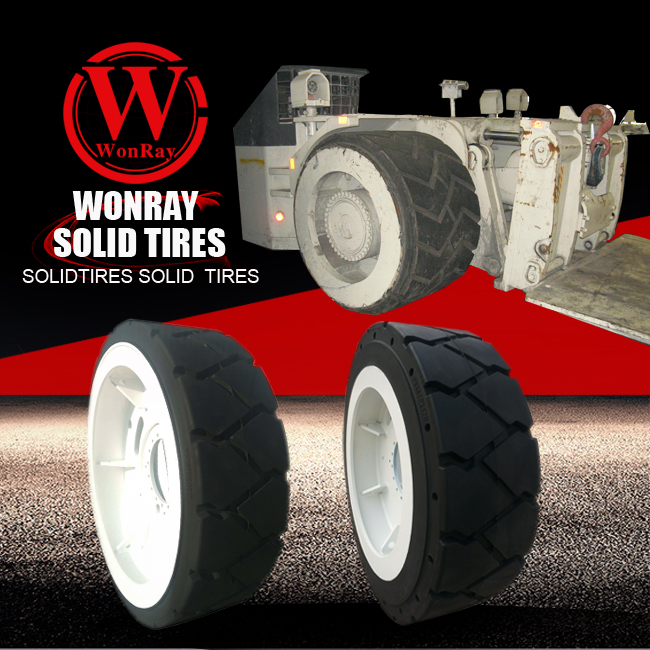
Better Load Support for Material Handling Equipment
Mold-on tires are often used on equipment that carries goods, tools, parts, or industrial materials. If the wheels are unstable, the load may shake, shift, or become harder to move safely.
Mold-on tires are commonly used on:
- Industrial carts
- Warehouse transfer vehicles
- Platform trucks
- Material handling equipment
- Aerial work platform wheels
- Lift equipment wheels
- Factory transport systems
- Custom machinery wheels
Stable load movement is especially important when the equipment operates near people, machines, racks, or finished goods. Mold-on tires can help reduce vibration and support smoother travel.
Floor Protection in Indoor Facilities
Many modern factories and warehouses use polished concrete, epoxy floors, coated surfaces, or clean production floors. A poor wheel can damage these surfaces, leave marks, or create vibration. Mold-on tires can help protect floors when the right material, hardness, and tire design are selected.
Floor-related benefits include:
- Smoother rolling contact
- Less vibration during movement
- Better control during turning
- Lower risk of tire movement on the core
- Reduced noise in indoor areas
- More stable equipment handling
For indoor facilities, wheel performance affects not only equipment movement but also workplace appearance and floor maintenance cost.
When Mold-On Tires Are More Suitable Than Standard Wheels
Mold-on tires are not necessary for every wheel application. They are more useful when standard wheels cannot meet stability, load, or bonding requirements.
Mold-on tires are suitable when:
- Equipment carries repeated loads
- Tire separation is a concern
- Smooth rolling is important
- Floor protection matters
- Standard wheel assemblies do not match the application
- A custom size or material is required
- Long service life is more important than simple replacement
For custom equipment and special industrial applications, mold-on tires can provide more targeted performance than standard wheel products.
Selection Points Before Ordering Mold-On Tires
Before ordering mold-on tires, buyers should collect accurate application details. A small mismatch in material, hardness, core design, or load capacity can affect performance.
Important details include:
- Wheel core material
- Tire material
- Tire diameter and width
- Load capacity
- Working floor type
- Indoor or outdoor use
- Operating speed
- Travel distance
- Working temperature
- Chemical or oil exposure
- Noise and vibration requirements
- Expected replacement interval
If the wheel works in a high-frequency warehouse, wear resistance may be more important. If the equipment moves on slightly uneven floors, shock absorption may matter more. If the wheel is used on clean indoor floors, floor protection may become the priority.
Maintenance Still Matters
Although mold-on tires are designed for strong bonding and stable performance, they still need regular inspection. Maintenance teams should check both the tire surface and the bonding area.
Inspection should include:
- Surface wear
- Cracks or cuts
- Chunking
- Flat spots
- Bonding condition
- Uneven rolling
- Abnormal noise
- Load-related deformation
Early inspection helps prevent wheel failure and avoids unexpected equipment stoppage. For equipment used in daily production, wheel condition should be part of routine maintenance.
Conclusion
Mold-on tires improve stability for industrial wheels by creating a strong integrated structure between the tire material and the wheel core. They help reduce tire movement, improve load support, protect floors, reduce vibration, and provide more consistent rolling performance in industrial applications. For warehouse carts, aerial work platforms, lift equipment, factory transport systems, and custom machinery, mold-on tires can be a practical solution when stability, durability, and application-specific performance are important.
FAQ
Q1: What are mold-on tires?
A1: Mold-on tires are tires made by molding or bonding rubber or polyurethane directly onto a wheel core, forming an integrated wheel-and-tire structure.
Q2: Where are mold-on tires commonly used?
A2: Mold-on tires are commonly used on industrial carts, warehouse vehicles, aerial work platforms, lift equipment, material handling systems, and custom machinery wheels.
Q3: Are mold-on tires better than standard wheel assemblies?
A3: Mold-on tires are often better when strong bonding, stable rolling, load support, floor protection, and lower maintenance are required.
Q4: How do I choose mold-on tires?
A4: Buyers should consider wheel core material, tire material, load capacity, floor condition, operating speed, indoor or outdoor use, working temperature, and wear resistance requirements.
Post time: 29-06-2026