
In modern industrial and warehouse operations, forklifts are indispensable for moving heavy loads efficiently. However, the performance, safety, and durability of these machines largely depend on the tires they use. Heavy-duty forklift tires are specifically engineered to handle extreme loads, withstand harsh environments, and maintain consistent operational performance. For B2B buyers, selecting the right tires is a strategic investment that reduces downtime, enhances safety, and increases overall equipment efficiency.
Understanding the unique advantages, types, applications, and maintenance requirements of heavy-duty forklift tires can help businesses make informed purchasing decisions.
Key Features That Make Heavy-Duty Forklift Tires Ideal for Industrial Environments
Heavy-duty forklift tires are designed to withstand demanding industrial conditions. They provide stability, durability, and traction across various indoor and outdoor surfaces.
● High Load Capacity for Maximum Industrial Efficiency
Built to carry extremely heavy loads without deformation, ensuring forklift stability during lifting and transportation.
● Durable Materials for Long-Term Reliability
Made from reinforced rubber or polyurethane compounds, these tires resist wear, abrasion, chemical exposure, and frequent impact.
● Optimized Traction for Smooth Indoor and Outdoor Operations
Specialized tread patterns enhance grip on smooth warehouse floors and rough outdoor terrain, improving maneuverability.
● Puncture Resistance to Minimize Downtime
Solid or semi-solid designs prevent flat tires, reducing interruptions and maintenance costs.
● Heat and Temperature Resistance for Continuous Operations
Able to withstand high operating temperatures generated by friction during long hours of continuous forklift use.
Industrial Applications Where Heavy-Duty Forklift Tires Provide Maximum ROI
Heavy-duty forklift tires are essential across multiple industries that require reliable handling of heavy loads:
● Warehousing and Distribution Centers
Facilitate safe and efficient movement of pallets, crates, and bulk goods while minimizing tire wear and reducing downtime.
● Construction Sites and Outdoor Material Handling
Support forklifts transporting steel beams, concrete blocks, and heavy machinery over rough terrain and uneven surfaces.
● Manufacturing Plants and Continuous Production Operations
Ensure smooth movement of raw materials, semi-finished goods, and finished products along production lines.
● Port Operations, Logistics Hubs, and Container Handling
Enable forklifts to operate continuously in high-volume environments while maintaining safety and efficiency.
● Outdoor Industrial Yards With Exposure to Chemicals and Extreme Conditions
Durable tires resist chemical spills, debris, and temperature fluctuations, ensuring consistent performance.
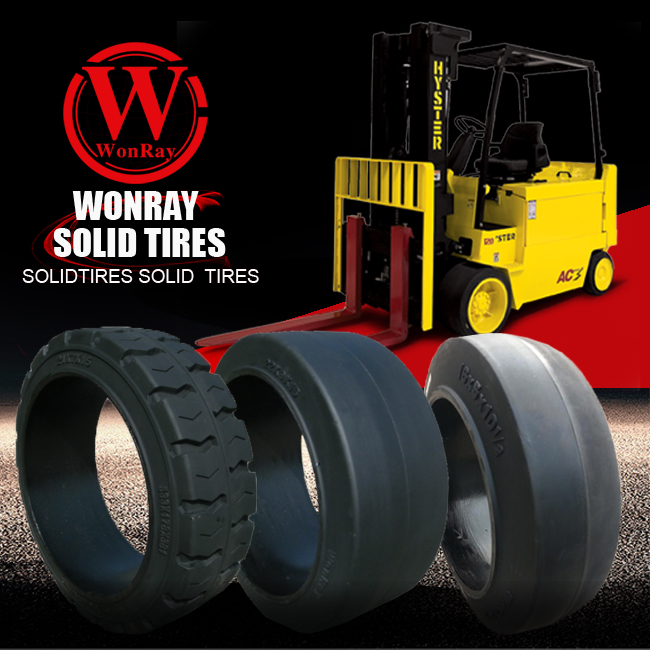
Understanding the Different Types of Heavy-Duty Forklift Tires
B2B buyers should consider the operational environment and forklift type when choosing heavy-duty tires:
● Solid Tires for Indoor and Heavy-Duty Industrial Use
– Maintenance-free and puncture-proof, ideal for continuous heavy-load operations on smooth surfaces.
● Pneumatic Tires for Rough and Uneven Outdoor Terrain
– Air-filled for better shock absorption and comfort on rough or uneven ground.
● Semi-Solid Tires for Balanced Performance
– Combine durability with some cushioning, suitable for mixed indoor-outdoor operations.
How Heavy-Duty Forklift Tires Enhance Safety, Efficiency, and Productivity
Investing in the right tires significantly impacts safety and operational efficiency:
● Minimized Downtime and Maintenance Costs
Puncture-resistant tires reduce equipment stoppages and maintenance interventions.
● Extended Forklift Life
High-quality tires reduce strain on axles and suspension systems, prolonging forklift longevity.
● Improved Stability and Operational Safety
Reliable traction and structural integrity minimize the risk of accidents, even under maximum load conditions.
● Optimized Handling and Performance
Precision tread patterns ensure smooth, controlled forklift movement in both indoor and outdoor environments.
Maintenance Best Practices to Maximize Tire Life
Even the most durable heavy-duty tires require proper maintenance:
● Regularly inspect for cracks, cuts, or embedded debris.
● Clean tires to remove dust, dirt, and chemical residues.
● Monitor load distribution to prevent uneven wear.
● Rotate tires if applicable to maintain consistent performance.
Routine maintenance protects the investment and reduces the risk of unexpected downtime.
Market Trends Driving the Demand for Heavy-Duty Forklift Tires
The industrial sector’s growth and automation are increasing demand for heavy-duty tires:
● Expansion of automated warehouses and material handling systems.
● E-commerce growth driving the need for durable, high-performance forklift tires.
● Advances in rubber and polyurethane materials improve longevity and durability.
● Industrial operators increasingly prioritize safety, efficiency, and cost savings.
Manufacturers providing high-quality, reliable heavy-duty forklift tires are well-positioned to capture market opportunities in modern industrial environments.
Conclusion
Heavy-duty forklift tires are a critical component of industrial and warehouse operations. They provide high load capacity, long-term durability, puncture resistance, and reliable traction, ensuring forklifts operate safely and efficiently.
For B2B buyers, investing in premium heavy-duty forklift tires improves equipment reliability, reduces downtime, and delivers significant cost savings over the long term. As industrial operations continue to expand, these tires remain a strategic choice for modern material handling applications.
FAQ
1. Which types of forklifts use heavy-duty forklift tires?
They are commonly used on warehouse forklifts, outdoor rough-terrain forklifts, skid-steer loaders, and material handling vehicles in logistics and manufacturing operations.
2. What is the difference between solid, pneumatic, and semi-solid tires?
Solid tires are maintenance-free and puncture-resistant, pneumatic tires provide cushioning for rough surfaces, and semi-solid tires offer a balance of durability and shock absorption.
3. How do heavy-duty forklift tires improve operational safety?
They provide stable traction, resist punctures, and maintain performance under heavy loads, reducing the risk of accidents and equipment downtime.
4. What should B2B buyers consider when sourcing heavy-duty forklift tires?
Consider load capacity, operating environment, tire material, maintenance requirements, and manufacturer quality standards to ensure optimal performance, safety, and cost-effectiveness.
Post time: 12-03-2026