
Steel mills create demanding conditions for industrial tires. Forklifts and other material-handling vehicles may operate near furnaces, transport heated products, and move between areas with significant temperature differences. Even without direct contact with hot materials, repeated exposure to radiant heat can gradually affect tire performance.
For Heat-Resistant Steel Mill Tires, thermal cracking is an important concern because it may develop gradually before more serious damage becomes visible. Understanding how repeated heating affects rubber, what accelerates crack formation, and how to identify early damage helps operators reduce premature tire deterioration.
How Repeated Heat Exposure Changes Tire Rubber
Industrial tires undergo continuous deformation during operation. As a tire rotates, its rubber compresses under the vehicle’s weight and returns toward its original shape after leaving the contact area. This repeated movement generates heat, which adds to the temperature absorbed from the surrounding environment.
When rubber is exposed to elevated temperatures over extended periods, its aging process may accelerate. Depending on the compound and exposure conditions, the material can gradually lose elasticity and become less resistant to repeated deformation. Small surface defects may then develop into visible cracks.
Temperature changes create additional stress. A tire may heat up while a vehicle works near a furnace and cool down when it moves into a storage or loading area. Repeating this cycle can place extra demands on the rubber, particularly when the tire is already exposed to heavy loads and frequent movement.
The performance of Heat-Resistant Steel Mill Tires therefore depends not only on tolerating high temperatures but also on maintaining suitable flexibility and strength throughout repeated operating cycles.
Why Thermal Cracks Develop Under Repeated Temperature Changes
Thermal cracking is rarely caused by a single factor. It usually involves a combination of rubber aging, temperature variation, and mechanical stress.
When a tire becomes hot, its rubber properties change temporarily. If the material has also experienced long-term thermal aging, it may become less capable of recovering from repeated compression. Cooling introduces further dimensional changes, and uneven temperature distribution can create additional stress within the tire.
Several working conditions may accelerate this process:
- Radiant heat exposure: Tires operating near furnaces, heated steel products, or hot production equipment may receive repeated thermal exposure.
- Frequent stop-and-start movement: Acceleration, braking, and turning increase deformation and frictional heating.
- Long operating periods: Insufficient cooling time between work cycles can allow tire temperatures to remain elevated.
- Existing material deterioration: Previous heat exposure, aging, or unsuitable operating conditions may reduce the rubber’s resistance to further stress.
These conditions often occur together in steel mills. A heavily loaded forklift working near a heat source may experience both external heating and heat generated through tire deformation. This combined effect can make cracking more likely than either condition alone.
Distinguishing Thermal Cracking from Other Tire Damage
Not every crack on an industrial tire is caused by heat. Steel mill environments also expose tires to sharp debris, rough surfaces, heavy loads, and repeated impacts. These factors can produce damage that resembles thermal deterioration.
Thermal-related cracks may appear as fine surface lines that gradually become more noticeable. However, appearance alone cannot confirm the cause. Their location, depth, distribution, and progression should all be considered.
Mechanical damage may present differently. Cuts and missing rubber can result from contact with sharp metal fragments, while abnormal deformation may be associated with overloading, incorrect tire specifications, or unsuitable installation. Uneven wear may also indicate alignment problems, braking faults, or repeated tight turns.
Comparing tires operating on the same vehicle can provide useful clues. If cracking occurs more frequently on tires working near a particular heat source, the operating environment deserves closer investigation. If damage is concentrated on one wheel position, vehicle-related factors should also be checked.
Identifying the actual cause is essential. Replacing a damaged tire without correcting the underlying problem may simply lead to the same failure recurring.
How Tire Construction Influences Thermal Crack Resistance
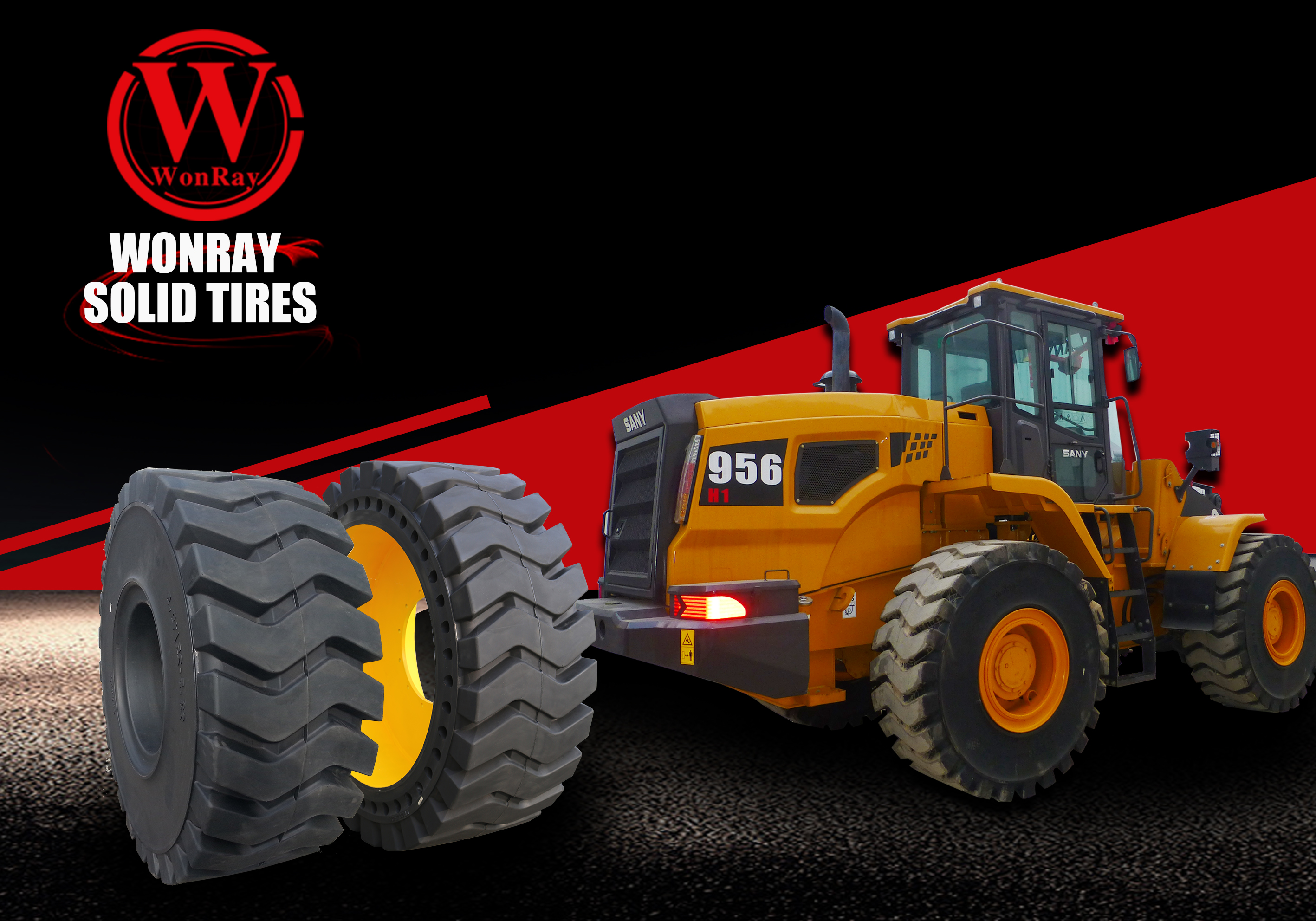
A solid tire’s ability to withstand repeated heat exposure depends on its rubber compound, structure, dimensions, and operating conditions. These elements work together to determine how the tire responds to temperature and mechanical loading.
Rubber compounds designed for demanding industrial environments may be formulated to resist thermal aging and maintain useful elasticity under elevated temperatures. However, heat resistance does not mean unlimited protection. Every tire has application limits, and actual performance depends on the intensity and duration of exposure.
Internal construction also matters. Excessive deformation under load can generate additional heat, even when the tire is made from a heat-resistant compound. Incorrect sizing, unsuitable load ratings, and operating speeds beyond recommended limits may increase this stress.
Tread design should also match the working surface and vehicle movements. The tire needs sufficient traction without creating unnecessary resistance or deformation. A forklift that frequently turns under heavy loads may require a different tread and performance balance from equipment traveling longer distances.
When assessing Heat-Resistant Steel Mill Tires, operators should therefore consider thermal resistance alongside load capacity, speed requirements, vehicle compatibility, and work-cycle demands.
Operating Practices That Help Slow Thermal Deterioration
Tire selection is only one part of preventing heat-related damage. Operating habits influence how much additional stress tires experience during each shift.
Abrupt acceleration, excessive braking, and sharp turns under heavy loads increase deformation and friction. Smoother driving can reduce these unnecessary forces. Where production arrangements allow, travel routes can also be planned to limit repeated passes close to major heat sources.
Maintenance teams should record where vehicles operate, how long they remain in high-temperature areas, and whether particular tire positions develop cracks more frequently. This makes it easier to identify recurring problems instead of treating every damaged tire as an isolated case.
A practical inspection routine should focus on three areas:
- Crack development: Record the location, depth, and progression of visible cracks. Pay attention to changes between inspections.
- Operating conditions: Review heat exposure, loading, travel speed, and the time available for cooling between work cycles.
- Vehicle condition: Check tire installation, wheel alignment, braking performance, and load distribution when abnormal damage appears.
Cracks that deepen or spread rapidly, especially when accompanied by deformation or unusual handling, require prompt assessment. Follow the tire and equipment manufacturer’s inspection and replacement guidance rather than relying on appearance alone.
Matching Tires to Different Steel Mill Operations
Different production areas expose tires to different combinations of heat and mechanical stress. Vehicles working near furnaces may face stronger radiant heat, while those transporting finished products through storage areas may experience more frequent turning, braking, and longer travel distances.
Before selecting Heat-Resistant Steel Mill Tires, consider the distance from heat sources, exposure duration, transported load, operating speed, and available cooling time. These details help establish the actual demands placed on the tire.
Equipment type is equally important. A forklift carrying heavy steel products may experience substantial tire stress during lifting and turning. Other material-handling vehicles may operate at different speeds or follow longer routes. Tire specifications should reflect the requirements of the individual vehicle rather than assuming that every steel mill application needs the same design.
A suitable choice should balance thermal resistance, load capacity, traction, and deformation behavior. Evaluating these requirements together helps avoid selecting a tire based on temperature resistance alone.
Exploring Tire Options for Steel Mill Applications
When evaluating Heat-Resistant Steel Mill Tires, comparing options against the actual vehicle and production environment is more useful than relying on general heat-resistance descriptions. WonRay offers solid tire solutions for industrial material-handling applications. Reviewing suitable options alongside equipment specifications, load requirements, and heat exposure conditions can help narrow the selection. The final decision should account for both thermal demands and the mechanical stresses encountered during daily operations.
Conclusion
Thermal cracking in steel mill tires can develop through repeated heat exposure, rubber aging, temperature changes, and mechanical deformation. Although early cracks may appear minor, continued operation under unsuitable conditions can lead to more serious deterioration. Selecting suitable Heat-Resistant Steel Mill Tires, monitoring crack development, improving operating practices, and checking related vehicle systems can help reduce premature damage and support reliable material handling.
FAQs
1. Can thermal cracks appear without direct contact with hot materials?
Yes. Radiant heat from furnaces, heated steel, and production equipment can affect tire rubber without direct contact. Repeated exposure may gradually accelerate rubber aging.
2. Are small cracks on solid tires always caused by overheating?
No. Cracks may also result from aging, mechanical stress, impacts, or unsuitable operating conditions. Their location, depth, and progression should be assessed before identifying the cause.
3. Do heat-resistant tires eliminate thermal cracking?
No. Heat-resistant construction improves suitability for elevated-temperature environments, but it cannot prevent all heat-related deterioration. Exposure duration, load, speed, and operating habits remain important.
4. What should operators check when thermal cracks appear?
Inspect the cracks and compare their development over time. Also review heat exposure, loading, tire installation, alignment, and braking performance to identify possible contributing factors.
Post time: 06-11-2026