
Forklift Winter Tires are not simply ordinary forklift tires used during a colder month. When an industrial vehicle moves into low-temperature warehouses, outdoor yards, loading docks or mixed indoor-outdoor routes, several operating conditions change at the same time. Rubber becomes less flexible as temperature falls, moisture can freeze, floor traction becomes less predictable and the machine may repeatedly cross from warm areas into cold ones.
These changes affect how a forklift tire should be evaluated. The relevant questions are not only whether the tire is solid or pneumatic, but whether its construction, tread and operating limits suit the actual temperature range and surface conditions.
Cold Temperature Changes Rubber Response
Rubber is viscoelastic, which means its stiffness and deformation behavior change with temperature. As conditions become colder, many rubber compounds become less flexible. That can reduce the amount of local deformation available for cushioning and can change how the tread follows small surface irregularities.
The effect varies by compound, so it is risky to assume that every industrial tire responds the same way in winter. A tire designed mainly for warm indoor use may not provide the same feel when operated for long periods in a cold storage area or an outdoor yard below freezing.
For this reason, minimum operating temperature should be part of tire selection when winter conditions are significant. If a manufacturer does not publish a dedicated low-temperature rating for the selected product, the operating range should be confirmed before use.
Winter Traction Is Mostly a Surface Problem
The word “winter” often suggests snow, but forklift sites can create more complicated surfaces. A loading dock may have cold dry concrete in one area, wet patches in another and thin ice near entrances. Outdoor yards may include compacted snow, gravel, frozen mud or salt-treated pavement.
A tire that performs well on clean dry concrete may behave differently when water or ice separates the tread from the floor. Tread pattern becomes more important because the tire needs channels and edges that help maintain contact as surface conditions change.
However, the deepest possible tread is not always the answer. Forklifts still need stable steering on hard floors. The useful design is one that balances traction with tread support for the machine’s actual route.
Indoor-to-Outdoor Routes Create Repeated Temperature Transitions
Many forklifts do not remain in one environment. They may start inside a heated warehouse, travel through an open dock door, cross an outdoor yard and return indoors. The tire therefore experiences repeated temperature changes rather than one stable cold condition.
Good winter operation therefore combines suitable tires with floor cleaning, drainage, de-icing and controlled driving speed. No tire can compensate for a floor that is covered with uncontrolled ice or oil-contaminated water.
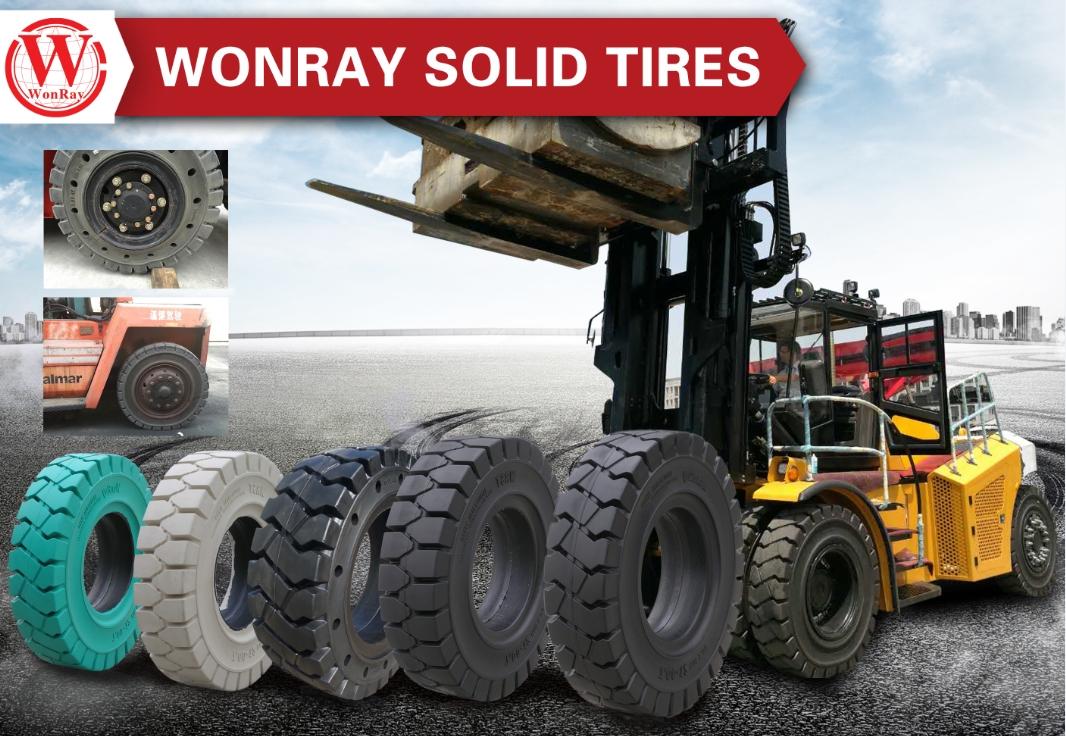
Solid and Pneumatic Tires Behave Differently in Cold Conditions
Pneumatic tires provide cushioning through air pressure, while solid tires rely on rubber deformation. Cold temperature can therefore influence the two systems differently. Pneumatic tire pressure also changes with temperature, so pressure checks become particularly important as ambient conditions change.
Solid tires remove inflation-pressure maintenance and ordinary puncture failure, which can be useful in outdoor industrial areas containing debris. However, the rubber compound still needs to operate within an appropriate temperature range, and the harder ride associated with cold rubber can become more noticeable on frozen or broken surfaces.
The choice should start with the wheel system and machine design. A forklift built around a cushion or press-on tire cannot simply change to a large pneumatic winter tire because the vehicle architecture is different.
Steering and Braking Need More Margin on Slippery Floors
Winter tire performance is not only about moving forward. Forklifts also need predictable steering and braking. Because a forklift can carry a high center of gravity and significant load, sudden steering inputs on slippery surfaces are especially undesirable.
Operators should reduce speed before turns and avoid sharp braking where ice or wet patches may be present. The tire needs adequate tread and condition, but driving technique remains part of the traction system.
Rear steering tires deserve attention because they can lose lateral grip during a turn even if the front drive tires still have enough traction to move the machine. ## What Should Be Checked Before Winter Starts?
A useful seasonal inspection begins before the first cold period. Measure remaining tread, inspect for cracks and chunking, verify that the tire is correctly seated on the rim and compare wheel diameters across each axle. On pneumatic systems, confirm pressure under the actual operating temperature.
Check the route as carefully as the tire. Identify doorways where water freezes, ramps where traction changes and outdoor areas where snow or mud accumulates. If the forklift moves between indoor and outdoor zones, note how often this transition occurs and whether the machine spends long periods parked in the cold.
These details help determine whether the requirement is mainly for deeper traction tread, a different rubber compound, a solid construction for puncture resistance or simply better route management.
Why “Winter Tire” Should Not Be Chosen From the Name Alone
Some keyword pages or product listings use the phrase Forklift Winter Tires without publishing a dedicated winter compound specification. In that case, the name should be treated as an application description rather than proof of a specific low-temperature formulation.
For industrial equipment, it is more reliable to confirm the selected tire’s actual construction, tread, size, load rating and recommended temperature range. If low-temperature performance is critical, the minimum working temperature should be discussed directly before the tire is specified.
This avoids turning a seasonal marketing term into an unsupported technical claim.
WonRay Forklift Tire Options for Cold-Weather Applications
WonRay’s forklift tire range includes solid pneumatic, non-marking and press-on constructions in multiple sizes and tread patterns. The public site also includes Forklift Winter Tires as a search term, but the product pages reviewed do not publish a universal dedicated winter-compound temperature rating for every size. For that reason, cold-weather matching should begin with the actual application rather than assuming all products share the same low-temperature capability.
To evaluate a winter application, provide the forklift model, tire size and construction, minimum and typical operating temperature, indoor/outdoor route, floor condition, maximum speed, normal load and photos of the current tread. If ice, snow, wet concrete or gravel are part of the route, state which condition occupies most of the working time.
WonRay can then match the available solid-tire construction and tread direction to the machine while the required temperature suitability is confirmed for the selected product.
Conclusion
Forklift Winter Tires should be selected by temperature, surface and machine design rather than by a seasonal label alone. Cold rubber response, wet or icy floors, indoor-outdoor transitions, steering grip and braking all influence how the forklift behaves.
The best winter plan combines a correctly matched tire with route management and appropriate operating practice. By confirming actual temperature range, tread requirement, tire construction, load and wheel system, a forklift can be prepared for cold-weather work without relying on assumptions about what the word “winter” means.
FAQ
Are solid tires suitable for winter forklifts?
They can be, especially where puncture resistance is useful, but rubber compound, tread, temperature range and surface conditions still need to be matched.
Why do pneumatic tire pressures need extra attention in cold weather?
Air pressure changes with temperature, so colder conditions can change inflation pressure and therefore tire shape and performance.
What information should be provided for a cold-weather tire recommendation?
Provide machine model, tire size, construction, minimum temperature, surface conditions, load, speed, route type and photos of the current tires.
Post time: 15-09-2026