
Solid tires, also known as solid resilient tires, are airless rubber tires designed for durability and performance in demanding environments. Unlike traditional pneumatic tires, solid tires do not contain air-filled cavities, which makes them resistant to punctures and blowouts. Over the past decade, solid tires have become increasingly popular across multiple industries due to their long lifespan, low maintenance requirements, and enhanced safety.
As industrial operations become more mechanized and efficiency-focused, the demand for reliable tire solutions has grown. This article explores the latest trends in the solid tires market, highlighting key innovations, emerging applications, and the factors driving industry growth. Businesses and fleet operators can leverage this knowledge to make informed tire selections and optimize operational efficiency.
Key Innovations Driving the Solid Tires Market
Advancements in Material Technology
Material innovation is at the forefront of the solid tires market. Traditional solid rubber tires, while durable, often lacked flexibility and ride comfort. Recent advancements in rubber compounds and polymer blends have addressed these limitations, delivering enhanced wear resistance, better traction, and improved shock absorption.
-
Durable Rubber Compounds: Modern formulations include high-performance rubber that withstands abrasion, chemical exposure, and extreme temperatures.
-
Lightweight Solutions: Some manufacturers are developing hybrid rubber and polyurethane blends to reduce tire weight without compromising load capacity.
-
Specialty Treads: Innovative tread patterns provide superior grip on challenging surfaces such as mud, gravel, and uneven warehouse floors.
These material improvements not only increase tire longevity but also contribute to overall vehicle performance, reducing downtime and maintenance costs.
Integration of IoT and Sensor Technology
The integration of IoT (Internet of Things) and smart sensors is another transformative trend in the solid tires market. Smart solid tires embedded with sensors can monitor critical parameters such as temperature, load, pressure, and wear in real-time.
-
Predictive Maintenance: Fleet managers can anticipate tire wear and schedule maintenance before failure occurs, reducing unexpected downtime.
-
Operational Efficiency: Real-time monitoring allows operators to optimize tire use, prevent overloading, and maintain consistent vehicle performance.
-
Data-Driven Insights: Collected data can inform purchasing decisions, fleet planning, and operational strategies, enhancing overall productivity.
As industries adopt Industry 4.0 principles, smart solid tires are increasingly seen as a critical component in connected and automated fleets.
Environmental Sustainability Initiatives
Environmental sustainability is becoming a core focus for industrial and commercial tire manufacturers. The solid tires market is responding with initiatives aimed at reducing carbon footprint and promoting recycling.
-
Recyclable Materials: Some solid tires are now made from eco-friendly, recyclable rubber compounds that minimize environmental impact.
-
Retreading Programs: Retreading solid tires extends their service life, reducing waste and conserving raw materials.
-
Lower Emissions: Durable solid tires require fewer replacements, which indirectly reduces energy consumption and emissions associated with tire manufacturing.
Businesses seeking green solutions can integrate solid tires into their operations while aligning with corporate sustainability goals.
Applications of Solid Tires Across Industries
Construction and Mining
Construction and mining industries demand tires capable of handling extreme loads and rugged terrains. Solid tires excel in these applications because of their puncture resistance and durability.
-
Heavy Machinery: Excavators, loaders, bulldozers, and dump trucks rely on solid tires to navigate rocky or uneven surfaces.
-
Safety & Stability: The solid construction reduces the risk of blowouts, enhancing operator safety.
-
Reduced Maintenance: Durable solid tires minimize vehicle downtime, ensuring projects stay on schedule.
Material Handling and Warehousing
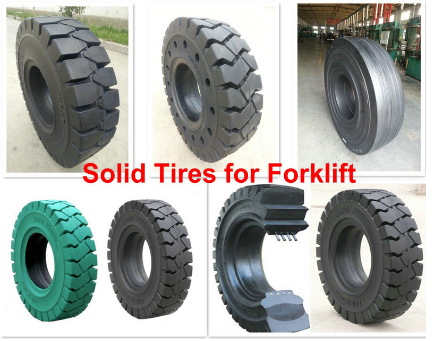
In warehouses and industrial facilities, forklifts, reach stackers, and pallet trucks frequently operate in tight spaces with continuous activity. Solid tires are ideal for such settings:
-
Increased Load Capacity: Solid tires can carry heavier loads than comparable pneumatic tires.
-
Low Maintenance: Their airless design eliminates flats, reducing maintenance interruptions.
-
Enhanced Maneuverability: Special tread designs provide grip on smooth warehouse floors while allowing smooth steering and motion.
Agriculture and Farming
The agriculture sector is increasingly adopting solid tires for tractors, harvesters, and other farm machinery.
-
Puncture-Proof Performance: Solid tires reduce downtime during planting and harvesting seasons.
-
Enhanced Traction: Tread designs are optimized for muddy or uneven fields.
-
Long-Term Savings: Reduced maintenance and tire replacements offer cost benefits to farmers over time.
Market Overview and Growth Trends
The global solid tires market is projected to experience steady growth in the coming years. Several factors contribute to this trajectory:
-
Rising Industrialization: Expanding manufacturing, construction, and logistics industries are driving demand for durable tire solutions.
-
Focus on Operational Efficiency: Businesses prioritize long-lasting, low-maintenance tires to reduce operational costs.
-
Technological Advancements: Innovations in materials, sensor integration, and smart tire technologies attract industrial operators seeking performance gains.
The market is highly competitive, with key players investing heavily in R&D to develop next-generation solid tires. Emerging markets, particularly in Asia-Pacific and Europe, show strong demand due to industrial expansion and infrastructure development.
Comparison: Solid Tires vs. Pneumatic Tires
| Property | Solid Tires | Pneumatic Tires |
|---|---|---|
| Maintenance | Low | High |
| Puncture Resistance | High | Low |
| Lifespan | Long | Short |
| Terrain Suitability | Versatile | Limited |
| Safety | High stability, puncture-proof | Risk of blowouts |
This comparison highlights why solid tires are preferred in industries that demand reliability, safety, and durability.
Conclusion
The solid tires market is rapidly evolving, driven by material innovations, smart technology integration, and environmental sustainability initiatives. From construction and mining to agriculture and warehousing, solid tires are proving their value as reliable, cost-effective, and eco-friendly solutions.
For businesses and fleet operators seeking durable, low-maintenance, and high-performance tire options, solid tires offer a compelling alternative to traditional pneumatic tires. By exploring the latest innovations and applications in the solid tires market, organizations can make informed decisions that optimize efficiency, enhance safety, and support sustainability goals.
Investing in high-quality solid tires is not only a strategic choice for operational reliability but also a step toward a greener, more sustainable industrial future.
Post time: 13-01-2026