
Forklift performance depends heavily on one critical component that is often overlooked—tires. In high-intensity environments such as warehouses, ports, and construction sites, choosing the right tire directly impacts productivity, safety, and long-term operating costs. Forklift solid tires have become a preferred solution for demanding applications due to their durability and reliability.
This article explores forklift solid tires from a performance and operational perspective, helping B2B buyers understand how to maximize efficiency in real working conditions.
What Are Forklift Solid Tires and How They Work
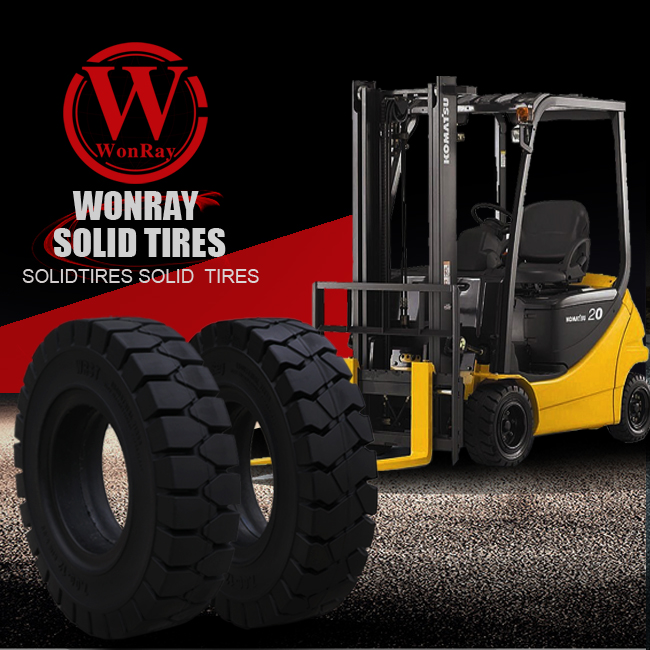
Forklift solid tires, also known as resilient tires, are manufactured using high-density rubber compounds without any air-filled cavity. Unlike pneumatic tires, they are completely solid in structure, which eliminates the risk of punctures, air leaks, or pressure-related issues.
Most solid tires feature a multi-layer construction that includes a wear-resistant outer layer, a shock-absorbing middle layer, and a reinforced base that securely fits onto the rim. This design ensures durability while maintaining a certain level of comfort and flexibility during operation.
Because they do not rely on air pressure, solid tires provide consistent performance regardless of load variations or environmental conditions.
Key Advantages of Forklift Solid Tires
Forklift solid tires deliver several operational benefits that make them ideal for demanding environments.
● Exceptional durability reduces frequent replacements
● Puncture-proof structure eliminates unexpected downtime
● High load capacity supports heavy-duty applications
● Stable performance improves safety during lifting tasks
● Low maintenance requirements reduce labor costs
These advantages make solid tires particularly suitable for industries where reliability is critical and downtime must be minimized.
Why Solid Tires Improve Operational Efficiency
In material handling operations, efficiency is closely linked to equipment uptime. Forklift solid tires contribute to improved efficiency by eliminating common tire-related failures.
Without the need for air pressure checks or repairs, maintenance routines become simpler and less time-consuming. This allows operators to focus more on productivity rather than equipment upkeep.
Additionally, solid tires maintain consistent ground contact, which improves maneuverability and reduces slippage. This is especially beneficial in high-traffic warehouse environments where precision and speed are essential.
Over time, the reduced maintenance and increased uptime translate into significant cost savings and improved workflow efficiency.
Applications Across Different Industries
Forklift solid tires are widely used across various industries due to their adaptability and performance.
● Warehousing and logistics operations requiring smooth indoor movement
● Construction sites with rough surfaces and heavy material handling
● Manufacturing plants with continuous equipment usage
● Ports and terminals handling large and heavy cargo loads
● Recycling and scrap yards where sharp debris is common
In these demanding environments, the ability of solid tires to resist damage and maintain performance provides a clear advantage over other tire types.
Solid Tires vs Pneumatic Tires: A Practical Comparison
Choosing between solid and pneumatic tires depends on application needs. However, in demanding job environments, solid tires often provide superior performance.
| Feature | Forklift Solid Tires | Pneumatic Tires |
|---|---|---|
| Puncture Resistance | Very high | Vulnerable to punctures |
| Maintenance | Minimal | Frequent checks required |
| Durability | Excellent | Moderate |
| Stability | High | Moderate |
| Best Use | Heavy-duty & indoor | Outdoor & uneven terrain |
While pneumatic tires may offer better shock absorption, solid tires are more reliable in environments where damage and downtime are concerns.
Factors to Consider When Choosing Forklift Solid Tires
Selecting the right forklift solid tires requires evaluating several key factors related to your operation.
● Load capacity must match the forklift’s working requirements
● Tire compound should suit the operating environment
● Floor conditions influence wear rate and traction performance
● Usage intensity determines the required durability level
Working with a professional supplier ensures proper tire selection and helps avoid compatibility or performance issues.
Product Selection Recommendations
For businesses aiming to enhance efficiency and reduce long-term costs, investing in high-quality forklift solid tires is a strategic decision. Look for tires with advanced rubber compounds, reinforced structures, and proven performance in industrial environments.
Reliable suppliers can provide tailored solutions based on your forklift model and application scenario, ensuring optimal performance and extended service life.
Frequently Asked Questions (FAQ)
Q1: Are forklift solid tires suitable for all working environments?
They are best suited for indoor and heavy-duty environments. For extremely rough outdoor terrain, pneumatic tires may be more appropriate.
Q2: How long do forklift solid tires last?
Their lifespan depends on usage conditions, but they generally last significantly longer than pneumatic tires in demanding applications.
Q3: Do solid tires affect operator comfort?
They offer less cushioning than pneumatic tires, but modern designs include shock-absorbing layers to improve comfort.
Q4: Can solid tires reduce overall operational costs?
Yes, their durability and low maintenance requirements significantly reduce both direct and indirect costs.
Conclusion
Forklift solid tires are a powerful solution for businesses operating in demanding environments. Their durability, stability, and low maintenance make them an essential component for improving efficiency and reducing downtime.
By choosing the right solid tires and aligning them with your operational needs, you can achieve better performance, enhanced safety, and long-term cost savings.
Post time: 26-03-2026